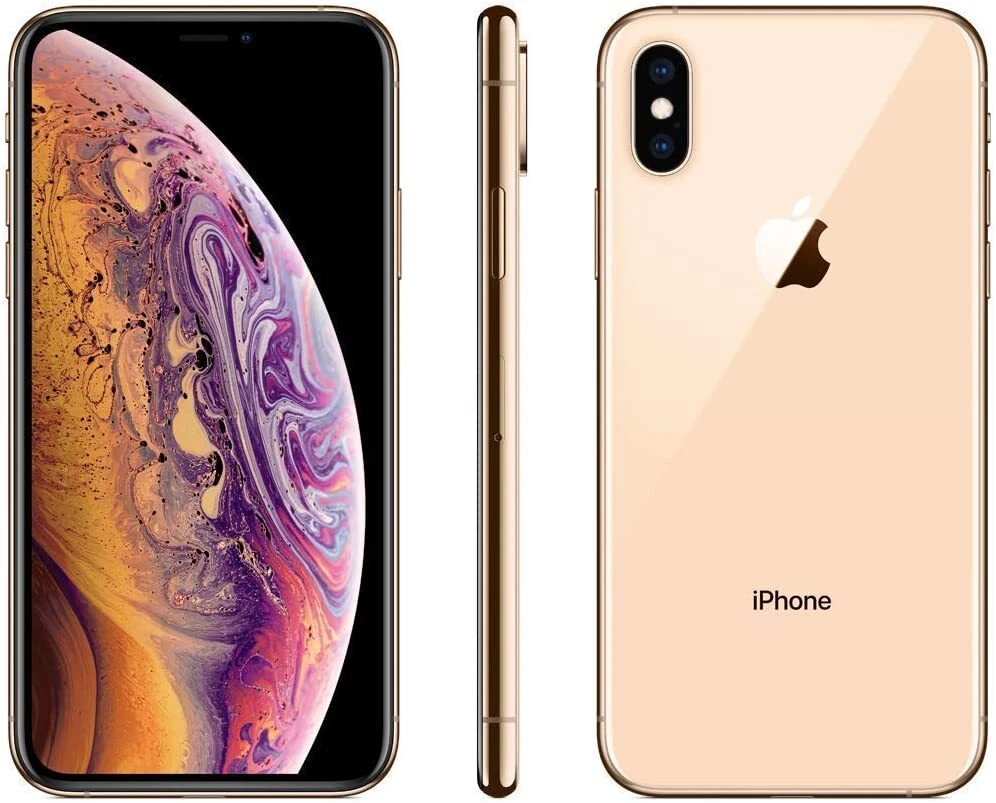

The iPhone X series marked one of the biggest turning points in Apple’s smartphone history. Introduced around the tenth anniversary of the original iPhone, the series moved Apple away from the traditional Home button design and introduced an edge-to-edge display, Face ID, gesture-based navigation, and a new generation of Apple silicon.
Table of Contents
The name “iPhone X series” generally refers to the iPhone X, iPhone XS, iPhone XS Max, and iPhone XR. Although these phones were launched between 2017 and 2018, they remain important because many of the design and technology choices introduced with them became the foundation for later iPhone generations.
The original iPhone X introduced Apple‘s first OLED iPhone display, the TrueDepth camera system, Face ID, and the A11 Bionic chip. The following year, Apple expanded the design with the iPhone XS and the larger iPhone XS Max while introducing the more affordable iPhone XR with an LCD display, aluminum frame, and colorful finishes. (Apple)
For people researching an iPhone X series phone today, understanding the differences between these models is particularly important. Screen technology, processor generation, camera configuration, storage, size, water resistance, battery performance, and software support can all affect the experience.
What Is the iPhone X Series?
The iPhone X series represents a transitional period in Apple’s smartphone lineup. The iPhone X was announced in September 2017 and went on sale in November of that year. It arrived alongside the iPhone 8 and iPhone 8 Plus but represented a substantially different design direction.
The iPhone XS and XS Max followed in 2018. The XS retained the 5.8-inch form factor of the iPhone X, while the XS Max introduced a much larger 6.5-inch display. Both models used OLED displays and the A12 Bionic processor.
The iPhone XR was also introduced in 2018. It used the same general all-screen design language and A12 Bionic processor but replaced OLED with a 6.1-inch Liquid Retina LCD display. It also used an aluminum frame rather than the stainless steel used on the X and XS models.
iPhone X Series Models
The main models are:
- iPhone X — introduced in 2017
- iPhone XS — introduced in 2018
- iPhone XS Max — introduced in 2018
- iPhone XR — introduced in 2018
Although they belong to the same design generation, these phones were not identical. The X and XS models were positioned as premium devices, while the XR offered many of the newer iPhone technologies at a lower launch price.
iPhone X: The Beginning of a New iPhone Era
The iPhone X was one of Apple’s most significant smartphone releases. Apple described it as a new generation of iPhone, and its design represented a major departure from the iPhone 6, 7, and 8 families.
Instead of a physical Home button below the display, the iPhone X used a gesture-based interface. Users could swipe upward from the bottom of the screen to return to the Home screen, swipe upward and pause to access the app switcher, and use other gestures for system navigation.
Apple also introduced Face ID, replacing Touch ID as the primary biometric authentication system.
The iPhone X featured a glass front and back, a stainless steel frame, wireless charging, and a 5.8-inch OLED Super Retina display. It was available in silver and space gray with 64GB and 256GB storage options. (Apple Support)
iPhone X Display
One of the most important changes was the display.
The iPhone X featured a 5.8-inch Super Retina OLED display with a resolution of 2436 × 1125 pixels and a pixel density of 458 pixels per inch. It supported HDR, True Tone, wide color, and a 1,000,000:1 contrast ratio. (Apple Support)
OLED technology allowed individual pixels to turn off completely when displaying black. This resulted in deep blacks and strong contrast compared with traditional LCD panels.
The display also introduced the notch at the top of the screen. Rather than being simply a design element, the notch housed the TrueDepth camera system and several sensors required for Face ID.
Face ID and TrueDepth Camera
Face ID was one of the defining features of the iPhone X.
The TrueDepth camera system used an infrared camera, flood illuminator, and dot projector to create a detailed facial map. Apple stated that the system projected more than 30,000 invisible infrared dots to help create a mathematical representation of the user’s face. Facial recognition processing was performed on the device and protected by the Secure Enclave. (Apple)
Face ID could be used to unlock the phone, authenticate purchases, access supported applications, and authorize Apple Pay transactions.
The technology also enabled Animoji, which used facial tracking to reproduce the user’s expressions through animated characters.

iPhone X Camera System
The iPhone X included a dual-camera system consisting of a 12MP wide-angle camera and a 12MP telephoto camera.
The wide-angle camera used an f/1.8 aperture, while the telephoto camera used an f/2.4 aperture. Both cameras supported optical image stabilization. The system also supported Portrait mode, Portrait Lighting, optical zoom, and 4K video recording. (Apple Support)
For its time, the camera system was particularly notable because computational photography was becoming increasingly important. The A11 Bionic chip’s image signal processor helped the phone process photos and video more intelligently.
iPhone XS: Refining the iPhone X
The iPhone XS was introduced in September 2018 as the direct successor to the iPhone X.
At first glance, the XS looked extremely similar to the X. It retained the 5.8-inch OLED display, stainless steel frame, glass back, Face ID, and general gesture-based interface.
However, Apple made important internal improvements.
The XS introduced the A12 Bionic chip, improved cameras, faster Face ID performance, additional storage options, and a new gold finish. Apple also improved water resistance compared with the iPhone X. (Apple)
A12 Bionic Chip

The A12 Bionic was one of the major technical upgrades in the XS generation.
It was Apple’s first 7-nanometer smartphone chip and included a six-core CPU, four-core GPU, and next-generation Neural Engine. Apple stated that its two performance cores could be up to 15 percent faster, while its efficiency cores could be up to 50 percent more efficient than the previous generation. (Apple)
The Neural Engine also became more capable, supporting machine-learning workloads used for photography, augmented reality, and other features.
This meant that the iPhone XS was not simply an iPhone X with a cosmetic refresh. Its processor architecture provided additional performance and efficiency for applications and system features.
iPhone XS Storage
The iPhone XS was available with substantially more storage than the original iPhone X.
Storage options included:
- 64GB
- 256GB
- 512GB
The 512GB option made the XS particularly attractive to users who stored large numbers of photos and videos or worked with large files. (Apple)
iPhone XS Max: The Largest iPhone X Design
The iPhone XS Max brought the iPhone X design to a much larger form factor.
It featured a 6.5-inch Super Retina OLED display while retaining the same general premium construction of the XS. Apple’s official specifications identify the XS Max as having a 6.5-inch all-screen Super Retina display, glass back, stainless steel frame, and 12MP wide-angle and telephoto rear cameras. (Apple Support)
The larger display was particularly useful for:
- Watching videos
- Reading documents
- Browsing websites
- Playing games
- Editing photos
- Using productivity applications
The XS Max was also equipped with the A12 Bionic chip and was offered with up to 512GB of storage.
iPhone XS vs XS Max
The major distinction between the XS and XS Max was physical size and display size.
The XS had a 5.8-inch display, while the XS Max had a 6.5-inch display. Both used OLED technology and the same A12 Bionic platform.
The XS was easier to handle for people who preferred a smaller phone, while the XS Max provided considerably more screen space.
iPhone XR: The Colorful Alternative
The iPhone XR was one of the most interesting members of the X generation.
Instead of positioning it as a simple budget phone, Apple gave it many technologies associated with the XS models. It used the A12 Bionic chip, Face ID, a TrueDepth front camera, wireless charging, and an all-screen design.
The biggest differences were the LCD display, aluminum frame, and single rear camera.
Apple introduced the XR in six finishes: black, white, blue, yellow, coral, and (PRODUCT)RED. (Apple)
iPhone XR Display
The XR featured a 6.1-inch Liquid Retina LCD display.
Unlike the X, XS, and XS Max, it did not use OLED. Its display resolution was also lower than the premium OLED models.
Nevertheless, the XR’s LCD panel incorporated technologies such as wide color support and True Tone. Apple’s design used precision-milled glass and pixel masking to extend the display toward the rounded corners. (Apple)
For many everyday users, the display still provided a large and modern-looking viewing area.
iPhone XR Performance
The XR used the same A12 Bionic generation found in the XS and XS Max.
This was important because it meant the less expensive model was not using an older processor. The A12 Bionic provided substantial processing power for gaming, photography, video editing, augmented reality, and everyday applications.
Apple stated that the A12 Bionic used a six-core CPU and four-core GPU, with its Neural Engine designed for machine-learning workloads. (Apple)
iPhone XR Camera
The XR used a single 12MP wide-angle rear camera.
At first glance, this appeared to be a major disadvantage compared with the dual-camera XS models. However, Apple’s computational photography allowed the XR to produce Portrait mode images using a single camera.
The phone supported depth control, Smart HDR, Portrait Lighting, and advanced image processing. (Apple)
The XR therefore demonstrated how software and machine learning could compensate for the absence of a dedicated telephoto lens in certain photography situations.
iPhone X vs XS vs XS Max vs XR
Understanding the differences becomes easier when the four models are placed side by side.
| Feature | iPhone X | iPhone XS | iPhone XS Max | iPhone XR |
|---|---|---|---|---|
| Introduced | 2017 | 2018 | 2018 | 2018 |
| Display | 5.8-inch OLED | 5.8-inch OLED | 6.5-inch OLED | 6.1-inch LCD |
| Processor | A11 Bionic | A12 Bionic | A12 Bionic | A12 Bionic |
| Face ID | Yes | Yes | Yes | Yes |
| Rear cameras | Dual 12MP | Dual 12MP | Dual 12MP | Single 12MP |
| Frame | Stainless steel | Stainless steel | Stainless steel | Aluminum |
| Wireless charging | Yes | Yes | Yes | Yes |
| Storage | 64GB/256GB | Up to 512GB | Up to 512GB | Up to 256GB |
| Water resistance rating | IP67 | IP68 | IP68 | IP67 |
| Main colors | Silver, Space Gray | Silver, Space Gray, Gold | Silver, Space Gray, Gold | Black, White, Blue, Yellow, Coral, PRODUCT(RED) |
Apple’s technical documentation confirms the iPhone X’s 64GB and 256GB configurations and IP67 rating, while Apple introduced the XS generation with up to 512GB storage and improved water resistance. The XR used a 6.1-inch Liquid Retina display, A12 Bionic, six colors, and IP67 protection. (Apple Support)
iPhone X Series Design
The design language introduced with the iPhone X became one of Apple’s most recognizable smartphone designs.
The most obvious change was the removal of the Home button.
Previous iPhones relied heavily on the circular Home button for navigation and Touch ID. The X series replaced it with gestures and Face ID.
This change created additional display space without making the phone dramatically larger.
Glass and Metal Construction
The premium X and XS models combined glass backs with stainless steel frames. The XR used glass with an aluminum frame.
The glass construction served another purpose besides appearance: it allowed wireless charging.
Wireless charging became part of the iPhone experience beginning with the glass-backed iPhone 8, iPhone 8 Plus, and iPhone X generation.
iPhone X Series Camera Features
Photography was another major area of development.
The X and XS models used dual rear cameras, allowing users to switch between wide-angle and telephoto perspectives. The XR used a single wide-angle camera but relied heavily on computational photography.
Portrait Mode
Portrait mode was designed to create a depth-of-field effect, keeping the subject relatively sharp while producing a blurred background.
On the iPhone X, the dual-camera system helped provide depth information. The XR demonstrated a different approach by using machine learning and image processing to create Portrait effects from a single rear camera.
Front Camera Photography
The TrueDepth camera system also improved front-facing photography.
The iPhone X introduced Portrait mode on the front camera, while later X-series models expanded the capabilities.
The front camera system was also responsible for Face ID, Animoji, and later Memoji features.
Video Recording on the iPhone X Series
The iPhone X could record 4K video at up to 60 frames per second and 1080p slow-motion video at up to 240 frames per second. Apple also emphasized improved stabilization and image processing. (Apple)
The XS generation continued to build on Apple’s video capabilities.
For casual creators, these features meant that an X-series iPhone could serve as a capable camera for social media, family videos, travel footage, and everyday content creation.
Battery and Charging
Battery performance differs between individual devices because battery condition is particularly important on phones from this generation.
When new, Apple designed the XS and XS Max to provide improvements over the original iPhone X. Apple stated that the XS could last up to 30 minutes longer than the X, while the XS Max could last up to 1.5 hours longer under Apple’s stated testing conditions. (Apple)
The XR was also designed with battery life as one of its strengths. Apple stated that it could last up to 1.5 hours longer than the iPhone 8 Plus under its testing conditions. (Apple)
However, when buying one of these phones used, battery health is often more important than the original battery specifications.
A heavily used iPhone X series phone may have a significantly degraded battery compared with a new unit.
Software and Long-Term Use
Software compatibility is an important consideration when buying an older iPhone.
The iPhone X series launched with iOS versions from the late 2010s. Over time, Apple’s newer operating systems introduced features that require newer hardware.
This means potential buyers should not judge an older iPhone solely by its processor speed or physical condition. Software compatibility, application requirements, security updates, and accessory compatibility can all affect how practical the device is today.
The exact software support available can change over time, so anyone buying an older iPhone should check Apple’s current compatibility list rather than relying solely on launch-era information.
Is the iPhone X Still Useful?
An iPhone X can still perform many everyday smartphone tasks, depending on its condition and software compatibility.
It has an OLED display, Face ID, dual rear cameras, wireless charging, and the A11 Bionic chip.
For basic activities such as calls, messaging, web browsing, photography, music, and compatible applications, the hardware remains capable.
However, the age of the device means buyers should pay particular attention to battery condition, storage capacity, physical damage, display condition, Face ID functionality, and software support.
Is the iPhone XS Still Worth Considering?
The iPhone XS has several advantages over the original X.
Its A12 Bionic processor is newer, it offers up to 512GB of storage, and it introduced other refinements to the camera and authentication systems.
The 5.8-inch OLED display also makes it a relatively compact option compared with larger modern smartphones.
A major consideration is that the XS is still an older phone. A used device can have significantly different battery health and physical condition depending on how it was treated by the previous owner.
Is the iPhone XS Max Still Useful?
The XS Max remains attractive to people who prioritize screen size.
Its 6.5-inch OLED display is considerably larger than the 5.8-inch screens of the X and XS while retaining the same general premium hardware platform.
Its A12 Bionic chip, dual-camera system, Face ID, and large display make it a capable device for media consumption and everyday tasks when software compatibility is sufficient.
The trade-off is its physical size and weight compared with smaller phones.
Is the iPhone XR Still Worth Considering?
The XR is particularly interesting because it combines several newer technologies with a more affordable design.
It has:
- A12 Bionic
- Face ID
- 6.1-inch display
- Wireless charging
- 12MP rear camera
- TrueDepth front camera
- Six color options
- Aluminum frame
Its biggest compromises compared with the XS generation are the LCD display and single rear camera.
For users who do not specifically need OLED or a telephoto camera, these differences may be less important than factors such as battery health and storage.
Common Problems to Check Before Buying a Used iPhone X Series
Anyone purchasing an older iPhone X series model should inspect the device carefully.
Check Battery Health
Battery degradation is normal after years of use. Check the Battery Health section before buying a used device.
A phone with a heavily degraded battery may require replacement sooner than expected.
Test Face ID
Face ID is an important feature on every X-series model.
Make sure the system can recognize the user’s face consistently. Repairs involving the TrueDepth system can be complicated, so a non-working Face ID system should be treated as a significant consideration.
Inspect the OLED Display
The iPhone X, XS, and XS Max use OLED panels.
Look for:
- Burn-in
- Dead pixels
- Unusual color shifts
- Touch problems
- Cracks
- Display replacement warnings or repair history
The XR uses an LCD display, so its display characteristics are different.
Test the Cameras
Open both front and rear cameras and test:
- Autofocus
- Portrait mode
- Video recording
- Flash
- Camera switching
- Face ID and TrueDepth functions
A camera that appears functional but struggles to focus may indicate a hardware issue.
Check the Charging System
Test both wired charging and wireless charging where available.
Also inspect the Lightning port for debris, corrosion, or physical damage.
Verify Storage
Because applications, photos, videos, and operating-system files consume storage, capacity can significantly affect long-term usability.
For users who take lots of photos and videos, higher-capacity models can be more convenient.
iPhone X Series Pros and Cons
Advantages
The iPhone X series introduced several technologies that remain familiar in modern smartphones.
Key advantages include:
- Modern all-screen design
- Face ID
- High-quality camera systems
- Wireless charging
- Strong Apple processors for their generation
- OLED displays on the X, XS, and XS Max
- Large display option with the XS Max
- Colorful design options with the XR
- Excellent integration with Apple’s ecosystem
Disadvantages
The main disadvantages today are related to age rather than the original hardware quality.
These can include:
- Older processors
- Aging batteries
- Limited future software compatibility compared with newer iPhones
- Older camera technology
- Lack of newer connectivity features
- Potential repair costs
- Used devices may have unknown repair histories
iPhone X Series for Photography
The iPhone X family helped establish many of the computational photography techniques that became increasingly important in later Apple devices.
The combination of camera hardware and Apple’s image-processing technology enabled features such as Portrait mode, Portrait Lighting, Smart HDR, depth effects, and improved low-light processing.
The XS and XR generations particularly demonstrated the importance of computational photography. The XR could create Portrait effects with a single rear camera by combining camera data with software processing. (Apple)
For everyday photography, these phones can still produce attractive images when used in good lighting and when the camera hardware is in good condition.
However, modern smartphones generally offer more advanced sensors, computational photography, stabilization, and low-light performance.
iPhone X Series for Gaming
The A11 and A12 Bionic chips were powerful processors for their respective generations.
The A11 Bionic introduced a neural engine and a three-core GPU, while the A12 Bionic moved to a more advanced architecture and four-core GPU. Apple specifically highlighted augmented reality, gaming, photography, video editing, and graphics-intensive applications when discussing the A12 platform. (Apple)
Older games and many everyday applications can run well on compatible software, but performance expectations should be adjusted for newer, graphically demanding applications.
Why the iPhone X Series Was Important
The importance of the iPhone X series extends beyond the phones themselves.
The series helped establish several features that would become standard parts of Apple’s premium smartphone design:
- Face ID
- Gesture-based navigation
- OLED displays across premium models
- The notch
- Glass-backed designs
- Wireless charging
- TrueDepth camera technology
- Computational photography
- Neural Engine-powered features
The original iPhone X therefore represents more than an older iPhone model. It represents the point at which Apple’s smartphone design moved decisively beyond the traditional Home button era.
Frequently Asked Questions About the iPhone X Series
What phones are included in the iPhone X series?
The term iPhone X series commonly includes the iPhone X, iPhone XS, iPhone XS Max, and iPhone XR. The iPhone X was introduced in 2017, while the XS, XS Max, and XR arrived in 2018. (Apple Support)
Which iPhone X series model has the biggest screen?
The iPhone XS Max has the largest screen, measuring 6.5 inches diagonally. The XR has a 6.1-inch display, while the X and XS have 5.8-inch displays.
Does the iPhone X have Face ID?
Yes. The iPhone X introduced Face ID, which uses the TrueDepth camera system for facial authentication.
Does the iPhone XR have Face ID?
Yes. The iPhone XR includes Face ID and the TrueDepth front camera system. (Apple)
Is the iPhone XR OLED?
No. The iPhone XR uses a 6.1-inch Liquid Retina LCD display. The iPhone X, XS, and XS Max use OLED displays.
Which iPhone X series models use OLED?
The iPhone X, iPhone XS, and iPhone XS Max use OLED displays. The XR uses LCD technology.
Does the iPhone X support wireless charging?
Yes. The glass-backed iPhone X supports wireless charging through the Qi standard. (Apple)
Does the iPhone XS support 512GB storage?
Yes. The iPhone XS and XS Max were available with up to 512GB of storage. (Apple)

How many cameras does the iPhone XR have?
The iPhone XR has one 12MP rear wide-angle camera. Despite having one rear camera, it supports computational Portrait mode and depth control. (Apple)
Which iPhone X series phone has the best battery life?
Battery performance depends on the specific device, battery health, software, and usage. At launch, Apple stated that the XS Max lasted up to 1.5 hours longer than the iPhone X under its testing conditions, while the XR was also designed for extended battery performance. (Apple)
Is the iPhone X series waterproof?
These phones are water-resistant rather than completely waterproof. The iPhone X and XR have IP67 ratings, while the XS generation introduced an IP68 rating. Water resistance can also decrease as a device ages or is damaged. (Apple Support)
Does the iPhone X have a Home button?
No. The iPhone X removed the physical Home button and introduced gesture-based navigation.
Does the iPhone X series support Animoji?
Yes. The TrueDepth camera system introduced with the iPhone X enabled Animoji, which could track facial expressions and animate compatible characters. (Apple)
Which iPhone X series model has the most storage?
The iPhone XS and XS Max have the highest storage capacity, with configurations reaching 512GB.
Is the iPhone XR part of the iPhone X series?
Yes. Although its design and display differ from the premium XS models, Apple introduced the XR in the same generation and equipped it with technologies derived from the iPhone X family, including Face ID and the A12 Bionic chip. (Apple)
Final Thoughts on the iPhone X Series
The iPhone X series represents a major chapter in Apple’s smartphone evolution. The original iPhone X introduced the all-screen OLED design, Face ID, TrueDepth camera system, gesture navigation, wireless charging, and A11 Bionic chip, while the iPhone XS and XS Max refined the concept with A12 Bionic performance, larger storage options, improved cameras, and a larger 6.5-inch display. The iPhone XR brought many of the same-generation technologies to a colorful aluminum-and-glass design with a 6.1-inch LCD display and single rear camera. For anyone researching these devices today, the most important considerations are no longer simply their launch specifications but also battery health, physical condition, software compatibility, storage capacity, display condition, and the reliability of Face ID and cameras.
Source links for the references used in the article: Apple — iPhone X announcement · Apple — iPhone XS and XS Max announcement · Apple — iPhone XR announcement · Apple Support — iPhone X technical specifications · Apple Support — Identify your iPhone model.

[…] Apple iPhone Air represents one of Apple’s most significant design changes to the iPhone lineup in years. Introduced in September 2025, […]