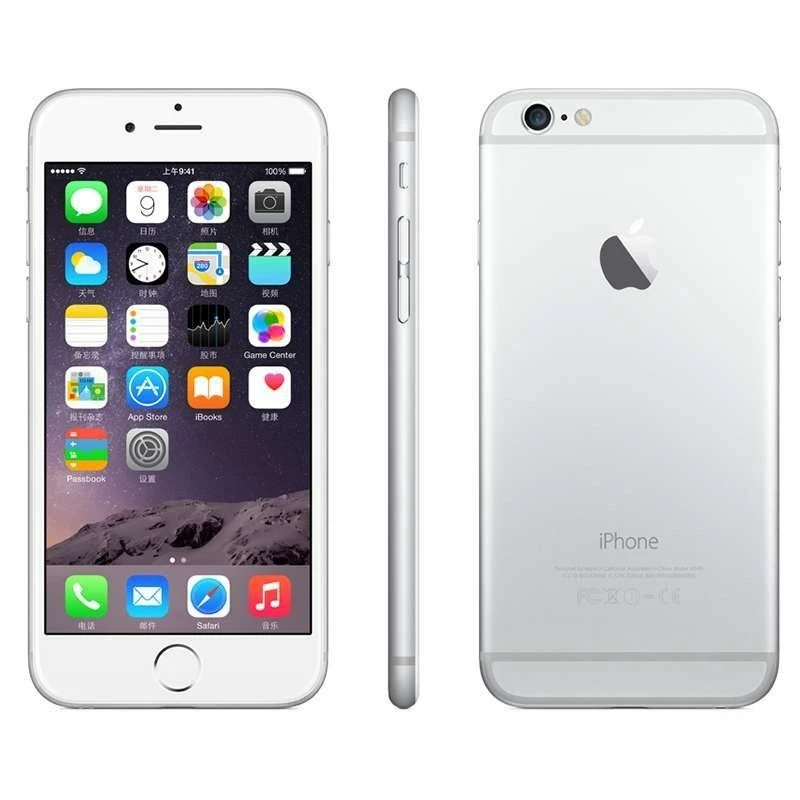

The iPhone 6 series represents one of the most important generations in Apple‘s smartphone history. Introduced between 2014 and 2015, the series marked Apple’s major move toward larger smartphone displays while introducing thinner designs, improved processors, better cameras, Touch ID, Apple Pay, and new software capabilities.

The series includes four closely related models: the iPhone 6, iPhone 6 Plus, iPhone 6s, and iPhone 6s Plus. Although these smartphones are now several generations old, they remain relevant in the used-phone market and are still searched for by people looking for affordable Apple devices, information about older iPhones, or a comparison between the different iPhone 6 models.
Table of Contents
The original iPhone 6 and iPhone 6 Plus launched in September 2014. Apple introduced two screen sizes for the first time in the main iPhone lineup: a 4.7-inch display on the iPhone 6 and a 5.5-inch display on the iPhone 6 Plus. Both featured Apple’s A8 processor, an aluminum body, an 8-megapixel rear camera, Touch ID, and support for Apple Pay.
One year later, Apple followed them with the iPhone 6s and iPhone 6s Plus. These models kept the basic design language but introduced major internal improvements, including the A9 processor, a 12-megapixel rear camera, 4K video recording, Live Photos, and 3D Touch.
This guide explains everything you need to know about the iPhone 6 series, including its history, specifications, design, displays, cameras, performance, battery life, software support, differences between models, advantages, limitations, and what to consider when buying one today.
What Is the iPhone 6 Series?
The iPhone 6 series is a family of Apple smartphones released during 2014 and 2015. It can be divided into two generations.
The first generation consists of:
- iPhone 6
- iPhone 6 Plus
The second generation consists of:
- iPhone 6s
- iPhone 6s Plus
The iPhone 6 and iPhone 6 Plus were announced on September 9, 2014, while the iPhone 6s and iPhone 6s Plus were announced on September 9, 2015.
The introduction of the iPhone 6 was particularly significant because Apple moved away from the smaller displays used by previous iPhone generations. The iPhone 6 featured a 4.7-inch screen, while the iPhone 6 Plus introduced a much larger 5.5-inch screen.
Apple positioned the larger displays as a way to provide more space for browsing, watching videos, using apps, viewing photographs, and interacting with content.
iPhone 6 Series Models
iPhone 6
The iPhone 6 is the smaller standard model of the first iPhone 6 generation.
It features a 4.7-inch Retina HD display with a resolution of 1334 × 750 pixels and 326 pixels per inch. The phone uses Apple’s A8 chip and M8 motion coprocessor. It has an 8-megapixel rear camera and a 1.2-megapixel FaceTime HD camera.
The iPhone 6 was available in silver, gold, and space gray and came with storage capacities ranging from 16GB to 128GB.
Its relatively compact dimensions made it easier to hold than the iPhone 6 Plus, making it the natural choice for users who wanted a larger display without moving to a large phone.
iPhone 6 Plus
The iPhone 6 Plus was the first large-screen Plus model in Apple’s main iPhone lineup.
It features a 5.5-inch Retina HD display with a resolution of 1920 × 1080 pixels. It also uses the A8 chip and M8 motion coprocessor.
One of the most important camera differences between the iPhone 6 and iPhone 6 Plus is optical image stabilization. Apple equipped the iPhone 6 Plus with optical image stabilization for its rear camera, helping reduce the effect of hand movement when taking photographs.
The larger body also allowed Apple to provide longer battery-life ratings than the standard iPhone 6.
iPhone 6s
The iPhone 6s retained the 4.7-inch form factor of the iPhone 6 but received substantial hardware improvements.
It uses Apple’s A9 chip and M9 motion coprocessor and introduced 3D Touch, which allowed the display to respond to different levels of pressure.
The rear camera was upgraded from 8 megapixels to 12 megapixels. The iPhone 6s could also record 4K video at 30 frames per second.
Apple also introduced Live Photos with the iPhone 6s generation, allowing users to capture a short motion sequence around a photograph.
The iPhone 6s was available in four colors: silver, gold, space gray, and rose gold.
iPhone 6s Plus
The iPhone 6s Plus combines the larger 5.5-inch design of the iPhone 6 Plus with the improved hardware of the iPhone 6s.
It uses the A9 processor, has a 12-megapixel rear camera, supports 4K video, includes 3D Touch, and features optical image stabilization for both photography and video.
The iPhone 6s Plus has a 1920 × 1080 display with 401 pixels per inch. It is substantially larger and heavier than the 4.7-inch models.
iPhone 6 Series Design
One of the defining characteristics of the iPhone 6 family is its aluminum construction and rounded design.
Apple moved away from the more angular appearance of earlier iPhones and introduced curved edges that transition smoothly into the display. The iPhone 6 and iPhone 6 Plus were designed around an anodized aluminum unibody enclosure and curved glass.
The design made the devices noticeably thinner than many previous iPhones.
The standard iPhone 6 measures approximately 138.1 mm tall, 67.0 mm wide, and 6.9 mm thick, with a weight of 129 grams.
The iPhone 6s is slightly thicker and heavier because of its upgraded construction and hardware. It measures 138.3 mm tall, 67.1 mm wide, and 7.1 mm thick, weighing 143 grams.
The Plus models are considerably larger.
This difference in physical size is one of the easiest ways to distinguish the standard and Plus versions.
iPhone 6 Series Display
iPhone 6 and iPhone 6s Display
Both the iPhone 6 and iPhone 6s feature 4.7-inch displays.
The resolution is 1334 × 750 pixels at 326 pixels per inch. Both use IPS LCD technology and Apple’s Retina HD branding.
The iPhone 6s adds an important feature: 3D Touch.
3D Touch allowed users to press more firmly on supported interface elements to access additional functions. It was one of Apple’s major software and hardware features during the iPhone 6s generation.
iPhone 6 Plus and iPhone 6s Plus Display
The Plus models use 5.5-inch displays.
The iPhone 6 Plus has a resolution of 1920 × 1080 pixels, while the iPhone 6s Plus retains the same resolution and adds 3D Touch. The iPhone 6s Plus reaches 401 pixels per inch.
The larger screen is particularly useful for watching videos, reading documents, browsing websites, viewing photographs, and using applications with more on-screen information.
iPhone 6 Series Performance

A8 Chip in iPhone 6 and iPhone 6 Plus
The iPhone 6 and iPhone 6 Plus use Apple’s A8 chip with 64-bit architecture.
At the time of launch, Apple emphasized the A8’s performance and energy efficiency. The processor was paired with the M8 motion coprocessor, which handled motion-related data from sensors such as the accelerometer, gyroscope, compass, and barometer.
For everyday tasks during its active software lifespan, the A8 provided enough performance for browsing, messaging, photography, social media, music, and many games.
A9 Chip in iPhone 6s and iPhone 6s Plus
The iPhone 6s generation moved to the A9 chip.
Apple described the A9 as its third-generation 64-bit chip and said it offered significant CPU and GPU performance improvements over the A8.
The A9 also integrates the M9 motion coprocessor.
This makes the iPhone 6s and 6s Plus the more capable choices within the iPhone 6 family from a hardware-performance perspective.
iPhone 6 Series Camera
Camera technology was another area where Apple made meaningful improvements between generations.
iPhone 6 Camera
The iPhone 6 features an 8-megapixel iSight rear camera with an f/2.2 aperture, Focus Pixels autofocus, True Tone flash, automatic HDR, panorama, burst mode, and image stabilization features.
The phone can record 1080p HD video at 30 or 60 frames per second.
The front FaceTime HD camera is 1.2 megapixels and supports 720p HD video recording.
iPhone 6 Plus Camera
The iPhone 6 Plus has similar core camera specifications to the iPhone 6 but adds optical image stabilization.
This is particularly useful when taking photographs in situations where camera movement can cause blur.
Apple also supported 1080p recording at up to 60 frames per second and slow-motion video at higher frame rates.
iPhone 6s Camera
The iPhone 6s represents a major camera upgrade.
Apple increased the rear camera resolution to 12 megapixels and added features such as Live Photos, improved autofocus, local tone mapping, noise reduction, and other image-processing improvements.
The iPhone 6s can also record 4K video at 30 frames per second.
This was a major upgrade over the iPhone 6’s 1080p maximum video resolution.
iPhone 6s Plus Camera
The iPhone 6s Plus combines the 12-megapixel camera of the 6s with optical image stabilization.
It supports 4K video recording at 30 frames per second and optical image stabilization for video.
For users interested in photography and video, the 6s Plus therefore represents the most advanced camera system among the four original iPhone 6 series models.
iPhone 6 Series Battery Life
Battery performance depends heavily on battery health, software, network conditions, usage, and whether the phone has its original battery.
When new, Apple rated the iPhone 6 for up to 14 hours of 3G talk time, up to 10 hours of internet use over 3G or LTE, up to 11 hours of Wi-Fi internet use, and up to 11 hours of HD video playback.
The iPhone 6 Plus had higher Apple-rated figures, including up to 24 hours of 3G talk time, up to 12 hours of internet use, and up to 14 hours of HD video playback.
The iPhone 6s has ratings similar to the iPhone 6, while the 6s Plus has ratings similar to the larger 6 Plus.
However, these figures should not be confused with the battery life of a used iPhone today.
Because these phones are many years old, battery condition is one of the most important things to inspect when purchasing a used model.
iPhone 6 Series Storage Options
The iPhone 6 family was offered in multiple storage configurations.
The original iPhone 6 and iPhone 6 Plus were available with 16GB, 64GB, and 128GB capacities at launch.
The iPhone 6s and iPhone 6s Plus were also offered in capacities including 16GB, 32GB, 64GB, and 128GB.
Storage capacity matters significantly on older iPhones because modern applications, photographs, videos, and operating-system data can consume space quickly.
A 16GB model can therefore be restrictive, particularly for someone who stores photographs, videos, music, or offline files on the device.
Touch ID on the iPhone 6 Series
All four major iPhone 6 series models feature Touch ID.
Touch ID is Apple’s fingerprint authentication system built into the Home button.
It can be used to unlock the device and authenticate certain actions and purchases.
The introduction of Touch ID also played an important role in Apple’s mobile payment system.
Apple Pay and the iPhone 6 Series
The iPhone 6 and iPhone 6 Plus were among the first iPhones to support Apple Pay.
Apple introduced Apple Pay alongside the iPhone 6 generation, allowing users to make contactless payments using the phone and Touch ID where supported.
The technology used the phone’s Secure Element to protect payment information.
For its time, this represented an important development in smartphone-based payments.
Connectivity
The iPhone 6 series supports cellular connectivity, Wi-Fi, Bluetooth, GPS-related positioning features, and other wireless technologies appropriate to its generation.
Apple highlighted LTE connectivity on the iPhone 6 and iPhone 6 Plus, including support for multiple LTE bands for international use.
However, network compatibility is especially important when purchasing an old iPhone in 2026.
Different regional models can support different cellular bands, and network operators have changed their infrastructure considerably since these devices were released.
Before buying a used iPhone 6 series device, buyers should therefore check the exact model number and confirm compatibility with their carrier.
Software and iOS Support
Software support is one of the biggest differences between an old iPhone and a current-generation smartphone.
The iPhone 6 originally shipped with iOS 8, while Apple lists iOS 9 among its original operating-system specifications for the device.
The iPhone 6 and iPhone 6 Plus eventually received updates through the iOS 12 generation. Apple released iOS 12.5.3 in May 2021 for the iPhone 6 and iPhone 6 Plus, among other older devices.
The iPhone 6s and iPhone 6s Plus were newer and had a longer software-support lifespan than the original iPhone 6 models.
This distinction is important because software compatibility can affect whether modern applications install and whether websites function correctly.
An iPhone 6 series phone may still work for basic tasks, but its age means users should not expect the application compatibility or security-update coverage available on newer iPhones.
iPhone 6 vs iPhone 6 Plus
The iPhone 6 and iPhone 6 Plus share many characteristics.
Both use:
- A8 processors
- 8-megapixel rear cameras
- Touch ID
- Aluminum construction
- Retina HD displays
- iOS 8 at launch
- 16GB, 64GB, and 128GB launch storage options
- Lightning connectivity
The main differences are physical size, display resolution, battery capacity, and camera stabilization.
The iPhone 6 has a 4.7-inch display with 1334 × 750 resolution, while the iPhone 6 Plus has a 5.5-inch display with 1920 × 1080 resolution. The Plus model also includes optical image stabilization.
iPhone 6s vs iPhone 6s Plus
The iPhone 6s and 6s Plus are also closely related.
Both use the A9 processor, support 3D Touch, feature 12-megapixel rear cameras, support Live Photos, and can record 4K video.
The biggest differences are screen size and optical stabilization.
The iPhone 6s uses a 4.7-inch display, while the iPhone 6s Plus has a 5.5-inch display with 1920 × 1080 resolution. The Plus model also has optical image stabilization.
iPhone 6 vs iPhone 6s
The iPhone 6 and iPhone 6s look similar, but the internal differences are significant.
The iPhone 6 uses the A8 chip, while the iPhone 6s uses the A9.
The rear camera increases from 8 megapixels to 12 megapixels.
The 6s adds 4K video recording and Live Photos.
It also introduces 3D Touch and comes in a rose gold finish in addition to the colors offered on the iPhone 6.
The iPhone 6s is therefore not simply a cosmetic refresh. It represents a meaningful hardware upgrade over the original iPhone 6.
iPhone 6 Plus vs iPhone 6s Plus
The same pattern applies to the larger models.
The iPhone 6 Plus uses the A8 processor and an 8-megapixel rear camera, while the iPhone 6s Plus uses the A9 processor and a 12-megapixel rear camera.
The 6s Plus also introduces 3D Touch, Live Photos, and 4K video recording.
Both have 5.5-inch displays, and both support optical image stabilization.
iPhone 6 Series Specifications at a Glance
| Feature | iPhone 6 | iPhone 6 Plus | iPhone 6s | iPhone 6s Plus |
|---|---|---|---|---|
| Release year | 2014 | 2014 | 2015 | 2015 |
| Display | 4.7-inch | 5.5-inch | 4.7-inch | 5.5-inch |
| Resolution | 1334 × 750 | 1920 × 1080 | 1334 × 750 | 1920 × 1080 |
| Chip | A8 | A8 | A9 | A9 |
| Rear camera | 8MP | 8MP | 12MP | 12MP |
| 4K video | No | No | Yes | Yes |
| Optical stabilization | No | Yes | No | Yes |
| 3D Touch | No | No | Yes | Yes |
| Touch ID | Yes | Yes | Yes | Yes |
| Storage | Up to 128GB | Up to 128GB | Up to 128GB | Up to 128GB |
| Headphone jack | Yes | Yes | Yes | Yes |
| Connector | Lightning | Lightning | Lightning | Lightning |
What Made the iPhone 6 Series Important?
The iPhone 6 series changed the direction of Apple’s smartphone lineup in several ways.
Larger displays became mainstream
Before the iPhone 6, Apple had largely maintained smaller smartphone displays compared with some competing devices.
The introduction of 4.7-inch and 5.5-inch models gave consumers a choice between a moderately larger phone and a significantly larger one.
Apple entered the large-phone market
The iPhone 6 Plus established the Plus-size iPhone concept.
The large-screen format eventually became a recurring part of Apple’s product strategy.
Apple Pay became part of the iPhone experience
The iPhone 6 generation also helped establish contactless smartphone payments through Apple Pay.
Camera technology continued to advance
The move from the 8-megapixel camera in the iPhone 6 generation to the 12-megapixel camera and 4K recording capabilities in the 6s generation demonstrated Apple’s continued emphasis on mobile photography and video.
Common Problems to Consider With Used iPhone 6 Models
Anyone purchasing an iPhone 6 series device today should remember that these phones are old hardware.
Battery degradation
Battery aging is one of the most common concerns with older smartphones.
A used iPhone 6 series phone may have had its battery replaced, or it may still contain an aging original battery.
Battery health should therefore be checked before purchase.
Limited software compatibility
The original iPhone 6 and 6 Plus are limited to much older versions of iOS than modern iPhones.
This can affect application compatibility and security support.
Physical wear
Older iPhones may have:
- Scratched displays
- Damaged screens
- Dented aluminum frames
- Worn buttons
- Faulty charging ports
- Weak batteries
- Camera problems
- Touch ID issues
A phone that looks inexpensive may require repairs that significantly increase its actual cost.
Storage limitations
A 16GB iPhone can be particularly restrictive.
If you intend to use the phone for photography, video, music, or numerous applications, larger storage is preferable.
Is the iPhone 6 Series Still Useful?
The answer depends on what you expect from the phone.
An iPhone 6 series device can still perform basic tasks such as calling, texting, listening to music, taking photographs, and performing simple web browsing.
However, the age of the hardware and software means it should not be considered equivalent to a modern iPhone.
The original iPhone 6 and iPhone 6 Plus are particularly limited by their older software support.
The 6s models offer newer hardware and better cameras, but they are also old by current smartphone standards.
Therefore, an iPhone 6 series device is most relevant today as a low-cost secondary phone, basic communication device, backup device, or older Apple device for users whose requirements are modest.
What to Check Before Buying a Used iPhone 6 Series
If you are considering a used iPhone 6, 6 Plus, 6s, or 6s Plus, inspect the device carefully.
Check the battery
Look for unusually fast battery drain, unexpected shutdowns, overheating, or poor battery health.
Test the display
Check the entire touchscreen for dead areas, discoloration, flickering, or cracks.
Test Touch ID
Make sure the Home button works and that fingerprint authentication functions correctly.
Test the cameras
Open both cameras and test autofocus, flash, video recording, and image quality.
Check the charging port
Connect a Lightning cable and verify that the device charges consistently.
Confirm storage
Check the actual storage capacity and available space.
Verify the device is unlocked
If you plan to use a SIM card from a particular network, confirm that the phone is compatible and not locked to another carrier.
Check Activation Lock
A used iPhone should be properly removed from the previous owner’s Apple Account before you purchase it.
Never buy a device that remains linked to someone else’s account.
Which iPhone 6 Series Model Has the Biggest Screen?
The iPhone 6 Plus and iPhone 6s Plus both have 5.5-inch displays.
The standard iPhone 6 and iPhone 6s have smaller 4.7-inch displays.
The Plus models also use a 1920 × 1080 resolution, compared with 1334 × 750 on the standard models.
Which iPhone 6 Series Model Has the Best Camera?
Looking strictly at the original four models, the iPhone 6s Plus has the most advanced camera hardware.
It combines a 12-megapixel rear camera, 4K video recording, Live Photos, and optical image stabilization.
The iPhone 6s also has a 12-megapixel camera and 4K recording, but does not include optical image stabilization.
The original iPhone 6 and iPhone 6 Plus use 8-megapixel rear cameras.
Which iPhone 6 Series Model Has the Best Performance?
The iPhone 6s and iPhone 6s Plus use Apple’s A9 chip, while the iPhone 6 and iPhone 6 Plus use the A8.
As a result, the 6s generation represents a clear performance step over the original iPhone 6 generation.
The A9 also provided the hardware foundation for features such as 3D Touch and other improvements introduced with the 6s.
iPhone 6 Series for Photography
Although modern smartphone cameras are substantially more advanced, the iPhone 6s family introduced several capabilities that were impressive for its era.
The 12-megapixel sensor provides more image detail than the 8-megapixel camera in the iPhone 6.
The 6s generation also introduced Live Photos, allowing still images to incorporate a short motion component.
The 6s Plus goes further with optical image stabilization, which can help reduce camera shake.
iPhone 6 Series for Video
Video is another area where the 6s models stand out.
The iPhone 6 and iPhone 6 Plus can record 1080p HD video at up to 60 frames per second.
The iPhone 6s and 6s Plus add 4K video recording at 30 frames per second.
The Plus models also benefit from optical image stabilization.
For users interested in basic video creation, these improvements make the 6s generation considerably more capable than the original iPhone 6.
The Legacy of the iPhone 6 Series
The iPhone 6 series occupies an important place in Apple’s product history.
The generation introduced a larger-screen strategy that became central to subsequent iPhone models.
It also brought Apple Pay to the iPhone, expanded camera capabilities, continued Apple’s move toward 64-bit processors, and established the Plus naming convention for larger phones.
The iPhone 6s then refined the design while introducing technologies such as 3D Touch, Live Photos, the A9 processor, and 4K video.
Apple reported that iPhone 6 and iPhone 6 Plus sales exceeded 10 million units during their first three days of availability in September 2014, illustrating the scale of the launch at the time.
Frequently Asked Questions About the iPhone 6 Series
What phones are included in the iPhone 6 series?
The iPhone 6 series generally refers to four models: iPhone 6, iPhone 6 Plus, iPhone 6s, and iPhone 6s Plus.
When was the iPhone 6 released?
Apple announced the iPhone 6 and iPhone 6 Plus on September 9, 2014, and they became available beginning September 19, 2014.
When was the iPhone 6s released?
Apple announced the iPhone 6s and iPhone 6s Plus on September 9, 2015.
Does the iPhone 6 have a headphone jack?
Yes. The iPhone 6 series models retain the traditional 3.5 mm headphone jack.
Does the iPhone 6 have Touch ID?
Yes. The iPhone 6 includes Touch ID, and Touch ID is also included on the iPhone 6 Plus, iPhone 6s, and iPhone 6s Plus.
Does the iPhone 6 support 4K video?
No. The original iPhone 6 and iPhone 6 Plus support up to 1080p HD recording. The iPhone 6s and iPhone 6s Plus support 4K recording at 30 frames per second.
Does the iPhone 6s have 3D Touch?
Yes. 3D Touch is one of the key features introduced with the iPhone 6s and iPhone 6s Plus.
Does the iPhone 6 have a 12MP camera?
No. The iPhone 6 has an 8-megapixel rear camera. The iPhone 6s and 6s Plus increased the rear-camera resolution to 12 megapixels.
Which iPhone 6 model has optical image stabilization?
The iPhone 6 Plus and iPhone 6s Plus have optical image stabilization for their rear cameras. The 6s Plus also supports optical stabilization for video.
What storage options were available?
The iPhone 6 and iPhone 6 Plus were initially available in 16GB, 64GB, and 128GB configurations. The 6s generation was offered in multiple capacities including 16GB, 32GB, 64GB, and 128GB.
Is the iPhone 6 still supported?
The original iPhone 6 and iPhone 6 Plus no longer receive the current major iOS releases. Apple did provide security updates for them, including iOS 12.5.3 in May 2021.
Is the iPhone 6s newer than the iPhone 6?
Yes. The iPhone 6s was introduced one year after the iPhone 6. It includes the newer A9 processor, a 12-megapixel camera, 3D Touch, Live Photos, and 4K video recording.
Is the iPhone 6 Plus bigger than the iPhone 6?
Yes. The iPhone 6 has a 4.7-inch display, while the iPhone 6 Plus has a 5.5-inch display.
Is the iPhone 6s Plus bigger than the iPhone 6s?
Yes. The iPhone 6s has a 4.7-inch display, while the iPhone 6s Plus has a 5.5-inch display.
Does the iPhone 6 support Apple Pay?
Yes. Apple introduced Apple Pay with the iPhone 6 and iPhone 6 Plus.
Does the iPhone 6 series use a Lightning cable?
Yes. The iPhone 6, 6 Plus, 6s, and 6s Plus use Apple’s Lightning connector.
Is the iPhone 6 series good for basic smartphone use?
The devices can still perform basic tasks, but their age and software limitations should be considered. The original iPhone 6 and 6 Plus are particularly limited compared with modern smartphones.
Final Thoughts on the iPhone 6 Series
The iPhone 6 series was a major turning point for Apple. The iPhone 6 and iPhone 6 Plus introduced larger 4.7-inch and 5.5-inch displays, the A8 processor, improved cameras, Touch ID, and Apple Pay, while the iPhone 6s and iPhone 6s Plus refined the concept with the A9 chip, 3D Touch, Live Photos, 12-megapixel cameras, and 4K video recording. Although these devices are now considerably older than current smartphones, understanding the iPhone 6 family remains useful for buyers of second-hand phones, Apple enthusiasts, collectors, and anyone researching the evolution of the iPhone.
Sources: Apple .


[…] iPhone X Series: Complete Guide to iPhone X, XS, XS Max, and XR • iPhone 6 Series: Complete Guide to iPhone 6, 6 Plus, 6s and 6s Plus • Apple iPhone Air: Everything You Need to Know About Apple’s Ultra-Thin iPhone • Hello […]