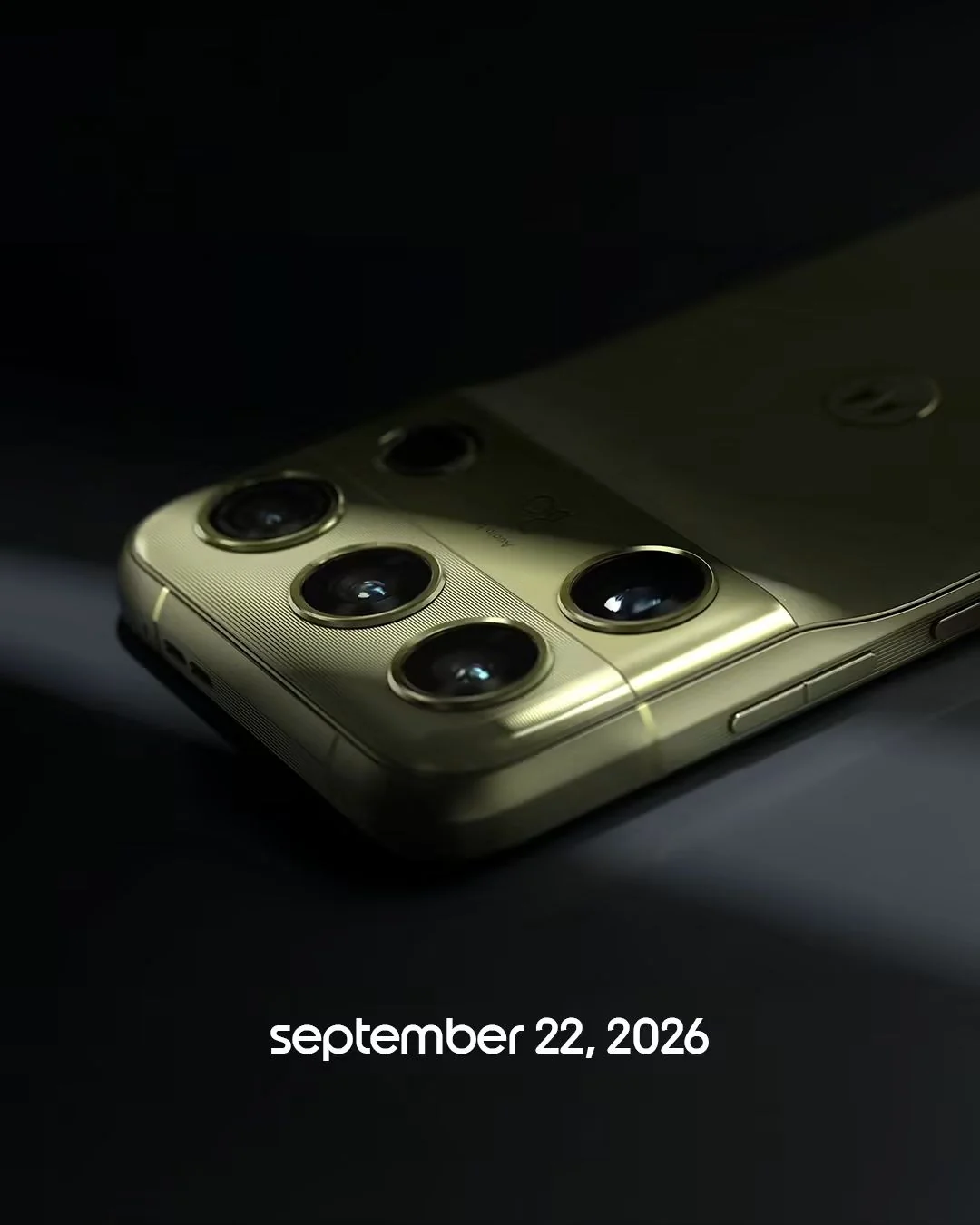

The Motorola Signature 27 is shaping up to be one of Motorola’s most ambitious smartphones in years. Unveiled at Qualcomm’s Snapdragon Summit in September 2026, the new flagship introduces a combination of next-generation processing power, premium materials, advanced artificial intelligence, long-term software support, high-end photography hardware, and a new audio partnership with Bang & Olufsen.
Unlike many Motorola smartphones that focus on the mid-range and foldable segments, the Signature 27 is positioned firmly in the ultra-premium flagship category. Motorola describes it as its most advanced smartphone yet, and the hardware announced so far explains why the company is making such a strong statement.
Table of Contents
One of the biggest highlights is Qualcomm’s Snapdragon 8 Elite Extreme Gen 6 mobile platform, which makes the Signature 27 one of the earliest smartphones announced around Qualcomm’s newest flagship silicon. Motorola is also introducing its ArcticMesh thermal system, a 200MP periscope telephoto camera, a 50MP Sony LYTIA 910 main camera, AI-powered video processing, and Audio by Bang & Olufsen.
The phone is expected to reach global markets later in 2026, with Motorola’s US website pointing to November availability. However, Motorola has not yet announced the official price or every specification.
For prospective buyers, that makes the Motorola Signature 27 particularly interesting. It is not simply an incremental update to the original Motorola Signature. Instead, it represents a more serious attempt by Motorola to compete at the very top of the smartphone market.
Motorola Signature 27 at a Glance
The Signature 27 is the second-generation member of Motorola’s premium Signature family. Its name also introduces a new naming approach in which the final two digits represent the upcoming year.
The confirmed highlights include:
- Snapdragon 8 Elite Extreme Gen 6 mobile platform
- 50MP Sony LYTIA 910 main camera
- 200MP periscope telephoto camera
- Motorola ArcticMesh cooling system
- Audio by Bang & Olufsen
- Google Gemini integration
- AI-powered video enhancement
- Seven years of operating system upgrades
- Up to seven years of security updates
- Aluminum construction
- Ceramic and brushed-aluminum camera housing
- Pantone Coal Smoke and Pantone Capulet Olive finishes
- Global availability planned for later in 2026
Motorola has not yet published the complete retail specification sheet, meaning details such as the exact battery capacity, storage configurations, display resolution, charging speeds, and final camera specifications should not be treated as officially confirmed unless Motorola announces them.
A New Direction for Motorola’s Signature Series
The original Motorola Signature, introduced in early 2026, represented Motorola’s move toward a more premium conventional smartphone. It combined a thin body, a 6.8-inch display, Snapdragon 8 Gen 5 processing, a 5,200mAh silicon-carbon battery, 90W charging, and a triple-camera system.
The Signature 27 takes the concept considerably further.
Instead of simply upgrading the processor and cameras, Motorola appears to be using the new generation as an opportunity to establish a recognizable premium identity. The device has a distinctive camera housing, specialized exterior textures, premium materials, advanced cooling, long software support, and a new relationship with Bang & Olufsen.
The result is a smartphone designed to compete not only on specifications but also on craftsmanship, photography, entertainment, artificial intelligence, and long-term ownership.
Design and Build Quality
Design is one of the areas where Motorola is deliberately separating the Signature 27 from more conventional smartphones.
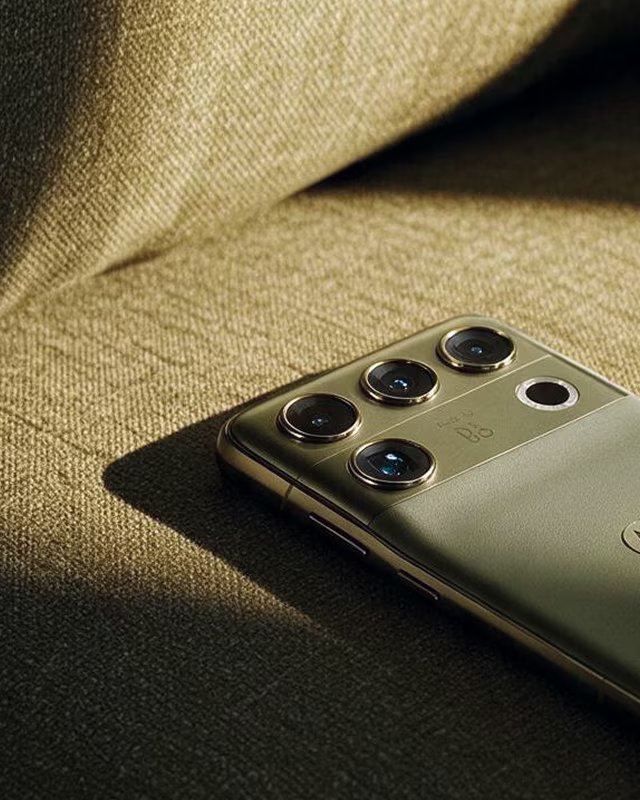
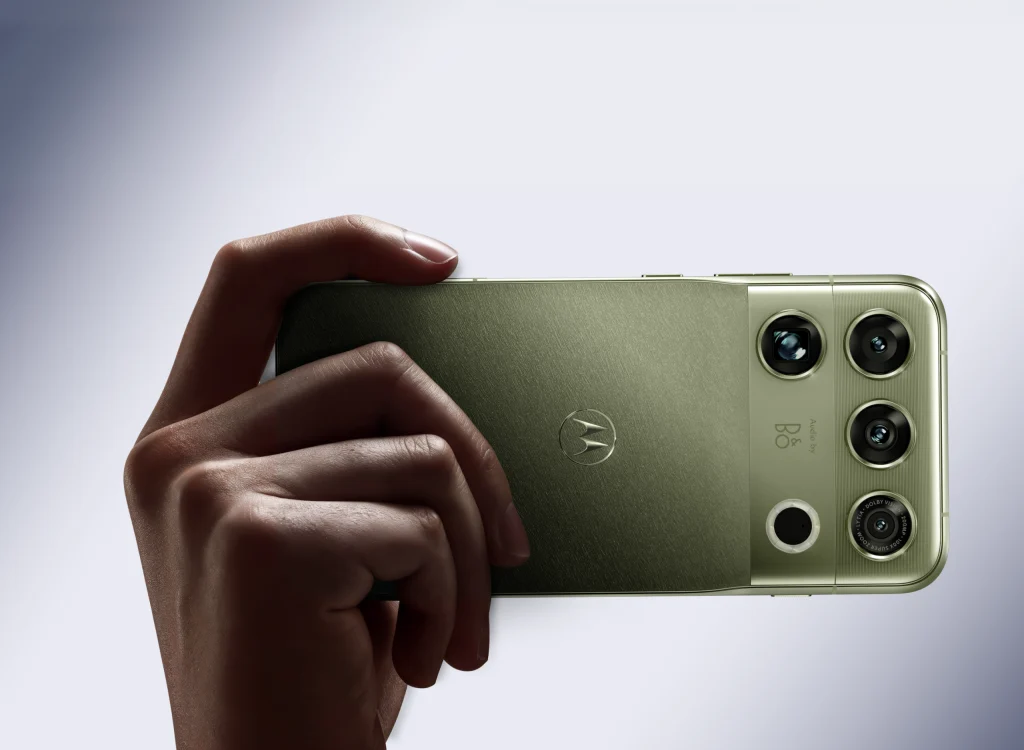
The phone features an aluminum silhouette with contoured edges. Motorola has combined the metal frame with a camera housing that uses ceramic and brushed aluminum, giving the rear of the phone a more distinctive appearance.
The company is also introducing two finishes.
Pantone Coal Smoke
The Coal Smoke version uses what Motorola calls a Tactical Weave finish. The texture takes inspiration from automotive engineering and performance-oriented materials.
Beyond appearance, the textured surface is intended to improve grip and give the phone a more tactile character.
This approach is notable because premium smartphones increasingly rely on glass surfaces. While glass can look sophisticated, textured materials can provide a different experience in the hand and potentially reduce the slippery feel associated with smooth glass.
Pantone Capulet Olive
The second finish is Capulet Olive. It uses a brushed, textile-inspired treatment that gives the phone a softer visual identity.
Motorola describes the finish as being inspired by fashion and interior design. Rather than making the phone look like a traditional industrial gadget, the company is attempting to make the Signature 27 resemble a premium lifestyle product.
That design strategy fits the broader Signature branding.
Display Experience
Motorola has not yet released the complete official display specification sheet for the Signature 27.
Several third-party specification databases have listed a 6.8-inch OLED or AMOLED panel with a high refresh rate, with 165Hz frequently appearing in preliminary listings. However, these details should be treated as provisional until Motorola publishes the complete specifications.
The original Motorola Signature already used a 6.8-inch Extreme AMOLED display with a 165Hz refresh rate, so a similar display philosophy would make sense for the successor.
A high-refresh-rate panel can provide smoother scrolling, animations, supported gaming, and general interface movement. For a premium phone powered by Qualcomm’s newest flagship processor, a high-refresh-rate display would also help make the device feel responsive.
The display will likely be an important component of the overall Signature 27 experience, especially for gaming, streaming, photography, and AI-assisted content creation.
However, buyers should wait for official information regarding resolution, peak brightness, HDR certification, LTPO technology, touch sampling, and display protection before treating third-party specification lists as final.
Snapdragon 8 Elite Extreme Gen 6 Performance
The processor is arguably the biggest technical story surrounding the Motorola Signature 27.
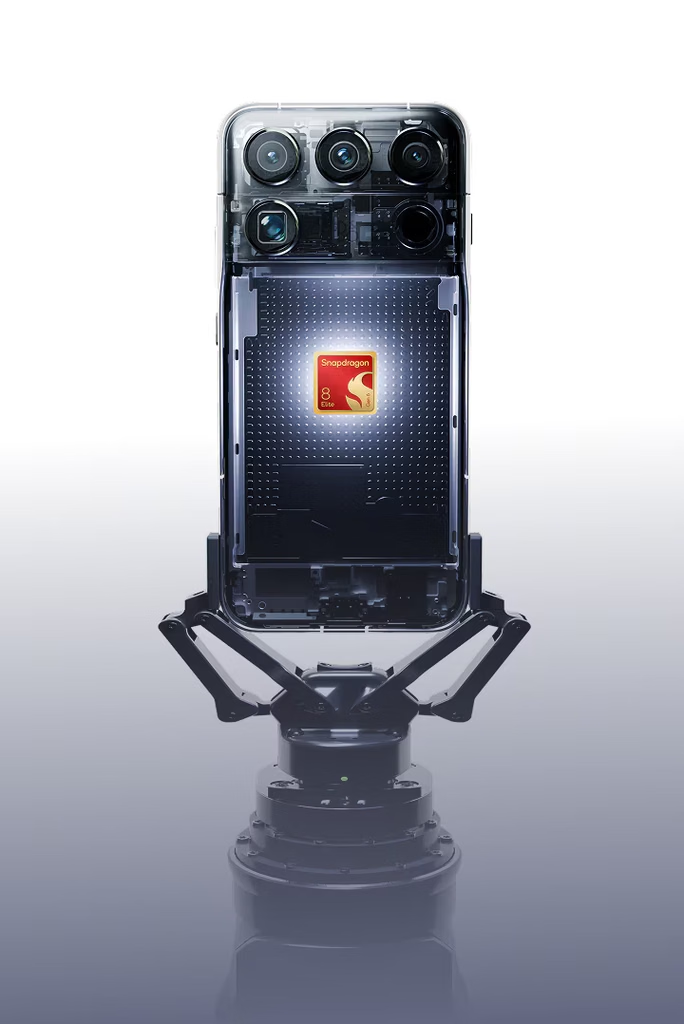
Motorola has confirmed that the phone uses Qualcomm’s Snapdragon 8 Elite Extreme Gen 6 mobile platform.
This is a new generation of Qualcomm flagship silicon designed around high-performance computing, artificial intelligence, graphics processing, connectivity, and energy efficiency.
For Motorola, adopting the platform gives the Signature 27 a much stronger position in the premium Android market.
Everyday Performance
For everyday users, the processor should provide considerable headroom.
Applications such as web browsers, social media, productivity software, photo editors, messaging applications, and video services should have access to substantially more processing power than necessary for ordinary tasks.
That extra performance becomes more important as smartphones increasingly use AI features locally.
Instead of relying entirely on cloud servers, modern flagship phones can perform certain AI operations directly on the device. This can improve response times and allow some functionality to work without continuously sending information to remote servers.

Gaming
Gaming is another major use case.
A flagship Snapdragon platform is designed to handle demanding 3D games, high frame rates, sophisticated graphics, and extended gaming sessions.
The Signature 27’s cooling system becomes particularly important here because raw processing power is only useful if the phone can sustain it.
A smartphone can deliver extremely high peak performance for a short period, but sustained workloads can generate heat. As temperatures increase, processors can reduce performance to protect themselves.
Motorola is therefore placing considerable emphasis on thermal management.
ArcticMesh Cooling Technology
Motorola’s ArcticMesh cooling system is designed to keep the Signature 27 performing under sustained workloads.
The system combines several technologies, including diamond-infused thermal gel, liquid metal, copper mesh, and a redesigned three-dimensional vapor chamber.
Motorola says the redesigned vapor chamber is 40% larger than the previous generation.
The objective is straightforward: move heat away from the processor more efficiently.
This matters because modern flagship smartphones are increasingly expected to perform tasks that were once associated with laptops and desktop computers.
Those workloads include:
- High-end gaming
- Generative AI
- Video recording
- Video editing
- Image processing
- Extended streaming
- Multitasking
- On-device AI processing
Cooling will therefore be a significant part of the Signature 27’s performance story.
It is also an area where benchmark results alone may not tell the entire story. Sustained performance over 20, 30, or 60 minutes can be more meaningful for demanding users than a short peak benchmark.
Camera System
The camera system is another defining feature of the Motorola Signature 27.
Motorola has confirmed two particularly important components: a 50MP Sony LYTIA 910 main camera and a 200MP periscope telephoto camera.
That combination gives the Signature 27 a different photographic identity from smartphones that rely heavily on a high-megapixel main sensor while offering a comparatively modest telephoto camera.
50MP Sony LYTIA 910 Main Camera
The 50MP Sony LYTIA 910 sensor is designed to serve as the primary camera.
Sony’s LYTIA family focuses on modern mobile imaging, particularly image quality in challenging lighting environments.
Motorola is also combining the sensor with its Video Enhancement Engine.
The system is intended to analyze scenes during recording and adjust elements such as color, exposure, highlights, and shadows.
The goal is to make video footage more consistent when lighting conditions change.
This could be particularly useful for:
- Concert videos
- Nighttime recordings
- Sunset photography
- Indoor events
- Moving subjects
- Scenes with strong contrast
Motorola also says the camera system uses Qualcomm image stabilization technology together with 3.5-degree optical image stabilization hardware.
The combination is intended to produce smoother handheld video and photography.
200MP Periscope Telephoto Camera
Perhaps the most unusual camera component is the 200MP periscope telephoto camera.
Rather than simply using 200MP resolution for the main camera, Motorola is putting that enormous pixel count into the telephoto system.
A periscope camera uses folded optical architecture to create additional physical distance between the lens elements and the image sensor without requiring an extremely thick smartphone body.
This allows manufacturers to provide longer optical zoom capabilities within a relatively slim phone.
Motorola is also promoting Super Zoom Pro, which can reach up to 100x using generative AI.
The important distinction is that 100x should not be interpreted as equivalent to 100x optical zoom. At very high magnifications, computational processing becomes increasingly important.
Still, the combination of high-resolution hardware and computational photography could make the Signature 27 particularly interesting for photographing distant subjects.
Potential use cases include:
- Wildlife
- Sports
- Architecture
- Landscapes
- Concert stages
- Travel photography
- Distant signs and details
The real-world quality of the 100x mode will ultimately need to be evaluated in hands-on testing.
Artificial Intelligence Features
Artificial intelligence is deeply integrated into the Signature 27.
The phone uses the processing capabilities of the Snapdragon platform alongside Motorola’s own software and Google’s Gemini ecosystem.
Motorola highlights Google Gemini as a major part of the experience.
Gemini can assist with tasks ranging from information discovery to planning and content creation, depending on the supported applications, languages, and regional availability.
The Signature 27 also introduces additional AI-oriented capabilities such as Gemini Omni and Lyria-based creative features.
This reflects a broader transformation in smartphones.
Instead of AI simply being a camera enhancement tool, manufacturers are increasingly treating it as an interface layer that can understand user intent and interact with different applications.
For users, that could eventually mean fewer manual steps when completing common tasks.
AI Video Enhancement
Video is another area where Motorola is applying artificial intelligence.
The Video Enhancement Engine analyzes scenes while recording and attempts to improve color, exposure, highlights, shadows, and overall consistency.
This is important because video presents a more difficult computational problem than individual photographs.
A photo can be processed after it is captured. Video requires continuous processing while multiple frames are being recorded.
The Signature 27 therefore depends on both its imaging hardware and the processing power of the Snapdragon platform.
If Motorola’s implementation performs as intended, the system could help produce more consistent video when lighting changes rapidly.
Audio by Bang & Olufsen
The Motorola Signature 27 is also significant for audio.
It is the first Motorola smartphone to feature Audio by Bang & Olufsen, following Motorola’s multi-year partnership with the Danish audio company.
Bang & Olufsen has a long history in premium audio equipment, and the collaboration gives Motorola another way to distinguish the Signature family from conventional smartphones.
The partnership involves audio tuning and design expertise.
For consumers, the most important question will ultimately be how the speakers sound in real-world use.
A premium audio partnership can improve speaker tuning, spatial presentation, clarity, and balance, but the final experience depends on the acoustic hardware as well as software tuning.
The Signature 27 is clearly being positioned as an entertainment-oriented flagship, where audio complements its display, cameras, and performance.
Software and Android Updates
Long-term software support is becoming increasingly important when buying an expensive smartphone.
Motorola has confirmed that the Signature 27 will receive seven years of operating system upgrades and up to seven years of security updates, starting from the global launch date.
This is a major commitment because software support determines how long a phone remains current and secure.
A smartphone that receives regular operating system updates can potentially remain useful for many years without requiring replacement simply because its software has become outdated.
The exact timing and availability of individual features can still vary by market, carrier, and model.
Battery and Charging
Battery specifications have not been fully confirmed by Motorola at the time of the Signature 27 unveiling.
Several third-party databases have reported capacities around 6,000mAh and 90W wired charging, with some also listing wireless charging.
However, these figures should be treated as preliminary until Motorola publishes the official retail specification sheet.
The original Motorola Signature used a 5,200mAh silicon-carbon battery and 90W wired charging, so a larger battery in the Signature 27 would be a logical upgrade.
Battery capacity is only one part of battery life, however.
Power efficiency also depends on the processor, display technology, software optimization, modem efficiency, camera processing, network conditions, and user behavior.
The Snapdragon 8 Elite Extreme Gen 6 platform and Motorola’s thermal management system will therefore play an important role in determining real-world endurance.
Connectivity
As a modern flagship smartphone, the Signature 27 is expected to support advanced cellular and wireless connectivity.
Motorola has emphasized improved connectivity as one of the benefits of the new Snapdragon platform.
The company has also discussed multiple antennas working together to support faster connectivity and cloud-based AI experiences.
Final regional specifications, including supported 5G bands and wireless standards, can vary by market.
This is particularly important for buyers in international markets because a phone sold in one region may not support every frequency band used by local operators.
Consumers should therefore check the official regional specification sheet before purchasing an imported model.
Storage and RAM
Motorola has not yet provided a definitive global list of storage and RAM configurations.
Some third-party databases have suggested configurations ranging from 12GB or 16GB of RAM to 256GB, 512GB, or 1TB of storage.
These listings are not yet sufficient to establish the final retail configurations.
If Motorola does offer a 1TB model, it would be particularly attractive to users who record large amounts of high-resolution video.
High-capacity storage is increasingly useful because 4K and 8K video files can consume storage rapidly.
Expected Price of the Motorola Signature 27
Motorola has not announced the official price of the Signature 27.
This is one of the most important pieces of information still missing.
The original Motorola Signature launched in Europe at around the €999 level for its 16GB/512GB configuration, providing some context for where Motorola positioned the first-generation device.
However, it would be premature to assume that the Signature 27 will use the same pricing.
The new Snapdragon platform, camera hardware, cooling system, premium materials, Bang & Olufsen partnership, and long software-support commitment could all influence the final price.
Unofficial prices circulating online should therefore be treated cautiously.
Motorola Signature 27 Release Date and Availability
Motorola has confirmed that the Signature 27 will reach markets worldwide later in 2026.
The company’s US website currently indicates that more information is coming in November, while Motorola has also opened registration for interested customers.
The exact retail release date has not yet been announced.
Availability may also differ between countries.
Motorola Signature 27 vs the Original Motorola Signature
The Signature 27 represents a substantial evolution of the original Signature concept.
The first-generation Signature focused on slimness, premium materials, a high-refresh-rate display, a large battery, fast charging, a capable Snapdragon processor, and long-term software support.
The Signature 27 pushes further toward ultra-premium territory.
Its biggest upgrades include the Snapdragon 8 Elite Extreme Gen 6 platform, the 200MP periscope telephoto camera, Arctic Mesh cooling, AI video processing, and Audio by Bang & Olufsen.
The naming strategy has also changed.
The number “27” represents the upcoming year, establishing a system Motorola says it intends to use for future generations of the Signature family.
Who Is the Motorola Signature 27 For?
The Signature 27 is clearly aimed at users who want a high-end Android smartphone with an emphasis on performance and premium design.
It could appeal to:
Mobile Photographers
The 200MP periscope telephoto camera makes the phone particularly interesting for people who regularly photograph distant subjects.
Content Creators
The combination of a high-end processor, advanced video processing, powerful cameras, and large potential storage configurations could make the phone useful for mobile video production.
Gamers
The Snapdragon flagship platform and ArcticMesh cooling system are designed for demanding workloads, making gaming one of the phone’s major potential strengths.
AI Enthusiasts
Users interested in on-device AI and generative features will benefit from the new Snapdragon platform and Motorola’s integration with Google Gemini.
Long-Term Smartphone Owners
Seven years of operating system upgrades and security support make the phone particularly relevant to buyers who intend to keep their smartphone for many years.
Premium Smartphone Buyers
The aluminum construction, distinctive finishes, ceramic camera housing, and Bang & Olufsen audio partnership position the phone as a luxury-oriented flagship rather than a conventional value-focused Motorola handset.
What Remains Unknown
Despite the extensive unveiling, several important details remain unavailable.
These include:
- Official global pricing
- Exact launch date
- Complete display specifications
- Full RAM and storage configurations
- Exact battery capacity
- Official charging specifications
- Complete rear-camera specifications
- Detailed front-camera specifications
- Regional 5G band support
- Full water and dust resistance certification
- Exact dimensions and weight
- Availability by individual country
This is why buyers should be careful when reading unofficial specification pages.
A large number of websites have already published complete-looking specification tables, but some of those tables combine confirmed information with leaks or estimates.
The official Motorola information should take priority until the final retail specifications are published.
Is the Motorola Signature 27 a True Flagship?
On paper, the Signature 27 has many characteristics associated with modern flagship smartphones.
It uses Qualcomm’s newest premium Snapdragon platform, features advanced camera hardware, introduces a sophisticated cooling system, offers premium construction, incorporates a luxury audio partnership, and promises seven years of software support.
Those features indicate that Motorola is targeting the highest segment of the Android smartphone market.
The most interesting aspect is that Motorola is not relying on a single specification.
Instead, the Signature 27 combines performance, photography, artificial intelligence, audio, design, and long-term software support into one product.
That makes the phone important for Motorola’s broader smartphone strategy.
Frequently Asked Questions About Motorola Signature 27
When was the Motorola Signature 27 announced?
Motorola unveiled the Signature 27 at Qualcomm’s Snapdragon Summit on September 22, 2026.
What processor does the Motorola Signature 27 use?
The phone uses Qualcomm’s Snapdragon 8 Elite Extreme Gen 6 mobile platform.
Does the Motorola Signature 27 have a 200MP camera?
Yes. Motorola has confirmed a 200MP periscope telephoto camera.
What is the main camera on the Motorola Signature 27?
The main camera uses a 50MP Sony LYTIA 910 sensor.
Does the Motorola Signature 27 support AI?
Yes. Motorola is integrating several AI capabilities, including Google Gemini, AI-powered video enhancement, and other Snapdragon-powered AI functions.
Does the Signature 27 have Google Gemini?
Yes. Motorola specifically highlights Google Gemini integration on the Signature 27.
How long will Motorola support the Signature 27?
Motorola says the phone will receive seven years of operating system upgrades and up to seven years of security updates beginning from its global launch date.
Does the Motorola Signature 27 have Bang & Olufsen audio?
Yes. It is Motorola’s first smartphone to feature Audio by Bang & Olufsen.
What colors will the Motorola Signature 27 have?
Motorola has announced Pantone Coal Smoke with a Tactical Weave finish and Pantone Capulet Olive with a brushed textile-inspired finish.
When will the Motorola Signature 27 be released?
Motorola says the phone will become available globally later in 2026. The US website currently points to November, but an exact retail date has not yet been announced.
How much will the Motorola Signature 27 cost?
Motorola has not announced official pricing yet.
Will the Motorola Signature 27 be available worldwide?
Motorola says the device is expected to reach markets worldwide later in 2026, although exact availability will vary by market.
Is the Motorola Signature 27 better than the original Motorola Signature?
The two phones target the same premium family, but the Signature 27 introduces newer flagship processing, a 200MP periscope telephoto camera, improved cooling, AI video technologies, and Bang & Olufsen audio. A complete comparison will be easier once Motorola publishes the final specifications and pricing.
Final Thoughts
The Motorola Signature 27 represents a significant step in Motorola’s attempt to establish itself more firmly in the premium smartphone market. Its combination of the Snapdragon 8 Elite Extreme Gen 6 processor, ArcticMesh cooling, 200MP periscope telephoto camera, 50MP Sony LYTIA 910 main sensor, AI-powered video processing, Bang & Olufsen audio, premium materials, and seven years of software support gives the phone an unusually ambitious specification profile.
The most important thing to remember at this stage is that the Signature 27 has only recently been unveiled. Motorola has confirmed the processor, major camera hardware, cooling technology, audio partnership, design finishes, AI capabilities, and software-support commitment, but it has not yet published every specification or its official price. Several online specification databases are already listing battery, display, memory, and charging details, but those figures should be considered provisional until Motorola confirms them.
For anyone following the 2026–2027 flagship smartphone market, the Motorola Signature 27 is therefore a device worth watching. Its success will ultimately depend not only on specifications but also on real-world camera quality, sustained performance, battery life, software experience, pricing, and availability. As Motorola releases the remaining information, the Signature 27 will become easier to evaluate against other premium Android smartphones.
Sources: Motorola


[…] personal data, applications, and digital security. Built on the Android Open Source Project (AOSP), GrapheneOS offers an alternative to conventional Android software, with additional security hardening, privacy […]