Motorola Razr Flex: Everything We Know About Motorola’s Rumoured Wide Foldable Phone, Specifications, Design and Launch Timeline

Motorola appears to be preparing another major addition to its growing foldable smartphone portfolio. Following the company’s expansion into book-style foldable phones, new reports suggest that Motorola is developing a more compact, wide-format foldable device that could compete with Samsung’s Galaxy Z Fold series, Apple’s iPhone Duo and other premium foldable smartphones.
According to a report from AndroidHeadlines, Motorola’s upcoming wide foldable is internally known as the Motorola Razr Flex, while its development codename is reportedly Parker. The device is expected to introduce a shorter, wider design compared with conventional book-style foldables, potentially making it easier to use with one hand while providing a spacious landscape-oriented display when unfolded.
Table of Contents
The latest leaks suggest that Motorola could equip the Razr Flex with a 6.92-inch folding OLED display, a 4.97-inch external screen, a 165Hz refresh rate, a Snapdragon 8-series processor, dual 50MP rear cameras and a 5,000mAh battery. The reported hardware points towards a foldable designed to balance portability, multimedia performance and battery capacity.

Perhaps most interestingly, Motorola could be preparing to introduce the phone in December 2026, giving it a potential place among the final major smartphone releases of the year.
However, it is important to remember that the Razr Flex has not yet received a complete official product announcement. The specifications discussed in this article are based on leaks, industry reporting, preliminary design information and reported Motorola teasers. Motorola could change some specifications, the retail name, the release date or the availability of the device before launch.
Motorola Razr Flex: Key Rumoured Specifications at a Glance
| Specification | Reported details |
|---|---|
| Product name | Motorola Razr Flex, not officially confirmed as the final retail name |
| Internal codename | Parker |
| Form factor | Wide, book-style foldable smartphone |
| Inner display | 6.92-inch OLED folding display |
| Inner resolution | 2,364 x 1,728 pixels, according to some reports |
| Inner refresh rate | Up to 165Hz |
| Cover display | 4.97-inch OLED display |
| Cover resolution | 1,736 x 1,140 pixels |
| Processor | Qualcomm Snapdragon 8 Gen 5 family; exact final chipset requires confirmation |
| RAM | 12GB reportedly |
| Storage | 256GB reportedly, with other configurations unconfirmed |
| Main camera | 50MP reportedly |
| Ultra-wide camera | 50MP reportedly |
| Front cameras | Two 32MP cameras, one for each display, according to leaks |
| Battery | 5,000mAh dual-cell battery reportedly |
| Wireless charging | 25W Qi2 reportedly |
| Folded dimensions | 110 x 76 x 12.6mm |
| Unfolded dimensions | 110 x 149 x 5.8mm |
| Weight | Approximately 215 grams reportedly |
| Durability | IP48 and IP49 ratings reported; official certification details pending |
| Operating system | Android 17 reportedly |
| Expected launch | Mid-December 2026, according to recent leaks |
| Colours | PANTONE Coriander and PANTONE Dark Botanical Garden reportedly |
| Official price | Not announced |
What Is the Motorola Razr Flex?
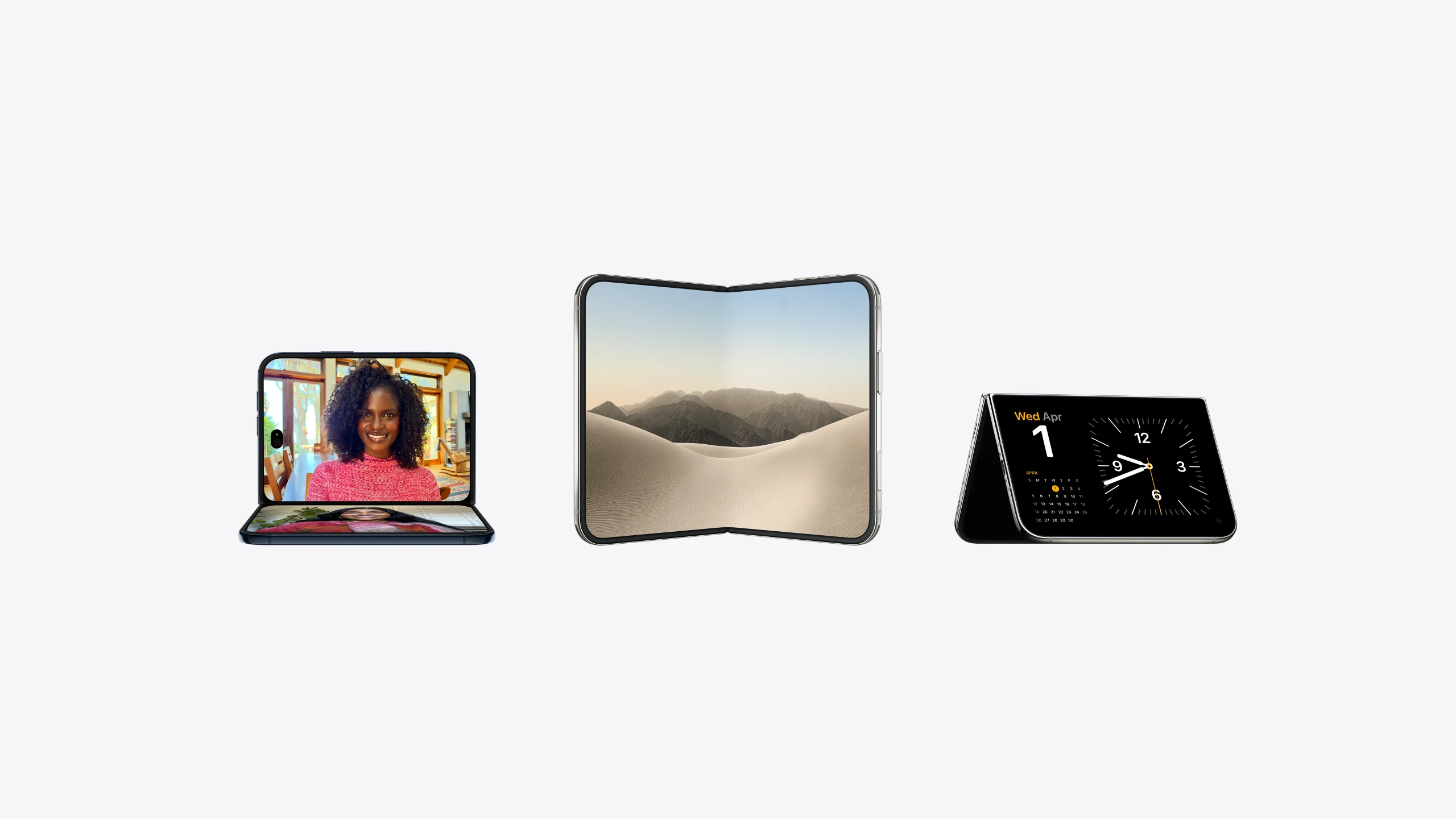
The Motorola Razr Flex is the reported name of Motorola’s upcoming wide-format foldable smartphone. Unlike the familiar clamshell Razr phones, which fold vertically into compact devices, or traditional book-style foldables, which generally have taller and narrower proportions, the Razr Flex is expected to use a wider design that opens into a landscape-oriented screen.
This approach is becoming increasingly relevant as smartphone manufacturers explore different ways of making foldable devices more useful for everyday tasks.
Traditional book-style foldables are designed to resemble a regular smartphone when closed and a small tablet when opened. They typically provide large internal displays suitable for reading, gaming, multitasking, video editing and productivity applications.
The Motorola Razr Flex could pursue a slightly different approach. Its reported 4.97-inch cover display and 6.92-inch internal display suggest a more compact device with a relatively wide screen rather than a tall, tablet-like design.
According to the reports, the phone is being developed under the codename Parker. The Razr Flex name is reportedly used internally, and it remains unclear whether Motorola will retain that name when the device reaches the market.
The company has already established the Razr name through its clamshell foldables. Extending the brand to a wider folding phone would allow Motorola to create a recognisable family of foldable products covering different form factors.
The Razr Flex would also arrive after Motorola’s entry into the conventional book-style foldable category with the Razr Fold. This means the company could have multiple foldable designs aimed at consumers who want different screen sizes, dimensions and usage experiences.
Motorola’s First Wide Foldable: Why the Design Matters
The foldable smartphone market has largely developed around two major designs. The first is the flip-style phone, which folds into a smaller square-shaped device. The second is the book-style foldable, which opens sideways to provide a larger internal display.

The Razr Flex reportedly combines elements of the second category with a more compact, wider design.
A shorter and wider foldable smartphone
One of the most distinctive aspects of the rumoured Razr Flex is its physical proportions. According to the leaked measurements, the device could measure 110mm wide and 149mm tall when unfolded.
For comparison, conventional book-style foldables often have taller internal displays that resemble small tablets in portrait orientation. Motorola’s proposed design would instead create a wider landscape-oriented workspace.
This could be useful for watching films, browsing websites, using split-screen applications and playing games that benefit from additional horizontal screen space.
A wider design could also make the external screen more practical for typing, messaging and reading. However, the reported cover display is relatively small, so the actual usability will depend heavily on Motorola’s software optimisation and the layout of its keyboard and applications.
A possible alternative to conventional foldables
Samsung’s Galaxy Z Fold family has traditionally focused on delivering a large internal display alongside a conventional external smartphone screen. Apple’s reported iPhone Duo and other emerging wide foldables are also expected to compete in this category.
Motorola’s strategy could be to offer a smaller overall footprint while maintaining the core benefits of a foldable screen.
Instead of making the internal display as large as possible, Motorola may be prioritising portability and a more manageable width. This would give the Razr Flex a different identity from larger, more tablet-like foldable smartphones.
Whether this approach succeeds will depend on how comfortably the phone can be used when folded and whether its smaller internal display provides enough room for productivity and entertainment.
Motorola Razr Flex Design and Build Quality
The latest reports describe the Motorola Razr Flex as a compact but relatively thick foldable phone. Leaked physical mock-ups and unofficial renders have provided an early indication of its proportions, although these materials should not be treated as final production hardware.
The device is reportedly designed with rounded edges, a wide outer screen and a rear camera module containing two large camera rings.
Reported dimensions and weight
The leaked dimensions are among the most detailed pieces of information currently available about the device.
- Unfolded: 110 x 149 x 5.8mm.
- Folded: 110 x 76 x 12.6mm.
- Weight: Approximately 215 grams.
These measurements suggest that the Razr Flex could be relatively thin when unfolded, but noticeably thicker than several competing foldables when closed.
At 12.6mm, the folded device would have a more substantial profile than many conventional premium smartphones. That could make it less pocket-friendly than thinner foldables, although its relatively short height could help compensate for the extra thickness.
The reported weight of 215 grams would place it in the same general weight category as many premium smartphones, rather than making it exceptionally heavy for a foldable.
It would reportedly weigh more than the Galaxy Z Fold 8, which has been reported at approximately 201 grams, but less than some larger foldable devices.
These comparisons remain dependent on the final specifications of competing products and the accuracy of the leaked measurements.
Rounded edges and a distinctive camera module
Unofficial design material suggests that Motorola could use rounded corners and edges similar to the company’s existing Razr devices.
The rear camera system is expected to include two large circular camera elements inside a horizontal pill-shaped module. This would give the phone a recognisable appearance while separating it visually from foldables that use larger rectangular camera islands.
However, leaked renders are not equivalent to official product images. Some of the concept images circulating online are based on sketches, assumptions and Motorola’s existing design language rather than confirmed manufacturing designs.
Details such as the precise hinge shape, camera placement, materials, button arrangement and available finishes could therefore change before the official launch.
Motorola Razr Flex Display: 6.92-Inch OLED Screen With 165Hz Refresh Rate
The display could be one of the most important selling points of the Motorola Razr Flex. Recent reports indicate that Motorola is developing a 6.92-inch OLED internal display with a refresh rate of up to 165Hz.
That would give the phone a faster refresh rate than the 120Hz panels commonly found on premium foldable smartphones.
6.92-inch internal folding OLED display
The leaked inner screen is reportedly a 6.92-inch OLED panel with a resolution of 2,364 x 1,728 pixels. Some reports have presented the resolution figures in a different order, but they describe the same general display specification.
OLED technology is particularly useful for foldable phones because it allows manufacturers to create thin, flexible display panels with individually illuminated pixels.
Potential benefits include high contrast, deep blacks, vibrant colours and the ability to support an always-on display without illuminating the entire panel.
However, the display’s real-world performance will depend on its brightness, colour calibration, touch response, crease visibility and durability. These details have not been comprehensively confirmed.
165Hz refresh rate and smoother scrolling
The reported 165Hz refresh rate could make the Razr Flex attractive to consumers who value smooth animations and responsive interactions.
A 165Hz panel can refresh up to 165 times per second, compared with 120 times per second for a 120Hz display. In supported applications, this can produce smoother scrolling, more fluid animations and a more responsive visual experience.
Gaming is another potential benefit. Games that support higher frame rates could take advantage of the faster panel, although performance will also depend on the processor, GPU, cooling system and game optimisation.
It is important to distinguish between display refresh rate and game frame rate. A 165Hz screen does not guarantee that every game will run at 165 frames per second.
Motorola would also need to balance the display’s refresh rate against power consumption. A high-refresh-rate OLED panel can use more energy when operating at its maximum frequency, making adaptive refresh-rate technology particularly useful.
HDR support and multimedia performance
Some reports indicate that the internal display could support HDR10, HDR10+ and Dolby Vision.
If confirmed, these formats could improve supported video content by providing a wider range of brightness levels and more detailed highlights and shadows.
Dolby Vision and HDR10+ use dynamic metadata to adjust picture presentation across scenes, while HDR10 provides a more conventional HDR format.
For users who watch films, television shows and streaming content on their phones, these features could make the Razr Flex a useful portable entertainment device.
Nevertheless, HDR format support alone does not guarantee excellent picture quality. Peak brightness, colour accuracy, panel calibration and application support will all influence the viewing experience.
4.97-inch external display
The cover screen is reportedly a 4.97-inch OLED display with a resolution of 1,736 x 1,140 pixels.
This would be smaller than the external screens found on some competing wide foldables. Motorola appears to be prioritising a relatively compact folded design instead of maximising the size of the outer screen.
The external display could be used for messaging, notifications, calls, navigation, quick settings and other everyday smartphone functions.
Its usefulness will depend on whether Motorola allows applications to run fully on the cover screen or limits users to selected widgets and simplified interactions.
A practical cover display should support comfortable typing, app switching, camera previews and access to important settings without requiring the user to unfold the phone constantly.
Motorola has not yet confirmed which applications will be supported or how its cover-screen interface will differ from that of its existing Razr devices.
Snapdragon Processor, RAM and Storage
The Motorola Razr Flex is expected to use a Qualcomm Snapdragon 8-series processor. AndroidHeadlines’ reported specifications, as summarised by several technology publications, point towards the Snapdragon 8 Gen 5 family.
However, there is some inconsistency in how secondary reports identify the processor. Some coverage refers to Snapdragon 8 Gen 5, while other reports mention Snapdragon 8 Elite Gen 5. The exact commercial processor designation should therefore be treated as unconfirmed until Motorola publishes the official specifications.
Snapdragon 8-series chipset
A Snapdragon 8-series processor would place the Razr Flex in Qualcomm’s higher-performance mobile chipset category.
Depending on the final chip, the device could deliver substantial processing power for multitasking, demanding Android applications, gaming, computational photography and on-device artificial intelligence features.
Foldable smartphones need to manage more than conventional smartphone workloads. Their larger screens make multitasking, split-screen applications and complex user interfaces more important.
A capable processor could help Motorola deliver responsive application switching and smooth animations while running several applications simultaneously.
However, actual performance cannot be determined from the processor name alone. Cooling design, sustained power limits, software optimisation and thermal management will also affect performance.
Motorola has not confirmed benchmark results, GPU specifications, AI processing capabilities or the final processor configuration for the rumoured phone.
12GB RAM and 256GB storage
The leaked configuration reportedly includes 12GB of RAM and 256GB of internal storage.
For a premium foldable device, 12GB of RAM could provide sufficient capacity for many multitasking scenarios, particularly when combined with Android’s memory management and Motorola’s software optimisations.
Users could potentially switch between productivity applications, browser tabs, social media platforms and entertainment services without repeatedly reloading applications.
The reported 256GB storage configuration would provide space for applications, documents, photographs, downloaded videos and offline content.
Some reports suggest that 256GB may be the only storage option, but this has not been confirmed. Motorola could offer additional configurations, such as 512GB, depending on its launch strategy and regional markets.
Expandable storage support has also not been confirmed. Consumers should not assume that the phone will include a microSD card slot simply because some Motorola smartphones support expandable storage.
Motorola Razr Flex Camera System: Dual 50MP Rear Cameras
Camera hardware could be another important aspect of Motorola’s wide foldable. According to the reported specifications, the phone could feature two 50MP rear cameras and two 32MP selfie cameras.
This would give Motorola a relatively straightforward camera system focused on a main camera, an ultra-wide camera and separate front-facing cameras for the two display configurations.
50MP primary camera
The primary rear camera is reportedly a 50MP sensor. A high-resolution camera can capture detailed images, although megapixel count alone does not determine image quality.
Sensor size, lens quality, optical image stabilisation, aperture, image processing and computational photography all influence the final photograph.
Motorola could use the primary camera for everyday photography, portraits, low-light images and video recording.
One reported feature is up to 30x digital zoom. This should not be confused with optical zoom. Digital zoom enlarges or crops an image using software, and image quality can decline significantly at higher magnification levels.
There is currently no confirmed information about the primary camera’s sensor model, aperture, optical stabilisation system or supported video resolutions.
50MP ultra-wide camera
The second rear camera is reportedly a 50MP ultra-wide sensor.
An ultra-wide camera allows users to capture a broader field of view, making it useful for landscape photography, architecture, group photographs and indoor scenes.
It can also provide a different perspective for creative photography and video recording.
However, the actual quality of the ultra-wide camera will depend on its optics and sensor performance. A 50MP sensor does not necessarily guarantee the same image quality as the primary camera.
Motorola has not confirmed whether the ultra-wide camera will support autofocus, macro photography or advanced stabilisation.
Two 32MP front cameras
The Razr Flex is also rumoured to include two 32MP selfie cameras, with one positioned for use with the external display and another for the internal screen.
This configuration could allow users to take selfies and participate in video calls regardless of whether the device is folded or unfolded.
Foldable phones have a particular advantage in photography because their flexible design can allow users to position the phone at different angles without requiring a separate tripod.
Motorola could build on this flexibility by offering camera modes that use the external display as a preview screen when taking photographs with the rear cameras.
Users might also be able to capture higher-quality selfies using the main rear camera while viewing the composition on the cover display.
Nevertheless, the two 32MP front cameras are based on leaks, and their final sensors, video capabilities and software features remain unconfirmed.
Battery Life and Charging: A Reported 5,000mAh Battery
Battery capacity could be one of the most interesting aspects of the Motorola Razr Flex. The device is rumoured to feature a 5,000mAh dual-cell battery, which would be relatively substantial for a compact foldable smartphone.
Foldable phones have to accommodate two display sections, a hinge, flexible screen components and other specialised hardware. These requirements can make battery design more challenging than in conventional smartphones.
5,000mAh dual-cell battery
According to the leak, Motorola could use a 5,000mAh battery divided into two cells.
Dual-cell battery arrangements are common in foldable devices because the battery can be distributed across the two halves of the phone, allowing manufacturers to make better use of the available internal space.
A 5,000mAh capacity could provide a useful foundation for everyday battery life, particularly given the reportedly smaller display sizes compared with some competing foldables.
However, battery capacity alone does not determine how long a phone will last. Display brightness, refresh rate, processor efficiency, mobile signal strength, camera usage and background applications can all affect battery consumption.
It is too early to make reliable claims about the Razr Flex’s screen-on time, video playback duration or full-day battery performance.
25W Qi2 wireless charging
The Razr Flex is also rumoured to support 25W wireless charging using the Qi2 standard.
Qi2 is designed to improve wireless charging through standardised technology and magnetic alignment in compatible implementations.
Magnetic alignment can help position a compatible charger more consistently, potentially improving charging reliability and reducing the likelihood of inefficient positioning.
However, the leaked specifications do not establish whether the Razr Flex will have built-in magnets or whether magnetic alignment will require a compatible case or accessory.
Motorola has not officially confirmed the phone’s wireless charging implementation, charging accessories or regional charging specifications.
Wired charging remains unconfirmed
Although 25W Qi2 wireless charging has been mentioned in reports, the maximum wired charging speed has not been established with the same level of confidence.
It would be premature to assume that the device will support a particular wired charging speed or include a charging adapter in the box.
Motorola could reveal the wired charging specifications, battery protection features and charging accessories during its official launch presentation.
Android 17 and Software Features
Several reports indicate that the Motorola Razr Flex could launch with Android 17.
If the phone arrives in December 2026 as rumoured, Android 17 would be a plausible operating system for a new premium smartphone introduced during that period.
However, Motorola has not officially confirmed the operating system version, software support policy or update schedule for the Razr Flex.
Foldable multitasking
The large internal display could allow Motorola to develop a more sophisticated multitasking experience.
Potential features include split-screen applications, floating windows, drag-and-drop interactions and improved application resizing.
These features are particularly useful on foldables because users can take advantage of the larger display to work with multiple applications simultaneously.
For example, a user might keep a browser open on one side of the screen while taking notes on the other, or watch a video while responding to messages.
Motorola’s implementation will be important because Android applications do not always adapt perfectly to unusual screen ratios and foldable layouts.
Artificial intelligence and productivity tools
Motorola could also integrate AI-powered features into the Razr Flex through its software and processor platform.
Possible applications include AI-assisted photography, image editing, voice transcription, writing assistance, translation and contextual productivity tools.
However, no complete list of Razr Flex-specific AI features has been confirmed. The presence of a Snapdragon 8-series processor would not, by itself, guarantee support for every advanced AI capability.
Some AI functions may depend on cloud services, regional availability, language support, subscriptions or specific hardware requirements.
Connectivity, SIM Support and Durability
The leaked specifications suggest that Motorola could equip the Razr Flex with modern connectivity features designed for a premium foldable smartphone.
Wi-Fi 7 and Bluetooth 6.0
Reports indicate that the phone could support Wi-Fi 7 and Bluetooth 6.0.
Wi-Fi 7 offers improvements in wireless networking, including higher potential throughput and more efficient use of compatible wireless networks.
However, actual speeds depend on the router, network configuration, supported frequency bands and local regulations.
Bluetooth 6.0 could provide support for modern wireless accessories, including headphones, speakers, watches and other compatible devices.
Motorola has not confirmed the complete list of supported wireless bands, regional network configurations or the final Bluetooth implementation.
Physical SIM card slot
Some reports indicate that the Razr Flex could retain a physical SIM card slot.
This would be useful for consumers who prefer traditional SIM cards, travel frequently or want to move their existing mobile subscription between compatible devices.
However, the availability of physical SIM support and eSIM functionality may vary by market. Motorola has not yet published a complete regional SIM specification.
IP48 and IP49 durability ratings
The Razr Flex is rumoured to carry IP48 and IP49 ratings.
Ingress Protection ratings describe how well a device is protected against the entry of solid particles and water under specified testing conditions.
The first digit in an IP rating relates to protection against solid objects, while the second digit relates to water resistance.
An IP48 rating generally indicates protection against specified solid objects and resistance to immersion under defined laboratory conditions. An IP49 rating relates to protection against high-pressure, high-temperature water jets under the relevant testing standard.
These ratings should not be interpreted as a guarantee that a foldable phone is waterproof in every situation.
Water resistance can be affected by wear, damage, repairs, exposure to chemicals and the condition of seals around the hinge and other components.
The reported ratings have not yet been confirmed by Motorola, and the final device could carry different certifications depending on the market.
Motorola Razr Flex Colours and Expected Design Finishes
The latest leaks mention two possible colour options for the Motorola Razr Flex:
- PANTONE Coriander: A colour option reportedly associated with a green-toned finish.
- PANTONE Dark Botanical Garden: A darker botanical-inspired finish reportedly planned for the device.
Motorola has a history of using Pantone-branded colours across selected smartphone models, and the Razr family has previously included distinctive colour treatments.
These reported finishes could help distinguish the Razr Flex from competing foldables that rely primarily on black, silver and other conventional colours.
However, the names have not been officially confirmed by Motorola. The company could introduce additional colours, change the names or offer different finishes in specific regions.
It is also unclear whether the reported colours refer to the complete device, the rear panel material or a combination of materials and finishes.
Motorola Razr Flex vs Samsung Galaxy Z Fold 8 and Apple iPhone Duo
The Motorola Razr Flex is expected to enter a competitive foldable smartphone market. Samsung has continued developing its Galaxy Z Fold range, while Apple has reportedly entered the category with the iPhone Duo.
The Xiaomi 18 Fold is another reported competitor in the wide foldable category.
Motorola’s potential advantage could be its compact footprint, high refresh rate and relatively large battery. Its principal compromises may involve display size and folded thickness.
| Feature | Motorola Razr Flex | Samsung Galaxy Z Fold 8 | Apple iPhone Duo |
|---|---|---|---|
| Inner display | 6.92 inches reportedly | Approximately 7.6 inches reported | Approximately 7.6 inches reported |
| Cover display | 4.97 inches reportedly | Approximately 5.5 inches reported | Approximately 5.4 inches reported |
| Refresh rate | 165Hz reportedly | Depends on confirmed configuration | Depends on confirmed configuration |
| Battery | 5,000mAh reportedly | Approximately 4,800mAh reported | Official configuration and regional details should be checked |
| Folded thickness | 12.6mm reportedly | Approximately 9.7mm reported | Approximately 11.3mm reported |
| Weight | 215g reportedly | Approximately 201g reported | Approximately 214g reported |
Note: The table reflects reported specifications and should not be treated as a definitive laboratory comparison. Device configurations, measurements and market versions may differ.
Razr Flex versus Galaxy Z Fold 8
Samsung’s Galaxy Z Fold 8 is expected to compete directly with Motorola’s wide foldable through a larger internal screen and a thinner folded profile.
The Motorola phone, on the other hand, could offer a 165Hz refresh rate and a 5,000mAh battery in a smaller overall form factor.
For consumers, the practical differences will involve how much screen space is available for multitasking, how comfortable the device is to carry, and how well the software uses the internal display.
Motorola’s reported 12.6mm folded thickness would be a notable compromise compared with the thinner Samsung design. A larger battery may help offset some of the disadvantages of the thicker body, but real-world endurance will need to be tested.
Razr Flex versus iPhone Duo
Apple’s iPhone Duo is another reported competitor in the wide foldable category.
The two devices are expected to share the general idea of a foldable smartphone that opens into a wide internal screen.
Motorola’s rumoured smaller displays and Android software could distinguish it from Apple’s ecosystem-focused approach.
The Razr Flex may also target consumers who want a foldable phone but prefer a different price category from Apple’s premium offering.
However, Motorola’s final pricing has not been announced, and the price difference cannot yet be established reliably.
Motorola Razr Flex Price: How Much Could It Cost?
One of the most important unanswered questions concerns the Motorola Razr Flex’s retail price.
As of the latest reports, Motorola has not officially announced the price of the device. No confirmed price has been provided for the United States, Europe, Asia or other markets.
It would therefore be misleading to present a particular dollar amount as the phone’s confirmed retail price.
Could Motorola price it below Samsung and Apple?
Some technology reports suggest that Motorola could position the Razr Flex at a lower price than certain competing wide foldables.
This would be consistent with a strategy of offering a more compact foldable with a distinctive hardware configuration rather than competing solely on display size or premium materials.
However, a lower price remains a possibility rather than an established fact. The final price will depend on manufacturing costs, component selection, market positioning and regional taxes.
The reported Snapdragon processor, dual 50MP cameras, high-refresh-rate OLED display and 5,000mAh battery could place the phone in the premium smartphone category.
Motorola may offer different prices in different countries because of currency exchange rates, import duties, taxes, carrier agreements and local distribution arrangements.
Expected pricing in the United States
The United States is likely to be an important market for Motorola’s premium foldable portfolio.
Nevertheless, there is currently no confirmed US launch price for the Razr Flex. Consumers should wait for Motorola’s official announcement before relying on any specific price estimate.
The eventual US retail price may also differ between Motorola’s online store, authorised retailers and mobile carriers.
Expected pricing in Europe
European pricing has not been confirmed either.
If Motorola launches the Razr Flex in Europe, its recommended retail price could vary between countries because of VAT, import costs and regional distribution arrangements.
It is also unclear whether the device will receive a simultaneous launch across major European markets or become available in selected countries first.
Expected pricing in Asia
Asia could be an important region for Motorola’s foldable strategy, particularly in markets where consumers are increasingly interested in premium smartphones and alternative foldable designs.
However, there is no verified retail price or complete country-by-country availability list for the Razr Flex.
China, India and other Asian markets may receive different configurations or launch dates if Motorola decides to introduce the device regionally.
Until official pricing is released, any local currency conversion would be speculative.
Motorola Razr Flex Launch Date: Expected December 2026 Release Timeline
The launch timeline is one of the most closely watched aspects of the Motorola Razr Flex rumours.
Recent reports citing AndroidHeadlines indicate that Motorola could be preparing the device for a mid-December 2026 launch.
If accurate, this would place the Razr Flex among the final major foldable smartphone launches of the year.
However, a leaked launch window is not the same as an official launch date. Motorola has not confirmed a specific announcement day, preorder schedule or retail availability date.
September 2026: Early design leaks and Motorola teasers
September 2026 has seen a significant increase in reports about Motorola’s wide foldable.
Earlier in the month, leaked sketches reportedly showed a new wide-format foldable phone being developed by Motorola.
These sketches suggested that the company was exploring a form factor similar to the newer wide foldables entering the market.
On September 9, Motorola also published a social media teaser during Apple’s product announcement event.
According to Android Authority’s coverage, the teaser included a brief glimpse of an unannounced wide foldable device. The video showed a wider design and what appeared to be a horizontal camera module.
The teaser was significant because it provided an official indication that Motorola was preparing another foldable device, even though it did not reveal the final name or full specifications.
Late September 2026: Internal name and specifications leak
By late September, AndroidHeadlines had reportedly obtained more detailed information about the phone’s specifications and internal naming.
The Razr Flex name began appearing in technology reports, while Parker was identified as the development codename.
The reported specifications included the 6.92-inch internal display, 4.97-inch cover screen, Snapdragon 8-series processor, 5,000mAh battery and dual 50MP rear cameras.
Physical mock-ups and unofficial renders also provided additional clues about the device’s dimensions and general design.
These reports represent a significant development compared with the earlier sketches, but they do not constitute an official Motorola product announcement.
October and November 2026: Possible announcement preparations
October and November could provide additional opportunities for Motorola to reveal information about the Razr Flex.
However, there is currently no verified announcement date for either month.
Motorola could publish further teasers, invite media organisations to a launch event, or introduce the phone through a regional announcement.
It is also possible that the company could remain silent until closer to the reported December launch window.
Consumers should therefore treat any claims about a specific October or November event as unconfirmed unless supported by a direct Motorola announcement.
Mid-December 2026: Reported launch window
The most specific current launch indication is mid-December 2026.
Several publications reporting on the AndroidHeadlines leak have repeated this timeframe.
If the schedule is accurate, Motorola could announce the phone in the first half of December and begin sales later in the month.
However, the announcement date, preorder period and first retail date may not be identical.
Motorola could also introduce the Razr Flex in selected markets first, with other countries receiving the device later.
There is no official confirmation that the phone will be available globally before the end of 2026.
| Timeline | Reported development | Confirmation status |
|---|---|---|
| Early September 2026 | Wide foldable design sketches circulate online | Reported leak |
| September 9, 2026 | Motorola teases a wide foldable in a social media video | Official teaser, but no complete product announcement |
| Late September 2026 | Razr Flex name, Parker codename and hardware details reported | Leak reported by AndroidHeadlines and other outlets |
| October-November 2026 | Possible additional teasers or launch preparations | Unconfirmed |
| Mid-December 2026 | Expected launch window | Reported rumour, not an official date |
| December 2026 or later | Potential regional retail availability | Unconfirmed |
Why Motorola Could Be Developing the Razr Flex
The reported development of the Razr Flex reflects a broader shift in the foldable smartphone industry.
For several years, manufacturers concentrated on refining the flip-style and book-style foldable categories. More recently, companies have begun exploring different proportions and display layouts to make foldables useful for a wider range of consumers.
Expanding the Razr brand
Motorola’s Razr branding has become closely associated with foldable smartphones.
By using the Razr name for multiple form factors, Motorola could create a product family that serves consumers with different preferences.
Clamshell Razr phones would continue to target users who want a compact device that folds vertically. The Razr Fold could address consumers who prefer a conventional book-style foldable.
The Razr Flex could occupy another category, offering a shorter and wider design intended to provide a different balance between portability and screen space.
Competing in a changing foldable market
The arrival of more wide-format foldables could increase competition in the premium smartphone market.
Samsung has continued to develop its book-style foldable portfolio, while Apple and other manufacturers are entering or expanding their presence in the category.
Motorola’s experience with foldable hinges, flexible displays and Razr software could provide a foundation for developing additional designs.
However, competing successfully will require more than distinctive hardware. Long-term software support, hinge durability, battery life, repairability and pricing will also matter to consumers.
What Remains Unconfirmed About the Motorola Razr Flex?
Despite the growing number of leaks, several important details remain unknown.
- Final retail name: Razr Flex is reportedly an internal name, and Motorola has not confirmed the final product branding.
- Processor designation: Reports differ between Snapdragon 8 Gen 5 and Snapdragon 8 Elite Gen 5 naming. The exact chip requires official confirmation.
- Official launch date: Mid-December 2026 is a reported window, not a confirmed announcement date.
- Retail pricing: No official US, European or Asian pricing has been announced.
- Storage options: The reported 256GB configuration may not be the only version.
- Wired charging: The maximum wired charging speed remains unconfirmed.
- Display durability: Details about the hinge mechanism, protective layers and crease resistance have not been officially disclosed.
- Camera sensors: The reported megapixel counts are available, but the sensor models, optical stabilisation and complete video specifications remain unknown.
- Software support: The number of Android upgrades and security update duration have not been confirmed.
- Regional availability: It is not yet known which countries will receive the phone or whether the launch will be global.
- Repairability: There is no confirmed information about screen replacement costs, hinge repairs or battery replacement procedures.
These details will be particularly important for consumers considering a premium foldable smartphone. Foldable displays and hinges can be expensive to repair, making warranty coverage and long-term software support significant purchasing considerations.
Frequently Asked Questions About the Motorola Razr Flex
What is the Motorola Razr Flex?
The Motorola Razr Flex is the reported name of Motorola’s upcoming wide, book-style foldable smartphone. It is reportedly being developed under the codename Parker and could feature a shorter, wider design than conventional book-style foldables.
When will the Motorola Razr Flex launch?
Recent leaks point towards a mid-December 2026 launch. Motorola has not officially confirmed the announcement date or retail availability schedule, so the launch timeline could change.
What is the expected price of the Motorola Razr Flex?
The official price has not been announced. Some reports suggest that Motorola may position the device below certain competing premium foldables, but there is no verified retail price for the United States, Europe or Asia.
What processor will the Motorola Razr Flex use?
The phone is expected to use a Qualcomm Snapdragon 8-series processor. Reports have referred to Snapdragon 8 Gen 5 and Snapdragon 8 Elite Gen 5, but the exact commercial processor designation has not been officially confirmed.
How big is the Motorola Razr Flex display?
The internal folding OLED display is reportedly 6.92 inches, while the external cover display could measure 4.97 inches. The inner screen is also rumoured to support a 165Hz refresh rate.
Does the Motorola Razr Flex have a good camera system?
Leaked specifications indicate a 50MP main camera, a 50MP ultra-wide camera and two 32MP front-facing cameras. Actual camera quality will depend on the sensors, optics, image processing and software features, which have not yet been fully confirmed.
How big is the Motorola Razr Flex battery?
The device is rumoured to include a 5,000mAh dual-cell battery and 25W Qi2 wireless charging. Motorola has not confirmed the battery specifications or maximum wired charging speed.
Will the Motorola Razr Flex support Android 17?
Reports suggest that Android 17 could be the operating system at launch. The official software version and Motorola’s long-term update commitment remain unconfirmed.
Will the Motorola Razr Flex be available in the United States?
US availability has not been officially confirmed. Motorola’s existing presence in the US smartphone market makes it a possible launch region, but consumers should wait for an official announcement regarding retail partners and availability.
What colours will the Motorola Razr Flex come in?
The reported colour options are PANTONE Coriander and PANTONE Dark Botanical Garden. These finishes have not yet been confirmed by Motorola, and additional colours may be announced.
Is the Motorola Razr Flex waterproof?
The phone is rumoured to carry IP48 and IP49 ratings. These ratings describe protection under specific testing conditions and should not be interpreted as a guarantee of complete waterproofing.
Final Thoughts: Is the Motorola Razr Flex Worth Waiting For?
The Motorola Razr Flex could become an interesting addition to the foldable smartphone market if the leaked specifications prove accurate.
Its reported 6.92-inch OLED internal display, 165Hz refresh rate, 5,000mAh battery, dual 50MP rear cameras and Snapdragon 8-series processor suggest a device designed to provide premium hardware in a relatively compact foldable form.
Its most distinctive feature may be the wide, shorter design. Rather than simply competing with Samsung and Apple on screen size, Motorola appears to be exploring a different balance between portability, display proportions and everyday usability.
Nevertheless, the leaked dimensions suggest that the device could be thicker than some competing foldables. Its smaller screens may also limit its appeal to consumers who prioritise maximum display space for productivity.
The final price will be another important factor. If Motorola introduces the Razr Flex at a competitive price and provides reliable software support, it could attract consumers interested in trying a wide foldable without necessarily choosing the largest or most expensive device available.
For now, the most important development is the reported mid-December 2026 launch window. Motorola’s September teaser and the subsequent AndroidHeadlines leak suggest that the device is progressing towards a possible announcement, but the exact schedule remains uncertain.
Until Motorola publishes its official specifications, pricing and availability information, buyers should treat the Razr Flex as an upcoming rumoured product rather than a confirmed retail device. Further details about its processor, display quality, hinge durability, camera performance and software support will determine how it compares with other premium foldables.
Sources and Further Reading
This article is based on reported leaks and coverage from the following technology publications. The linked reports provide additional information about the Motorola Razr Flex, its rumoured specifications, design and possible launch timeline.
- 9to5Google – Motorola’s wide Galaxy Z Fold 8 competitor might be very tiny and called Razr Flex
- Android Central – Alleged Moto Razr Flex sounds like a wide fold, but smaller
- Android Authority – Motorola shows off its new wide foldable in a teaser
- Android Authority – Motorola’s wide Razr looks small, chunky, and powerful in detailed leaks
- GSMArena – Motorola’s wide foldable now has a name and its specs are out
- Notebookcheck – Motorola’s wide foldable specifications leak
Disclaimer: The Motorola Razr Flex is a rumoured device at the time of writing. Specifications, pricing, product name, colours, launch dates and regional availability are based on leaks and third-party reporting and have not all been confirmed by Motorola. This article will require updating when official information becomes available.