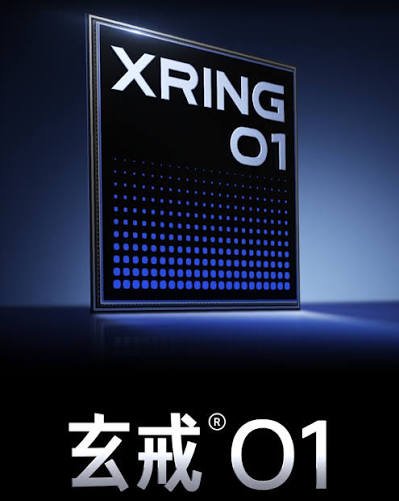

The Xiaomi XRING O1 is one of the most significant processors in Xiaomi’s recent history. Introduced in May 2025, it marked Xiaomi’s return to designing its own smartphone-class flagship silicon after years of relying primarily on chipmakers such as Qualcomm and MediaTek.

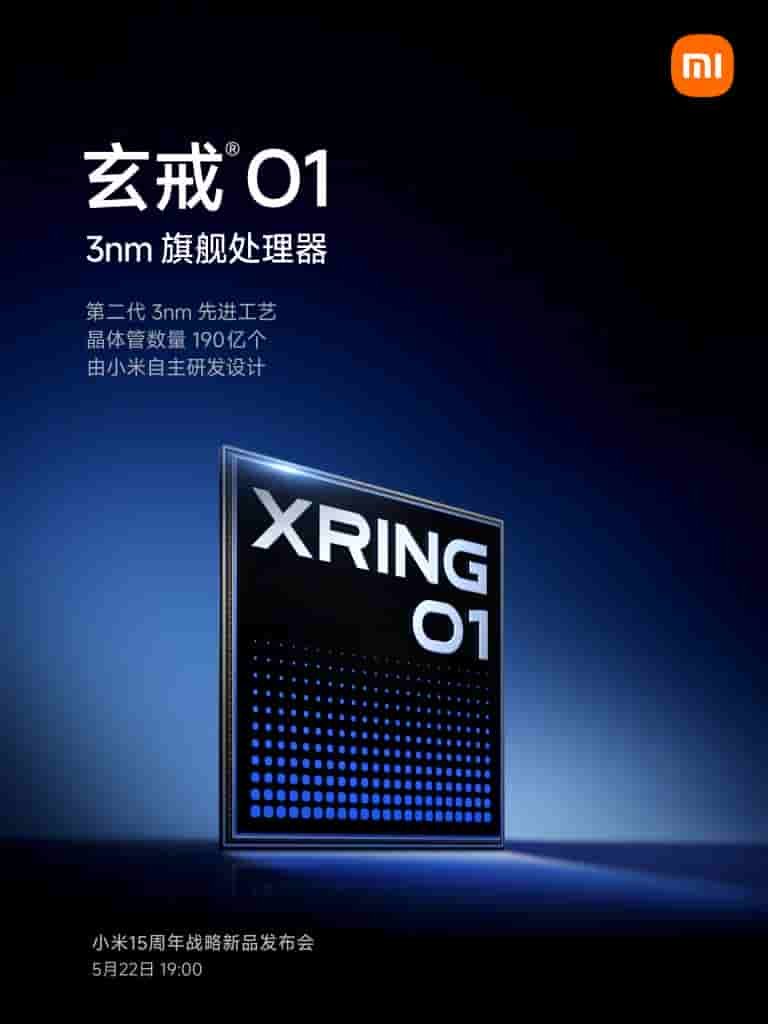
Rather than being another mid-range processor, XRING O1 was designed as a flagship system-on-chip (SoC) for high-end smartphones and tablets. Xiaomi built it using a second-generation 3nm manufacturing process and equipped it with a 10-core CPU, a 16-core Arm Immortalis-G925 GPU, a dedicated AI NPU and an in-house image signal processor.
Table of Contents
The chip debuted in the Chinese-market Xiaomi 15S Pro and Xiaomi Pad 7 Ultra, making it the foundation of Xiaomi’s renewed push toward greater hardware and software integration. Xiaomi says its development represents a long-term investment in core technologies rather than simply an attempt to produce another smartphone processor.
What Is Xiaomi XRING O1?
XRING O1 is Xiaomi’s first modern flagship smartphone and tablet processor developed in-house. It is a complete SoC rather than simply a CPU.
The processor combines:
- A 10-core ARM-based CPU
- 16-core Immortalis-G925 GPU
- Dedicated 6-core NPU
- Xiaomi’s fourth-generation ISP
- 19 billion transistors
- Second-generation 3nm manufacturing technology
- LPDDR5T memory support
- UFS 4.1 storage support
- Wi-Fi 7 connectivity
- USB-C 3.2 Gen 2 support
Xiaomi officially announced the processor on May 22, 2025, describing it as its first flagship SoC manufactured using a second-generation 3nm process. The company also reported an official AnTuTu V10 score exceeding three million.
The XRING O1 is particularly important because Xiaomi is attempting to control more of the technology stack inside its premium devices. Instead of depending entirely on an external processor supplier, Xiaomi can optimize the processor, operating system, AI functions, camera processing and power management around its own hardware.
Xiaomi XRING O1 Specifications
| Feature | Xiaomi XRING O1 |
|---|---|
| Manufacturer | Xiaomi |
| Announcement | May 22, 2025 |
| Manufacturing process | Second-generation 3nm |
| Transistors | 19 billion |
| CPU | 10-core ARM CPU |
| Prime cores | 2 × Cortex-X925 up to 3.9GHz |
| Performance cores | 4 × Cortex-A725 up to 3.4GHz |
| Additional cores | 2 × Cortex-A725 + 2 × Cortex-A520 |
| GPU | Arm Immortalis-G925 |
| GPU cores | 16 |
| NPU | 6-core |
| AI performance | Up to 44 TOPS |
| ISP | Xiaomi fourth-generation ISP |
| Memory | LPDDR5T |
| Storage | UFS 4.1 |
| Wi-Fi | Wi-Fi 7 |
| USB | USB-C 3.2 Gen 2 |
| Architecture | 64-bit ARM |
| Initial devices | Xiaomi 15S Pro, Xiaomi Pad 7 Ultra |
The exact implementation can vary between devices. For example, Xiaomi’s smartphone and tablet products can use different cooling configurations and performance profiles even when they are powered by the same underlying SoC.
3nm Manufacturing Technology
One of the biggest technical characteristics of XRING O1 is its 3nm manufacturing process.
Xiaomi states that the chip uses a second-generation 3nm process and contains approximately 19 billion transistors. A smaller manufacturing node allows chip designers to place more transistors into a smaller area while potentially improving performance and energy efficiency.
XRING O1 measures approximately 109 mm² according to Notebookcheck’s processor database.
The move to 3nm is particularly important for smartphones because performance is only one part of the equation. Modern flagship devices must balance CPU speed, graphics performance, AI processing, camera workloads and connectivity while operating from a relatively small battery.
A more advanced process can help manufacturers achieve this balance.
10-Core CPU Architecture
Unlike many smartphone processors that use eight CPU cores, XRING O1 uses a 10-core CPU configuration.
The architecture consists of four groups:
2 × Cortex-X925 Prime Cores
At the top of the hierarchy are two Arm Cortex-X925 cores clocked at up to 3.9GHz.
These are the processor’s highest-performance cores and are designed to handle demanding workloads such as:
- Gaming
- Photo processing
- Video editing
- AI workloads
- Heavy multitasking
- Complex web applications
- High-performance applications
The Cortex-X925 is part of Arm’s high-performance CPU generation and provides XRING O1 with a modern foundation for flagship-level processing.
4 × Cortex-A725 Performance Cores
Four Cortex-A725 cores can operate at up to 3.4GHz.
These cores provide additional performance without requiring every task to run on the two powerful Cortex-X925 cores.
This arrangement allows the operating system to distribute workloads according to their requirements.
2 × Lower-Clocked Cortex-A725 Cores
XRING O1 also includes two lower-clocked Cortex-A725 cores operating at around 1.9GHz.
These provide an intermediate performance layer between the high-performance cores and the efficiency-oriented cores.
2 × Cortex-A520 Efficiency Cores
Finally, two Cortex-A520 cores operate at approximately 1.8GHz.
These cores are designed for lighter workloads where maximum performance is unnecessary.
The complete configuration gives XRING O1 its unusual 10-core arrangement:
2 × Cortex-X925 + 4 × Cortex-A725 + 2 × Cortex-A725 + 2 × Cortex-A520.
CPU Performance
The CPU is one of the strongest parts of XRING O1.
Early benchmark results showed that the processor could compete with contemporary flagship platforms from Qualcomm and MediaTek. Notebookcheck’s later database measurements place the XRING O1 around the flagship tier, although exact performance varies according to device, cooling system, software version and benchmark version.
Geekbench 6 results recorded by Notebookcheck show an average single-core score of approximately 2,790 and an average multi-core score of approximately 8,970, based on tested XRING O1 devices.
Independent testing of the Xiaomi 15S Pro has also produced results around 3,000 points in Geekbench 6 single-core testing and more than 9,400 points in multi-core testing.
These figures demonstrate that Xiaomi’s first flagship SoC is not simply an experimental chip. It is capable of competing in the performance class occupied by leading Android processors.
XRING O1 GPU
Graphics processing is handled by a 16-core Arm Immortalis-G925 GPU.
The Immortalis family is Arm’s high-end GPU architecture and supports advanced graphics technologies designed for modern mobile gaming.
The GPU is responsible for:
- 3D gaming
- Hardware-accelerated graphics
- High-resolution interfaces
- Video processing
- GPU-accelerated applications
- Certain AI and compute workloads
Xiaomi’s official specifications identify the XRING O1 as having a 16-core Immortalis-G925 GPU.
However, actual graphics performance depends heavily on the device’s cooling system and software optimization.
Testing of the Xiaomi 15S Pro showed that XRING O1 could deliver flagship-level graphics performance, although some independent benchmarks placed it slightly behind the best Snapdragon 8 Elite and Dimensity 9400 implementations in GPU-specific workloads.
This distinction is important because processor performance should not be judged solely from CPU benchmark scores.
Gaming Performance
XRING O1 was designed to support demanding smartphone and tablet gaming.
The combination of Cortex-X925 CPU cores and Immortalis-G925 graphics provides enough processing power for modern high-end Android games.
Its gaming strengths include:
- High CPU performance
- High-end Arm GPU architecture
- Hardware ray-tracing capabilities associated with the Immortalis platform
- Advanced memory support
- Fast UFS storage
- Xiaomi’s thermal management
- High-refresh-rate display support on compatible devices
The actual gaming experience depends on the phone or tablet. A larger tablet can potentially sustain performance for longer because its chassis offers more space for heat dissipation.
Xiaomi has also developed software and thermal-management technologies around XRING O1 to help maintain performance during demanding workloads.
AI Performance
Artificial intelligence is another major component of XRING O1.
The processor contains a six-core NPU, with Xiaomi rating its AI performance at up to 44 TOPS.
The NPU is designed to accelerate AI calculations without forcing the CPU or GPU to handle every machine-learning operation.
Potential uses include:
- Generative AI
- Image recognition
- Voice processing
- AI writing
- Smart search
- Image enhancement
- Computational photography
- On-device AI features
- Language processing
This is increasingly important because modern smartphones are moving more AI workloads directly onto the device rather than sending every task to cloud servers.
Xiaomi’s Fourth-Generation ISP
Photography is another area where Xiaomi designed specialized silicon into XRING O1.
The SoC includes Xiaomi’s fourth-generation ISP, which handles image-processing workloads.
An ISP, or Image Signal Processor, is responsible for converting raw information captured by a camera sensor into usable photographs and video.
It can assist with:
- HDR processing
- Noise reduction
- Exposure control
- Color processing
- Computational photography
- Night photography
- Video processing
- AI-assisted image enhancement
Xiaomi says its fourth-generation ISP provides real-time HDR and AI noise-reduction capabilities.
This becomes particularly useful when Xiaomi combines the processor with high-end camera hardware and Leica imaging technologies.
Memory and Storage Support
XRING O1 supports modern high-speed memory and storage technologies.
Notebookcheck lists support for LPDDR5T memory and UFS 4.1 storage.
Fast memory is important because a flagship processor can become bottlenecked if it cannot receive data quickly enough.
Similarly, UFS 4.1 storage can improve:
- App loading
- Game loading
- File transfers
- Large photo and video operations
- System responsiveness
- Installation and update speeds
The combination makes XRING O1 suitable for premium smartphones and tablets with large RAM and storage configurations.
Connectivity
XRING O1 is also equipped for modern wireless and wired connectivity.
Wi-Fi 7
The processor supports Wi-Fi 7, providing compatible devices with access to newer high-speed wireless networking technologies.
Wi-Fi 7 can improve throughput, latency and network efficiency when paired with a compatible router.
USB-C
The SoC supports USB-C 3.2 Gen 2, with Notebookcheck listing theoretical data-transfer support of up to 10Gbps.
This is useful for:
- External storage
- High-speed file transfers
- Displays
- Accessories
- Professional workflows
XRING O1 and Power Efficiency
Flagship processors have to deliver high performance without destroying battery life.
Xiaomi therefore emphasized efficiency as part of XRING O1’s design.
The combination of the 3nm manufacturing process, heterogeneous CPU architecture, dedicated low-power processing and Xiaomi’s software optimization allows workloads to be distributed between different processing cores.
Light tasks can use lower-power cores while demanding workloads can be moved to the high-performance Cortex-X925 cores.
This approach is particularly important for tablets, where users may spend long periods browsing, watching videos, working or gaming.
XRING O1 Benchmark Performance
Benchmark results vary by device and test version, so they should be treated as measurements rather than absolute representations of everyday performance.
Notebookcheck’s current database shows XRING O1 averaging roughly:
| Benchmark | Approximate XRING O1 Result |
|---|---|
| Geekbench 6 Single-Core | 2,790 |
| Geekbench 6 Multi-Core | 8,970 |
| AnTuTu CPU | 620,000 |
| AnTuTu overall results | Around the 3-million class in Xiaomi’s official testing |
Xiaomi itself reported an AnTuTu V10 score of 3,004,137 during the processor’s launch. Independent sources have noted that manufacturer benchmark results should be treated cautiously because testing conditions can differ from standardized independent testing.
Independent benchmark results nevertheless show that XRING O1 belongs firmly in the flagship performance category.
XRING O1 vs Snapdragon 8 Elite
When XRING O1 was introduced, one of the most important comparisons was with Qualcomm’s Snapdragon 8 Elite.
Both processors were designed for premium Android devices, but their architectures differ.
XRING O1 uses a 10-core ARM CPU with two Cortex-X925 prime cores, whereas Snapdragon 8 Elite uses Qualcomm’s custom Oryon CPU architecture.
Early Geekbench testing showed XRING O1 reaching scores in the same general performance class as Snapdragon 8 Elite. Some independent tests put it ahead in particular workloads, while others showed Qualcomm maintaining an advantage depending on the device and benchmark.
The comparison therefore depends heavily on:
- CPU workload
- GPU workload
- Cooling
- Software optimization
- Benchmark version
- Sustained performance
- Power limits
Rather than being universally faster or slower, XRING O1 should be viewed as Xiaomi’s entry into the same flagship processor class.
XRING O1 vs MediaTek Dimensity 9400
MediaTek’s Dimensity 9400 was another major competitor when XRING O1 arrived.
Independent testing showed XRING O1 performing around the Dimensity 9400 class in CPU workloads. Notebookcheck’s analysis of the Xiaomi 15S Pro found CPU performance broadly competitive with flagship MediaTek and Qualcomm processors, while some GPU measurements showed the competing chips maintaining an advantage.
This makes XRING O1 particularly significant because Xiaomi achieved competitive flagship performance with its first modern in-house SoC.
Devices Powered by XRING O1
The processor initially appeared in two major Xiaomi products.
Xiaomi 15S Pro
The Xiaomi 15S Pro was the first smartphone to use XRING O1.
Xiaomi paired the processor with flagship hardware, a large battery and a high-end Leica camera system.
The device served as an important demonstration of how Xiaomi could combine its own processor with its HyperOS software and imaging technologies.
Xiaomi Pad 7 Ultra
The XRING O1 also powers the Xiaomi Pad 7 Ultra.
The tablet provides a larger environment for the processor and demonstrates that Xiaomi’s in-house silicon is not limited to smartphones.
The company’s subsequent use of XRING technology in newer devices has also demonstrated its intention to develop a broader chip platform rather than a single experimental processor.
Why XRING O1 Matters for Xiaomi
The importance of XRING O1 goes beyond benchmark numbers.
For Xiaomi, controlling the SoC can provide greater flexibility in designing future products.
A company that controls its own processor can potentially optimize:
- CPU performance
- GPU performance
- AI acceleration
- Camera processing
- Battery management
- Operating-system scheduling
- Thermal management
- Security features
This can make it easier to coordinate hardware and software development.
Xiaomi has stated that it has invested heavily in core technology development and that its XRING program represents a long-term commitment to semiconductor development. The company’s 2025 interim report said Xiaomi had formally unveiled XRING O1 as its first self-developed flagship processor in May 2025.
Is XRING O1 a True Flagship Processor?
Yes, based on its specifications and independent performance measurements, XRING O1 occupies the flagship smartphone/tablet SoC class.
It uses:
- A 3nm manufacturing process
- Cortex-X925 CPU cores
- Immortalis-G925 graphics
- A dedicated NPU
- A high-end ISP
- Fast memory support
- UFS 4.1
- Wi-Fi 7
Independent benchmarks also place it close to other leading Android flagship processors of its generation.
Its most important achievement, however, may be proving that Xiaomi can produce a competitive high-end SoC rather than simply matching a particular benchmark score.
XRING O1 and Xiaomi’s Future Chip Strategy
XRING O1 can be seen as the beginning of a broader Xiaomi semiconductor strategy.
The company previously experimented with mobile processors, including the Surge S1, but XRING O1 represents a much more ambitious attempt to compete at the flagship level.
Xiaomi’s investment in chip design could eventually allow it to integrate processors more deeply with its operating system, AI models, camera systems and connected-device ecosystem.
The processor is therefore significant not only for Xiaomi smartphones but also for tablets, AI devices, wearables and potentially other categories of connected hardware.
Frequently Asked Questions About XRING O1
What is Xiaomi XRING O1?
Xiaomi XRING O1 is Xiaomi’s first modern self-developed flagship smartphone and tablet SoC. It was officially introduced in May 2025 and uses a second-generation 3nm manufacturing process.
How many CPU cores does XRING O1 have?
XRING O1 has 10 CPU cores: two Cortex-X925 cores, four Cortex-A725 performance cores, two additional lower-clocked Cortex-A725 cores and two Cortex-A520 efficiency cores.
What GPU does XRING O1 use?
The processor uses an Arm Immortalis-G925 GPU with 16 cores according to Xiaomi’s official specifications.
Does XRING O1 support AI?
Yes. XRING O1 includes a six-core NPU with Xiaomi claiming up to 44 TOPS of AI processing performance.
Is XRING O1 made using 3nm technology?
Yes. Xiaomi says XRING O1 is manufactured using a second-generation 3nm process and contains approximately 19 billion transistors.
Which phones use XRING O1?
The processor debuted in the Xiaomi 15S Pro. It was also introduced in the Xiaomi Pad 7 Ultra tablet.
Is XRING O1 faster than Snapdragon 8 Elite?
Performance varies by workload and device. Independent testing has placed XRING O1 in the same general flagship class as Snapdragon 8 Elite, while individual CPU and GPU tests can favor either processor.
Does XRING O1 support Wi-Fi 7?
Yes. The processor supports Wi-Fi 7 as well as UFS 4.1 storage and USB-C 3.2 Gen 2 connectivity.
How powerful is XRING O1?
XRING O1 is a flagship-class mobile processor. Its 3nm fabrication, 10-core CPU, Immortalis-G925 GPU, dedicated NPU and high-speed memory/storage support give it enough performance for premium smartphones and tablets.
Final Thoughts on Xiaomi XRING O1
The Xiaomi XRING O1 represents a major step in Xiaomi’s semiconductor ambitions. Rather than producing a basic proprietary chip, Xiaomi entered the flagship SoC market with a 3nm processor featuring a 10-core CPU, 16-core Immortalis-G925 GPU, dedicated AI NPU and advanced image-processing hardware. Independent testing has confirmed that its performance is broadly competitive with leading flagship Android processors of its generation, although results vary by workload and device.
The most important aspect of XRING O1 may therefore not be its benchmark score. Its real significance is that Xiaomi has demonstrated the ability to design and deploy competitive high-end silicon across smartphones and tablets. As Xiaomi continues developing the XRING family, the O1 provides the technological foundation for deeper integration between the company’s processors, AI systems, cameras, HyperOS software and connected-device ecosystem.
Sources: Xiaomi’s official XRING O1 announcement and corporate reporting, Notebookcheck.