Kirin 9035 Processor: Specifications, Performance, AI, Gaming, Architecture and Everything You Need to Know

The Kirin 9035 is Huawei’s latest flagship smartphone processor designed for the company’s premium Mate lineup. The chip made its commercial debut inside the Huawei Mate 90 Pro, which launched in China on October 1, 2026.
Huawei positions the Kirin 9035 as a high-performance member of its new-generation Kirin family, sitting above the Kirin 9030 used by the standard Mate 90 and below the more advanced Kirin 9050-series chips used in the higher-end Mate 90 Pro Max and Ultimate Design models.
The Kirin 9035 is particularly significant because it represents another stage in Huawei’s effort to develop increasingly capable proprietary smartphone silicon. Rather than competing purely through CPU frequency, Huawei has emphasized the combination of the Kirin 9035, HarmonyOS 7, graphics acceleration, artificial intelligence and its broader hardware ecosystem.
Table of Contents
Huawei officially confirms the Kirin 9035 as the processor inside the Mate 90 Pro. The company also highlights hardware-level ray tracing capable of rendering up to 31 million rays per second under its specified test conditions. Huawei’s official specifications list 12GB or 16GB of RAM, storage configurations reaching 1TB, a 6,600mAh battery and up to 100W wired charging.
Kirin 9035 at a Glance
| Feature | Kirin 9035 |
|---|---|
| Manufacturer / platform | Huawei Kirin |
| First commercial smartphone | Huawei Mate 90 Pro |
| Launch date | October 1, 2026 |
| Operating system | HarmonyOS 7.0 |
| Processor class | Flagship smartphone SoC |
| RAM on Mate 90 Pro | 12GB or 16GB |
| Maximum Mate 90 Pro storage | 1TB |
| Hardware ray tracing | Supported |
| Huawei ray-tracing claim | Up to 31 million rays per second under specified conditions |
| Mate 90 Pro battery | 6,600mAh typical capacity |
| Wired charging | Up to 100W |
| Wireless charging | Up to 50W |
| Launch phone starting price | ¥6,999 in China |
Important: Huawei has confirmed the Kirin 9035 name and its use in the Mate 90 Pro, but it has not published a conventional public processor datasheet revealing every CPU core, clock speed, GPU architecture, transistor count or manufacturing-node detail. Some specifications circulating online therefore remain reported rather than officially confirmed.
What Is the Kirin 9035?
The Kirin 9035 is a flagship mobile system-on-chip, or SoC, developed for Huawei smartphones. Like other modern smartphone SoCs, it brings together multiple processing components that work as a single platform.
These components can include CPU processing resources, graphics processing, AI acceleration, memory management and communication-related technologies. The benefit of integrating these functions into one platform is that Huawei can optimize the interaction between the processor, operating system and other hardware.
The Kirin 9035’s first confirmed commercial application is the Huawei Mate 90 Pro. Huawei’s official Mate 90 Pro page explicitly identifies the processor as Kirin 9035 and markets the chip alongside HarmonyOS 7 as part of a vertically integrated hardware-and-software platform.
Huawei Mate 90 Pro and the Kirin 9035
The Mate 90 Pro is the smartphone that officially introduced the Kirin 9035.
Huawei’s specifications show that the phone has a 6.75-inch dual-layer OLED display with a 1-120Hz LTPO adaptive refresh rate, 2,832 × 1,280 resolution, 1.07 billion colours, a 1440Hz high-frequency PWM dimming system and a 300Hz touch sampling rate.
The phone is available with either 12GB or 16GB of RAM and 256GB, 512GB or 1TB of internal storage. Huawei does not provide microSD expansion on the Mate 90 Pro.
This hardware configuration gives the Kirin 9035 a substantial platform for multitasking, gaming, photography, AI processing and other demanding smartphone workloads.
Kirin 9035 CPU Performance
The CPU is one of the most important components of any smartphone processor because it handles general-purpose computing tasks.
Huawei has not publicly released a complete official CPU architecture table for the Kirin 9035. Consequently, claims about the exact number of cores, individual core architecture and maximum clock frequencies should be treated carefully unless they are backed by Huawei documentation.
What Huawei has confirmed is that the Kirin 9035 provides a performance upgrade for the Mate 90 Pro. The company describes the processor as delivering high-performance computing alongside HarmonyOS 7, while independent launch reporting cites Huawei’s comparison showing an 11% CPU improvement against the 12GB Mate 80 Pro configuration using the Kirin 9030.
The comparison is especially interesting because it demonstrates that Huawei is not treating the Kirin 9035 as simply a renamed processor. The company is positioning it as a new performance tier for the Mate 90 Pro.
Kirin 9035 GPU Performance
The graphics processor is another important component of the Kirin 9035 platform.
Huawei specifically promotes hardware-level ray tracing on the Mate 90 Pro. According to Huawei, the system can render up to 31 million rays per second under specified testing conditions. Huawei notes that its ray-tracing measurement was obtained using the game Wuthering Waves version 3.7 and that ray tracing is supported only in certain scenes.
That makes the Kirin 9035 particularly relevant to mobile gaming. Hardware ray tracing can improve the realism of reflections, shadows, lighting and other visual effects when games are optimized to use the technology.
What Is Hardware Ray Tracing?
Ray tracing is a rendering technique that simulates how light behaves within a virtual environment. Instead of relying exclusively on traditional approximations, ray-tracing calculations can trace the movement and interaction of virtual light rays.
The technique can produce more realistic reflections and lighting, but it is computationally expensive. Hardware acceleration is therefore important when attempting to implement ray tracing on a mobile device.
The Kirin 9035’s hardware-level ray-tracing capability is consequently one of the processor’s most notable gaming features.
Kirin 9035 Gaming Performance
The Kirin 9035 was designed to support demanding mobile workloads, and gaming is one of the clearest examples.
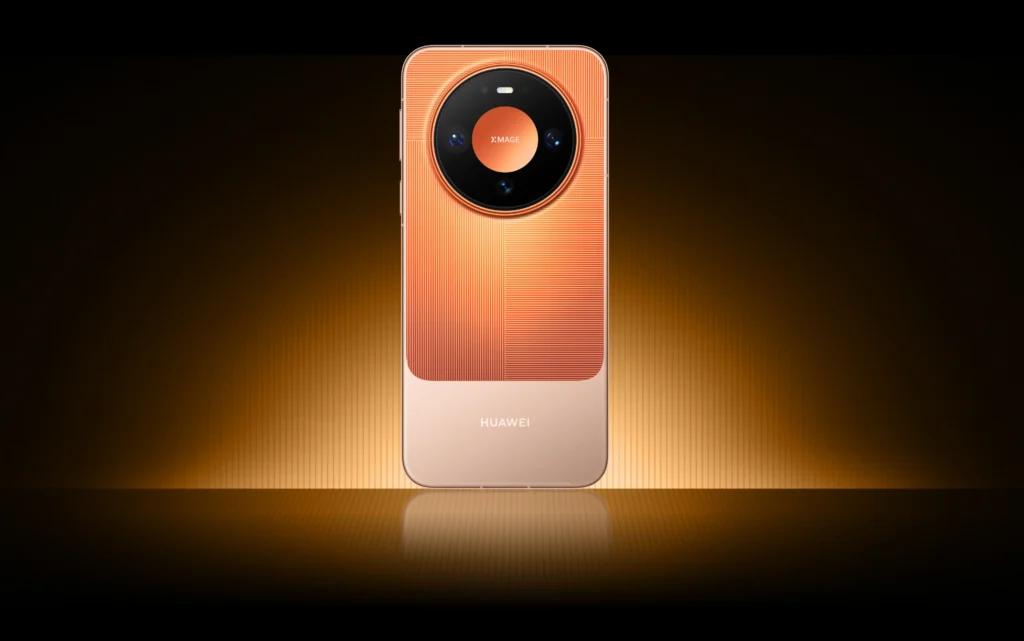
The Mate 90 Pro combines the processor’s graphics capabilities with a high-refresh-rate OLED display and a 300Hz touch sampling rate. The result is a hardware platform designed for games that require both graphics performance and fast touch response.
Huawei’s ray-tracing implementation adds another dimension to the gaming platform. Games that support the technology can use more sophisticated lighting effects, although actual results depend heavily on game optimization.
It is important to distinguish peak graphics performance from sustained gaming performance. Long gaming sessions can generate heat, and thermal management can influence how consistently a processor maintains high clock speeds.
Kirin 9035 and Artificial Intelligence
Artificial intelligence is another major focus of Huawei’s latest smartphone platform.
The Mate 90 Pro includes a range of HarmonyOS AI features, including Xiaoyi Help Me Remember, Xiaoyi Calls, Xiaoyi Triggered AI and the Xiaoyi Gallery Assistant. These functions combine software models with the phone’s local computing resources and cloud services where applicable.
The processor’s AI capabilities are especially important for image processing, voice recognition, intelligent organization and other computational tasks that can happen directly on the smartphone.
AI Photography
Modern smartphone cameras depend heavily on computational photography.
When a photograph is captured, the phone can process sensor information, combine multiple frames, improve dynamic range, reduce noise, optimize colour and apply other corrections before the final image is produced.
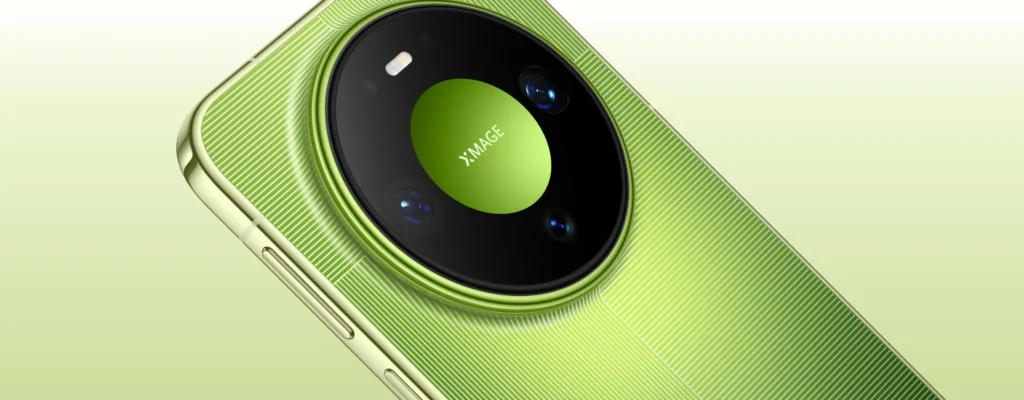
The Kirin 9035 operates alongside Huawei’s XMAGE imaging platform and third-generation Red Maple primary-colour camera technology in the Mate 90 Pro. Huawei says the Red Maple system is designed to improve colour reproduction, particularly for portrait photography.
Kirin 9035 and the Red Maple Camera System
The processor’s relationship with the camera system is an important part of the Mate 90 Pro experience.
The phone features a 50MP main camera with an f/1.4-f/4.0 variable aperture, optical image stabilization and an RYYB sensor. It also has a 40MP RYYB ultrawide camera and a 50MP RYYB telephoto/macro camera with optical stabilization. Huawei lists approximately 4x optical zoom.
All of these sensors produce large amounts of data that need to be processed quickly. The processor therefore contributes to the computational photography pipeline by helping transform raw sensor information into finished images and video.
Kirin 9035 and HarmonyOS 7
One of Huawei’s defining strategies is its integration of proprietary hardware with its own operating system.
The Mate 90 Pro runs HarmonyOS 7.0, and Huawei explicitly markets the Kirin 9035 and HarmonyOS 7 as a tightly integrated platform.
This integration allows Huawei to control both the hardware and software layers of its flagship smartphone ecosystem. In theory, this can allow the operating system to make more targeted decisions about processor resources, memory, graphics and AI workloads.
Huawei is also continuing to expand HarmonyOS capabilities beyond conventional smartphone functions, with features for device-to-device sharing, AI assistance, photography and communication.
Kirin 9035 and Memory
The Mate 90 Pro is available with 12GB or 16GB of RAM. Storage configurations include 256GB, 512GB and 1TB.
The availability of a 16GB RAM configuration is particularly relevant to demanding multitasking and AI workloads. More memory allows the operating system to keep more applications and data available without repeatedly reloading them.
Large storage capacities are also useful for users who shoot high-resolution photographs and videos, download large games or maintain extensive offline media libraries.
Kirin 9035 Power Efficiency
Raw performance is only one part of processor design. Power efficiency is equally important for a smartphone because the processor operates throughout the day.
The Mate 90 Pro uses a 6,600mAh battery. Huawei specifies a maximum 100W wired SuperCharge system and up to 50W wireless SuperCharge.
A large battery provides considerable energy capacity, while processor-level power management determines how efficiently that energy is consumed during different workloads.
Light tasks such as messaging and web browsing do not need maximum CPU and GPU resources, whereas gaming, camera processing and AI workloads can demand substantially more power.
Kirin 9035 and Charging Technology
Although charging is not technically performed by the processor alone, the SoC and smartphone power-management architecture work together as part of the overall energy system.
Huawei’s Mate 90 Pro supports up to 100W wired charging and 50W wireless charging. The phone also supports wired reverse charging of up to 18W.
The combination of a 6,600mAh battery and high-speed charging makes the Mate 90 Pro’s hardware platform suitable for users who regularly perform demanding tasks such as gaming, photography and video recording.
Kirin 9035 Connectivity
A flagship SoC is part of a larger communication system, and the Mate 90 Pro includes a wide range of modern connectivity technologies.
Huawei specifies Wi-Fi connectivity across 2.4GHz and 5GHz bands, Bluetooth 6.0, NearLink StarFlash E2.0 and USB 3.1 Gen 1 through USB Type-C. The phone also supports BeiDou satellite messaging in mainland China subject to the relevant activation and service requirements.
Huawei also highlights a Wi-Fi and cellular antenna architecture designed to switch intelligently between connections and a multi-device communication-sharing feature that can involve up to four devices under supported conditions. Huawei says laboratory testing showed transmission-rate improvements of up to 40% in certain network-congested scenarios when the assistance feature was used.
Kirin 9035 and 5G
Network capabilities should be evaluated according to the exact smartphone model and market rather than the processor name alone.
Huawei’s Mate 90 Pro is marketed as a modern flagship communications device, but regional network bands and carrier support can vary. Consumers considering an imported Chinese model should therefore verify compatibility with their local networks before purchasing.
This is particularly important for international buyers because the Chinese version of a phone can have different network-band combinations, software services and carrier support compared with a future international variant.
Kirin 9035 and Security
Security is another area where Huawei integrates specialized hardware with the smartphone operating system.
Huawei says the Mate 90 Pro includes a mobile security processor and supports post-quantum cryptographic algorithms for security-related functions. The company’s product information describes this as chip-level security protection for functions such as unlocking and payments.
Hardware-assisted security is important because sensitive operations can be isolated from ordinary application processing, reducing the amount of critical information exposed to the general software environment.
Kirin 9035 and Display Processing
The processor also contributes to the smartphone’s display experience.
The Mate 90 Pro features a 6.75-inch dual-layer OLED display with LTPO adaptive refresh from 1Hz to 120Hz, 2,832 × 1,280 resolution and 300Hz touch sampling. Huawei also specifies 1440Hz high-frequency PWM dimming.
Adaptive refresh technology can allow the display to reduce its refresh rate during relatively static content and increase it when scrolling or displaying compatible high-frame-rate content.
The Kirin 9035’s graphics capabilities are therefore important because the processor has to generate and deliver frames efficiently while the display dynamically adjusts its refresh behaviour.
Kirin 9035 Performance Compared With Kirin 9030
The Kirin 9035 represents the next performance level above the Kirin 9030 within Huawei’s Mate 90 family.
The standard Mate 90 uses the Kirin 9030, while the Mate 90 Pro uses the Kirin 9035. Higher-end Mate 90 Pro Max and Ultimate Design configurations use newer Kirin 9050-series processors.
According to launch reporting, Huawei compared the Mate 90 Pro’s Kirin 9035 against the Kirin 9030-powered Mate 80 Pro 12GB configuration and reported improvements of approximately 11% in CPU performance, 10% in GPU performance and 51% in NPU performance. These figures are Huawei’s comparison claims and should not be treated as independent benchmark results.
| Area | Kirin 9035 vs previous comparison platform |
|---|---|
| CPU | Huawei-reported 11% improvement |
| GPU | Huawei-reported 10% improvement |
| NPU | Huawei-reported 51% improvement |
The particularly large NPU improvement is notable because artificial intelligence is becoming increasingly important in Huawei’s smartphone software.
Kirin 9035 vs Kirin 9030
Although both chips belong to Huawei’s 2026 Mate 90 generation, they occupy different positions in the product range.
| Feature | Kirin 9030 | Kirin 9035 |
|---|---|---|
| Primary device | Mate 90 | Mate 90 Pro |
| Positioning | Standard flagship | Pro flagship |
| Hardware ray tracing | Supported on Mate 90 | Supported on Mate 90 Pro |
| Mate 90-series RAM | 12GB | 12GB / 16GB |
| Maximum storage | 1TB | 1TB |
| Wired charging on phone | 66W | 100W |
The two processors should therefore be understood as different tiers rather than simply two names for exactly the same silicon.
Kirin 9035 vs Kirin 9050
The Kirin 9050 family sits above the Kirin 9035 in Huawei’s Mate 90 lineup.
The Mate 90 Pro Max is offered with Kirin 9050 and Kirin 9050 Pro configurations, while the highest-end versions use the more advanced Kirin 9050 Pro. Huawei’s official purchase guide identifies the processors indirectly through the Mate 90 product hierarchy, while launch coverage confirms the processor allocation.
The 9050 Pro also introduces Huawei’s newer LogicFolding technology. Reuters reported that the architecture changes how chip wiring is organized in three dimensions to increase processing density, although the more complex design can also increase manufacturing requirements.
This makes the Kirin 9035 an important flagship processor but not Huawei’s highest-tier smartphone chip for 2026.
What Is Huawei’s τ Architecture?
The Kirin 9035 has been described at launch as a flagship τ (Tau) chip. This naming is significant because Huawei is increasingly presenting its latest processors as part of a broader architectural evolution rather than simply incremental revisions to earlier Kirin designs.
The Kirin 9050 Pro is the processor most directly associated with Huawei’s new LogicFolding architecture, while the Kirin 9035 represents the next-generation Pro-tier Kirin platform used in the Mate 90 Pro.
Consumers should therefore avoid assuming that every feature attributed to the Kirin 9050 Pro automatically applies to the Kirin 9035.
Does the Kirin 9035 Use a 3nm Process?
There is currently no Huawei-confirmed public specification establishing the Kirin 9035’s exact semiconductor manufacturing node.
Claims about 3nm, 5nm or other process technologies should therefore be treated cautiously unless they are supported by a reliable technical source.
The manufacturing process is only one part of semiconductor performance. CPU and GPU architecture, transistor design, memory subsystem, power management, packaging, thermal characteristics and software optimization can all affect real-world performance.
Who Manufactures the Kirin 9035?
Huawei has not publicly confirmed a manufacturing partner for the Kirin 9035 in its consumer product specifications.
Reuters has reported that the Kirin chips in Huawei’s latest smartphones are believed to be manufactured by SMIC, but Reuters also notes that Huawei has not confirmed this.
It is therefore more accurate to describe the Kirin 9035 as a Huawei-designed processor while treating claims about its specific manufacturing source as reported rather than officially confirmed.
Kirin 9035 and Huawei’s Semiconductor Strategy
The development of the Kirin 9035 takes place within a much broader semiconductor strategy.
Huawei has faced restrictions affecting access to advanced semiconductor technologies and manufacturing equipment. Despite these limitations, the company has continued developing its own smartphone processors and other chips.
The Mate 90 generation demonstrates this strategy particularly clearly because Huawei is simultaneously promoting its own Kirin silicon, HarmonyOS 7, AI features, imaging technologies and communication systems.
Reuters reported that Huawei continues to face limitations in China’s advanced semiconductor manufacturing capacity and that the company’s chip strategy is partly shaped by restrictions on access to advanced semiconductor technology.
Kirin 9035 for AI Workloads
The NPU, or neural processing unit, is increasingly important in smartphone processors because many modern features depend on machine-learning calculations.
Huawei’s reported 51% NPU improvement over the specified previous Mate 80 Pro comparison configuration is particularly relevant because the Mate 90 Pro introduces a number of AI-powered functions.
These include intelligent note and memory functions, AI-assisted calls, screen-aware actions and AI-powered gallery tools. Huawei says some of these functions require software updates and may depend on Huawei account, network or other service requirements.
Kirin 9035 for Content Creation
The processor is also relevant to mobile content creators.
Photographers and video creators depend on fast image processing, storage and memory. The Mate 90 Pro’s 16GB RAM option and up to 1TB storage provide a substantial hardware platform for users who frequently capture high-resolution content.
Huawei’s AI gallery features can also assist with photo organization and editing. The company describes functions for AI-assisted editing, automatic video creation, dynamic photographs and other content-generation features.
Kirin 9035 Battery Life
Battery life cannot be attributed to the processor alone, but the Kirin 9035 forms an important part of the Mate 90 Pro’s power-management system.
The phone has a 6,600mAh typical battery capacity and Huawei claims a maximum video playback time of up to 41 hours under its specified laboratory testing conditions. Huawei notes that actual battery life varies according to usage, configuration, network conditions and other factors.
This is important because processor efficiency is only one factor affecting battery endurance. Display brightness, cellular reception, gaming, camera use, background applications and software settings can have a major impact on real-world battery life.
Kirin 9035 and Thermal Management
High-performance processors need effective thermal management.
When CPU and GPU resources operate at high intensity, they generate heat. A smartphone must therefore balance performance against temperature and power consumption.
This is particularly relevant to gaming and AI workloads. The Kirin 9035 can deliver high processing performance, but sustained performance during extended workloads depends on the complete thermal design of the Mate 90 Pro.
Independent long-duration tests will be important for determining how consistently the processor performs under sustained gaming and computational workloads.
Kirin 9035 Price
The Kirin 9035 is not sold separately as a consumer processor. It is integrated into Huawei smartphones, with the Mate 90 Pro being its confirmed launch device.
Huawei’s official Chinese purchase guide lists the following Mate 90 Pro launch prices:
| Configuration | China launch price | Approximate USD equivalent* |
|---|---|---|
| 12GB + 256GB | ¥6,999 | About $985 |
| 12GB + 512GB | ¥7,999 | About $1,125 |
| 16GB + 512GB | ¥8,499 | About $1,195 |
| 16GB + 1TB | ¥9,999 | About $1,405 |
*USD figures are approximate conversions for reference and are not Huawei’s official international prices. Exchange rates change over time, and taxes and local retail pricing can significantly alter the final price.
Huawei’s official purchase guide confirms that the Mate 90 Pro starts at ¥6,999 and lists the four configurations above.
Kirin 9035 Availability in Asia
The Kirin 9035 is commercially available through the Huawei Mate 90 Pro in China, with sales beginning on October 1, 2026.
Huawei’s official purchase guide lists the Mate 90 Pro in four configurations, ranging from 12GB + 256GB to 16GB + 1TB.
For other Asian countries, availability depends on Huawei’s regional launch plans. At the time of the Mate 90 series’ Chinese launch, broad international availability had not been confirmed.
Potential buyers in markets outside China should therefore distinguish between Chinese-market availability and an officially supported international model.
Kirin 9035 Availability in Europe
There was no confirmed European retail launch announcement for the Kirin 9035-powered Mate 90 Pro at the time of the October 1 Chinese launch.
If Huawei eventually introduces the Mate 90 Pro in Europe, the price may differ considerably from the Chinese price because European taxes, import costs, distribution, warranties and local pricing structures would apply.
European buyers should also verify supported cellular bands, software services and warranty coverage before importing a Chinese model.
Kirin 9035 Availability in America
There was no confirmed U.S. retail launch of the Kirin 9035-powered Mate 90 Pro at the time of the Chinese launch.
Huawei’s international smartphone business has also been affected by regulatory and technology restrictions, meaning that availability in the United States cannot simply be assumed from the Chinese launch.
For American buyers, an imported Mate 90 Pro should be evaluated for network compatibility, software services, warranty support and regional functionality before purchase.
Kirin 9035 Specifications: What Is Confirmed and What Is Not?
One of the most important things to understand about the Kirin 9035 is the difference between official specifications and online reports.
Officially Confirmed
- Kirin 9035 is the processor used by the Huawei Mate 90 Pro.
- The Mate 90 Pro runs HarmonyOS 7.0.
- Hardware-level ray tracing is supported.
- Huawei claims up to 31 million rays per second under specified test conditions.
- The Mate 90 Pro supports 12GB and 16GB RAM configurations.
- Storage options reach 1TB.
- The Mate 90 Pro has a 6,600mAh typical battery.
- Wired charging reaches 100W.
- Wireless charging reaches 50W.
Not Fully Disclosed by Huawei
- Exact CPU core architecture.
- Complete CPU clock-speed table.
- Detailed GPU architecture.
- Exact transistor count.
- Official manufacturing node.
- Complete NPU architecture specifications.
- Full semiconductor manufacturing-partner details.
This distinction is useful when researching the processor because many online specification tables combine official information with leaks and unofficial technical estimates.
Frequently Asked Questions About Kirin 9035
What is the Kirin 9035?
The Kirin 9035 is Huawei’s flagship smartphone processor introduced with the Huawei Mate 90 Pro in 2026. It combines general computing, graphics, AI and other processing capabilities into a smartphone SoC.
Which phone uses the Kirin 9035?
The Huawei Mate 90 Pro uses the Kirin 9035. Huawei’s official product and specification pages identify the chip as the Mate 90 Pro’s processor.
Is Kirin 9035 a flagship processor?
Yes. Huawei positions the Kirin 9035 as a flagship processor and uses it in the premium Mate 90 Pro. Higher-end Mate 90 Pro Max and Ultimate Design models use more advanced Kirin 9050-series processors.
Does Kirin 9035 support ray tracing?
Yes. Huawei confirms hardware-level ray tracing on the Mate 90 Pro and claims up to 31 million rays per second under specified laboratory testing conditions.
How powerful is the Kirin 9035?
Huawei positions the Kirin 9035 as a high-performance flagship processor. Launch reporting citing Huawei’s comparisons says the chip delivers an 11% CPU, 10% GPU and 51% NPU improvement against the specified previous-generation Mate 80 Pro configuration. These are Huawei’s claims rather than independent benchmark results.
Does the Kirin 9035 support AI?
Yes. The Kirin 9035 is part of the AI-capable hardware platform used by the Mate 90 Pro. Huawei’s HarmonyOS 7 ecosystem includes AI functions for memory assistance, calls, screen-aware actions, photography and gallery editing.
How much RAM does the Kirin 9035 phone have?
The Huawei Mate 90 Pro is available with 12GB or 16GB of RAM and up to 1TB of internal storage.
Is the Kirin 9035 faster than the Kirin 9030?
The Kirin 9035 is positioned above the Kirin 9030 in Huawei’s Mate 90 lineup. Huawei and launch reporting also indicate improvements in CPU, GPU and NPU performance compared with the specified previous-generation Mate 80 Pro platform.
Is Kirin 9035 made by Huawei?
The Kirin 9035 is part of Huawei’s proprietary Kirin processor family and is designed as part of Huawei’s own semiconductor platform. The exact manufacturing partner has not been officially confirmed by Huawei. Reuters has reported that the chips are believed to be manufactured by SMIC, but Huawei has not confirmed that claim.
Is Kirin 9035 a 3nm chip?
Huawei has not officially confirmed a 3nm manufacturing process for the Kirin 9035. Claims about its exact process node should therefore be treated as unconfirmed unless supported by authoritative technical documentation.
Can the Kirin 9035 run demanding games?
Yes. It is designed for demanding flagship workloads and supports hardware-level ray tracing. Actual gaming performance depends on game optimization, graphics settings, thermal conditions and sustained performance.
Can I buy the Kirin 9035 separately?
No. The Kirin 9035 is integrated into Huawei smartphones rather than sold as a standalone consumer processor.
What is the Kirin 9035 price?
There is no standalone retail price because the processor is not sold separately. The Huawei Mate 90 Pro containing the Kirin 9035 starts at ¥6,999 in China, with higher configurations reaching ¥9,999.
Sources