

HyperOS 4 is Xiaomi’s next major software platform, designed to bring a more intelligent, connected, and refined experience across Xiaomi smartphones, tablets, wearables, smart-home products, and other devices. As the successor to HyperOS 3, the new generation focuses on system performance, artificial intelligence, personalization, privacy, cross-device connectivity, and a more unified Xiaomi ecosystem.

Table of Contents
For Xiaomi users, HyperOS 4 is expected to be particularly important because the operating system is becoming more than a smartphone interface. Xiaomi is increasingly positioning HyperOS as the software foundation connecting phones, tablets, cars, televisions, wearables, and smart-home devices.
What Is HyperOS 4?
HyperOS 4 is the fourth major generation of Xiaomi’s HyperOS software platform. It builds on the foundation introduced when Xiaomi moved away from MIUI and toward a unified operating system for its growing hardware ecosystem.

The software is expected to combine Android’s application ecosystem with Xiaomi’s own system-level technologies and ecosystem services. On supported smartphones, users can expect changes to the interface, animations, system management, artificial intelligence features, connectivity, and device-to-device interaction.
Rather than being simply a visual update, HyperOS 4 is positioned as a broader ecosystem upgrade.
HyperOS 4 Release Date
Xiaomi’s HyperOS release strategy typically begins with selected flagship devices before expanding to additional smartphones and tablets.
HyperOS 4 availability will therefore depend on the device, market, region, and Xiaomi’s rollout schedule. New flagship models are generally among the first devices to receive major software versions, while older compatible phones receive updates later.
Users should also distinguish between the announcement date, China rollout, and global rollout. Xiaomi frequently introduces major software features in China before bringing an international version to markets such as Europe, Southeast Asia, India, and other regions.
HyperOS 4 Design and User Interface
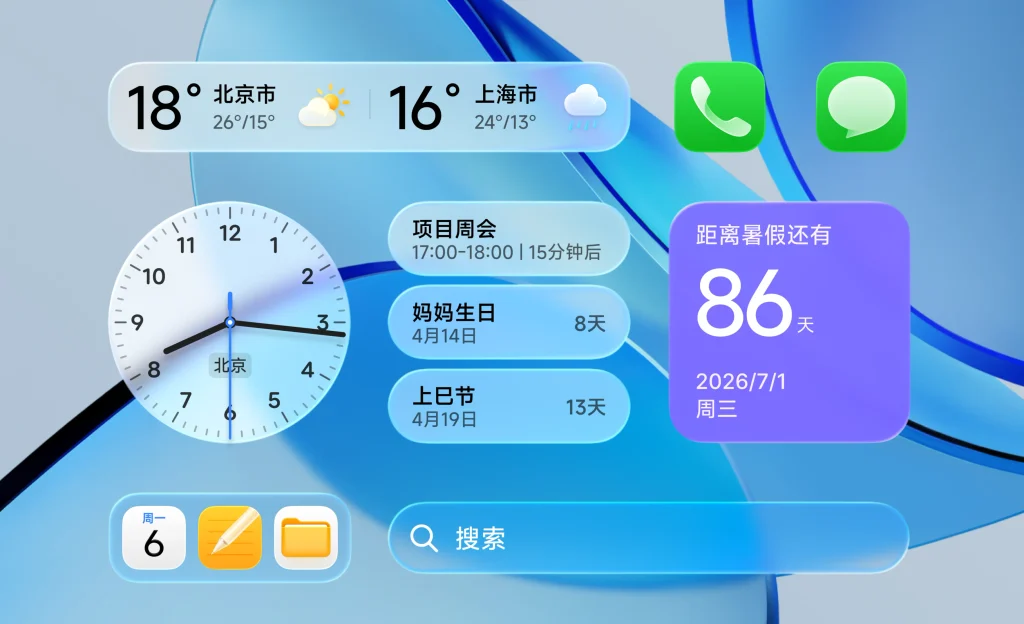
One of the most noticeable aspects of HyperOS 4 is expected to be its user interface.
Xiaomi has been gradually refining HyperOS rather than completely redesigning the interface with every generation. HyperOS 4 continues that approach with improvements to visual consistency, animations, widgets, notifications, lock-screen customization, and system transitions.
The interface is expected to emphasize:
- Cleaner system layouts
- Smoother animations
- Improved multitasking
- More customizable lock screens
- Updated widgets
- Refined notification management
- Better visual consistency across Xiaomi devices
- Improved tablet and large-screen layouts
The overall goal is to make the interface feel faster and more cohesive without sacrificing the customization that Xiaomi users have traditionally expected.
Artificial Intelligence in HyperOS 4
Artificial intelligence is expected to be one of the major themes surrounding HyperOS 4.
Modern smartphones increasingly use AI for photography, communication, productivity, personalization, and system management. Xiaomi is following this industry-wide trend by integrating AI more deeply into its software ecosystem.
Potential HyperOS 4 AI capabilities include smarter image processing, text recognition, translation, writing assistance, summarization, voice-related features, and contextual recommendations.
AI can also play a role in system optimization. Rather than simply increasing raw hardware performance, Xiaomi can use software intelligence to determine how applications and system resources should be prioritized.
The availability of individual AI features, however, can vary by device because many advanced functions require sufficiently powerful processors or dedicated AI hardware.

HyperOS 4 Performance Improvements
Performance optimization remains an important part of any major operating-system update.
HyperOS 4 is expected to improve the way the operating system manages CPU resources, memory, background applications, storage, and power consumption.
For everyday users, these improvements can translate into:
- Faster application launching
- Smoother animations
- Better multitasking
- More consistent gaming performance
- Improved background-app management
- Reduced unnecessary system activity
- Better battery efficiency
The actual performance improvement will depend heavily on the Xiaomi device running the software. A flagship phone with a modern Snapdragon or MediaTek processor will naturally have more headroom than an entry-level device.
HyperOS 4 and Gaming
Gaming is another area where system optimization matters.
Xiaomi has increasingly integrated gaming-oriented technologies into its smartphones, particularly its flagship and performance-focused models. HyperOS 4 can further improve resource allocation when demanding games are running.
Possible benefits include better CPU and GPU scheduling, improved thermal management, faster memory allocation, and more efficient background-process control.
On compatible Xiaomi gaming smartphones, HyperOS 4 may also work alongside dedicated gaming modes that provide tools for managing notifications, performance, touch response, and other gaming settings.
HyperOS 4 Battery Improvements
Battery life depends on much more than battery capacity. Software optimization plays an important role in determining how efficiently a phone uses its available energy.
HyperOS 4 is expected to improve power management by optimizing background applications and system processes.
The operating system can also use device usage patterns to manage resources more intelligently. For example, applications that are rarely used can be restricted more aggressively while frequently used applications receive greater priority.
This approach can help Xiaomi deliver better endurance without requiring a larger physical battery.
HyperOS 4 Privacy and Security
Privacy and security remain critical aspects of modern smartphone software.
HyperOS 4 is expected to build on Android’s existing security framework while incorporating Xiaomi’s own privacy and permission-management technologies.
Users can expect controls related to:
- Application permissions
- Location access
- Camera and microphone access
- Personal data
- Account security
- Device protection
- Application isolation
As AI becomes more deeply integrated into smartphones, privacy becomes even more important. Xiaomi therefore has an opportunity to provide users with greater transparency over which information is processed locally and which services require cloud connectivity.

HyperOS 4 Connectivity Across Xiaomi Devices
One of HyperOS’s biggest ambitions is to make different Xiaomi products work together more naturally.
A user might have a Xiaomi smartphone, tablet, smartwatch, earbuds, television, laptop, or smart-home appliance. HyperOS is designed to create a software layer connecting these products.
HyperOS 4 can further strengthen this ecosystem approach through features such as:
- Cross-device file transfers
- Device discovery
- Shared notifications
- Clipboard synchronization
- Screen sharing
- Multi-device control
- Smartphone-to-tablet collaboration
- Improved interaction with Xiaomi accessories
This becomes particularly useful for people who own several Xiaomi products.
HyperOS 4 on Tablets
Xiaomi has expanded significantly into the tablet market, making tablet optimization increasingly important.
HyperOS 4 is expected to provide improved support for larger displays, multitasking, floating windows, split-screen applications, and productivity workflows.
On compatible Xiaomi tablets, users may benefit from better interactions between smartphones and tablets. A phone could serve as a connected source for files, notifications, or other information while the tablet handles productivity and entertainment.
The larger display also gives Xiaomi more room to introduce enhanced widgets and multitasking capabilities.
HyperOS 4 and Smart Homes
HyperOS is not limited to smartphones and tablets.
Xiaomi has one of the world’s largest consumer electronics ecosystems, covering products such as televisions, air conditioners, smart appliances, cameras, lighting systems, routers, wearables, and other connected devices.
HyperOS 4 can therefore act as part of the software infrastructure connecting these products.
For consumers, the advantage is convenience. Instead of managing every device as a separate product, users can potentially control compatible products through a more unified Xiaomi ecosystem.
HyperOS 4 Camera Improvements
Camera performance is another area where software can make a significant difference.
Modern smartphone cameras depend heavily on computational photography. The image sensor captures the information, but software determines how that information is processed.
HyperOS 4 can enhance camera experiences through improvements to:
- HDR processing
- Night photography
- Portrait effects
- Image noise reduction
- Scene recognition
- AI image enhancement
- Video stabilization
- Computational zoom
The exact camera capabilities will still depend on the individual phone’s sensors, lenses, image signal processor, and chipset.
A HyperOS 4 update cannot turn a basic camera sensor into a flagship camera system, but software optimization can improve the results produced by existing hardware.
HyperOS 4 Customization
Customization has historically been an important part of Xiaomi’s software experience.
HyperOS 4 is expected to continue offering users ways to personalize their devices through wallpapers, lock screens, themes, widgets, icons, fonts, and other interface elements.
The lock screen can become particularly important as smartphone operating systems increasingly allow users to customize clock styles, wallpapers, notifications, and information displayed before unlocking the phone.
HyperOS 4 Supported Devices
The final list of HyperOS 4-compatible devices depends on Xiaomi’s official update policy and regional rollout.
Newer flagship smartphones are generally the strongest candidates for major HyperOS updates. Recent Xiaomi, Redmi, and POCO devices may also receive the software depending on their support period.
Potential categories include:
Xiaomi Smartphones
Recent flagship and premium Xiaomi smartphones are likely to receive priority during the rollout.
This can include newer Xiaomi flagship families, including models introduced shortly before HyperOS 4 becomes available.
Redmi Smartphones
Selected recent Redmi Note, Redmi K-series, and other eligible Redmi smartphones can also be expected to participate in the rollout.
POCO Smartphones
Recent POCO flagship and performance-oriented models may receive HyperOS 4 where they remain within Xiaomi’s software-support window.
Xiaomi Tablets
Recent Xiaomi Pad models are also important candidates because Xiaomi increasingly treats tablets as part of the broader HyperOS ecosystem.
However, users should check Xiaomi’s official regional update information for their specific model rather than assuming that every device in a particular series will receive the update.
HyperOS 4 vs HyperOS 3
HyperOS 4 builds on the foundation established by HyperOS 3.
| Feature | HyperOS 3 | HyperOS 4 |
|---|---|---|
| User interface | Modern HyperOS design | Further visual refinement |
| AI | Expanded AI capabilities | Deeper AI integration |
| Performance | System optimization | Further optimization |
| Multitasking | Improved | More refined |
| Cross-device ecosystem | Supported | More integrated |
| Privacy | Android + Xiaomi security | Continued improvements |
| Tablets | Optimized | Further large-screen refinement |
| Customization | Extensive | More personalization options |
The difference will be most noticeable on newer Xiaomi hardware capable of taking advantage of the operating system’s latest capabilities.
HyperOS 4 Global Availability
Xiaomi’s global software strategy is important because not every feature available in China necessarily appears on international devices.
China-specific versions can contain features, services, applications, and AI tools that depend on Xiaomi’s domestic ecosystem. Global versions may replace or omit some of these services because of regional regulations, partnerships, language support, or differences in Google’s Android services.
Therefore, users in Europe, Asia, Africa, and other international markets should not assume that a feature demonstrated on a Chinese Xiaomi phone will necessarily be available on the global version.
HyperOS 4 Update Size
The size of a HyperOS 4 update will vary by device and update path.
A major operating-system upgrade can require several gigabytes of free storage. Xiaomi may also distribute the software in stages, meaning that the download size shown to one device may differ from another.
Before installing a major update, users should ideally:
- Back up important information.
- Ensure sufficient storage.
- Connect to Wi-Fi.
- Charge the phone adequately.
- Install the update through the official system updater.
Will HyperOS 4 Improve Older Xiaomi Phones?
The answer depends on the hardware.
Older devices can benefit from software optimization, but they may not support every feature introduced with a new operating system.
AI functions are particularly dependent on chipset capabilities. Some advanced features may require a modern neural-processing engine or sufficient CPU/GPU performance.
Consequently, two Xiaomi phones running HyperOS 4 may offer different experiences even though they use the same operating system.
HyperOS 4 and Android
HyperOS remains closely connected to Android, which means users continue to benefit from the Android application ecosystem.
For consumers, this means access to familiar applications while Xiaomi handles much of the visual design, device management, ecosystem integration, and additional system features.
This hybrid approach allows Xiaomi to differentiate its devices without abandoning compatibility with the wider Android ecosystem.
Frequently Asked Questions
What is HyperOS 4?
HyperOS 4 is the next major generation of Xiaomi’s operating system, designed for smartphones, tablets, wearables, smart-home products, and other connected Xiaomi devices.
Which phones will get HyperOS 4?
Recent Xiaomi, Redmi, and POCO smartphones are the main candidates, although eligibility varies by model, region, and Xiaomi’s software-support policy.
Will Redmi phones get HyperOS 4?
Selected recent Redmi models are expected to be eligible, but Xiaomi determines eligibility on a model-by-model basis.
Will POCO phones receive HyperOS 4?
Recent POCO devices that remain within their supported software lifecycle may receive the update.
Will HyperOS 4 be available globally?
A global rollout is expected to depend on Xiaomi’s regional update schedule. Features can differ between Chinese and international versions.
Is HyperOS 4 based on Android?
Yes. HyperOS operates on top of the Android ecosystem while adding Xiaomi’s own interface, services, system technologies, and cross-device features.
Will HyperOS 4 improve battery life?
Software optimization can improve power efficiency, although actual battery-life results will depend on the device’s hardware, battery capacity, applications, network conditions, and usage patterns.
Is HyperOS 4 better than MIUI?
HyperOS represents Xiaomi’s move toward a broader operating-system and ecosystem platform rather than simply continuing the MIUI branding. HyperOS 4 continues that direction with greater emphasis on AI, connectivity, performance, and cross-device integration.
Final Thoughts
HyperOS 4 represents another step in Xiaomi’s transition from a smartphone-focused software experience to a connected operating system spanning phones, tablets, wearables, smart appliances, and other devices. Its most important areas are expected to include AI, performance optimization, personalization, privacy, multitasking, and cross-device connectivity.
For Xiaomi users, the update’s value will ultimately depend on the device they own. Newer flagship hardware is likely to benefit from more of the platform’s advanced capabilities, while older and entry-level devices may receive a more limited feature set.
As Xiaomi expands its hardware ecosystem, HyperOS 4 could become increasingly important not simply as the software running on a phone, but as the layer connecting a user’s entire collection of Xiaomi products.