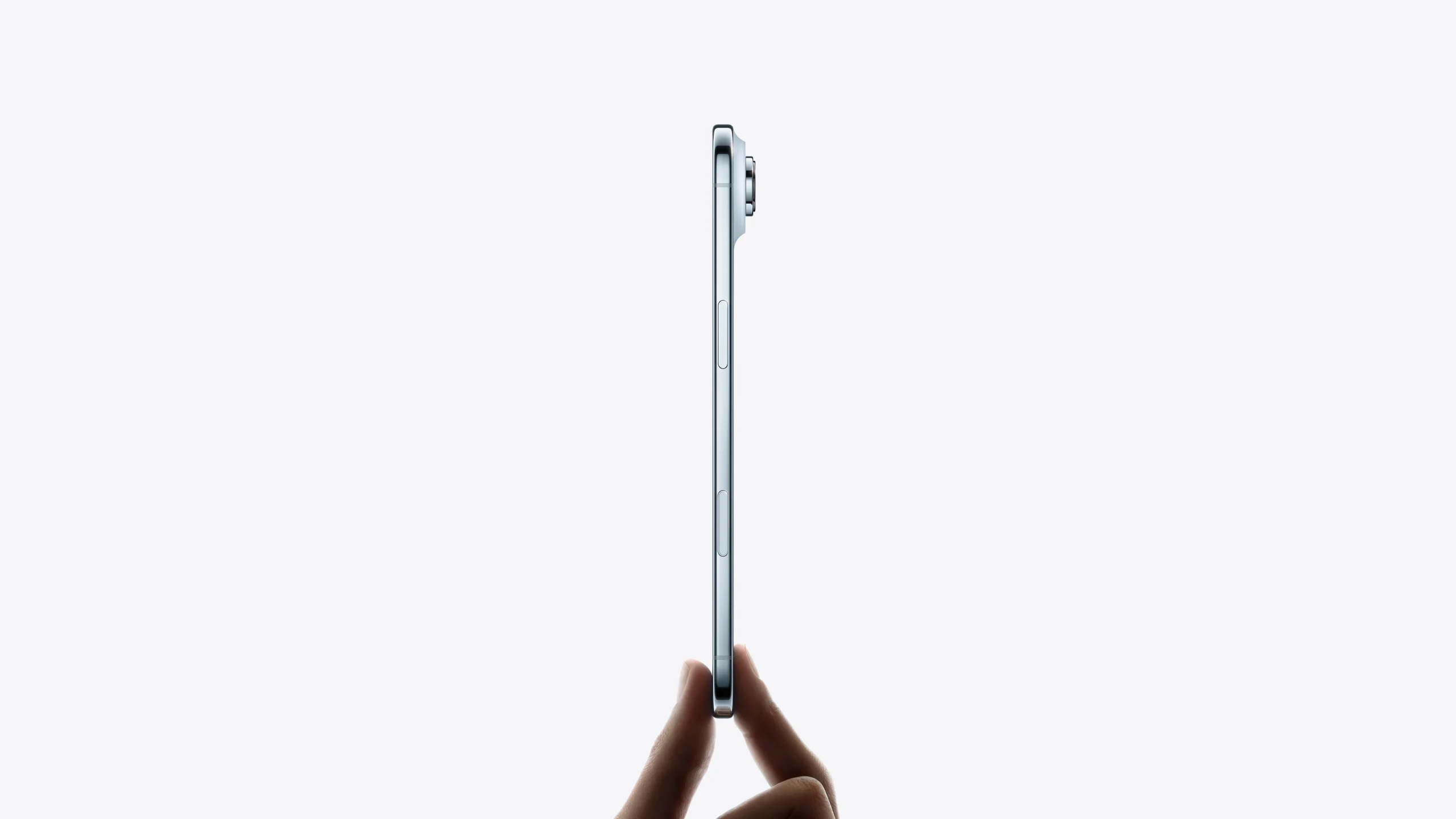

The Apple iPhone Air represents one of Apple’s most significant design changes to the iPhone lineup in years. Introduced in September 2025, the device takes a different approach from traditional flagship smartphones: instead of focusing primarily on adding more cameras, increasing battery capacity, or making the phone heavier, Apple has prioritized thinness, light weight, portability, and high-end performance.
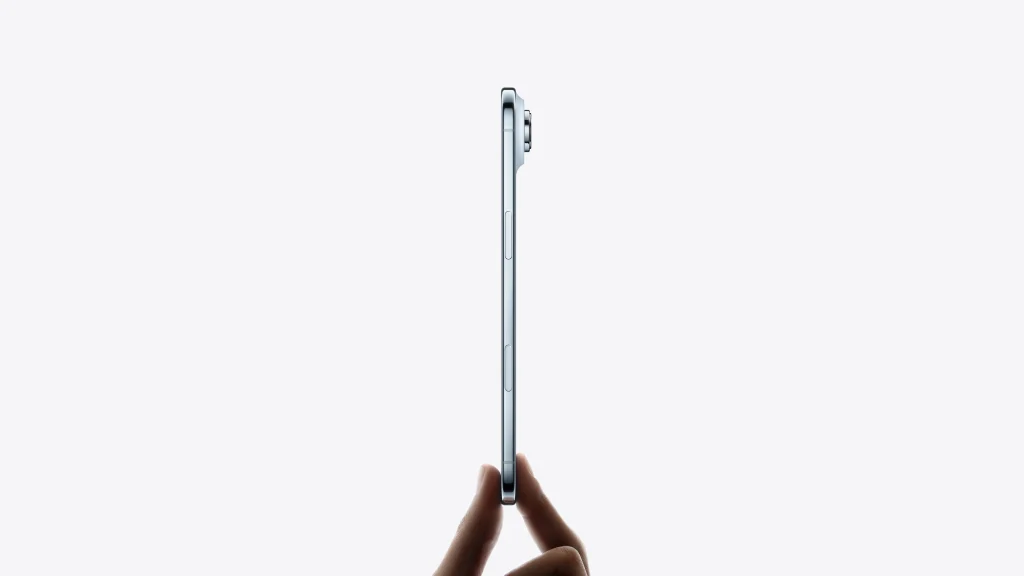
Table of Contents
At just 5.64 mm thick and 165 grams, the Apple iPhone Air is the thinnest iPhone Apple has ever produced. Despite its extremely slim profile, it features a 6.5-inch Super Retina XDR OLED display with ProMotion up to 120Hz, an A19 Pro chip, a titanium frame, Apple’s C1X cellular modem, Wi-Fi 7, and a 48MP Fusion rear camera. (Apple)
However, achieving such a thin design involves compromises. The Apple iPhone Air has a single rear camera rather than the multi-camera systems found on Pro models, its battery capacity is constrained by the thin chassis, it uses eSIM rather than a physical SIM card, and its USB-C connection is limited to USB 2 data-transfer speeds. Independent reviews have also highlighted its comparatively limited camera flexibility and battery endurance as important considerations. (The Washington Post)
What Is the Apple iPhone Air?
The Apple iPhone Air is a premium iPhone introduced by Apple in 2025 as a new category positioned between the company’s standard and Pro-oriented models.
Rather than simply being a larger or faster version of an existing iPhone, the Air emphasizes a different design philosophy. Apple engineered the device around an extremely thin body while attempting to preserve flagship-level performance and a large, high-quality display.
Apple describes the Apple iPhone Air as its thinnest iPhone ever, measuring only 5.64 mm deep. It weighs 165 grams despite carrying a 6.5-inch display. (Apple)
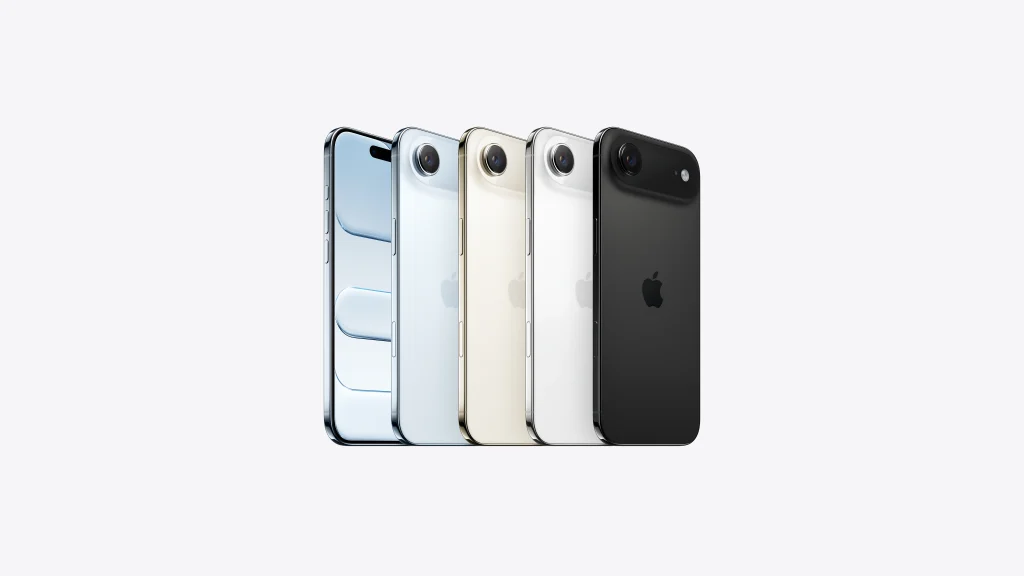
The phone is available in four finishes:
- Space Black
- Cloud White
- Light Gold
- Sky Blue
Storage options include:
- 256GB
- 512GB
- 1TB
The combination of a large screen, lightweight body, titanium construction, and powerful processor makes the Apple iPhone Air particularly distinctive within Apple’s smartphone range.
Apple iPhone Air Design and Build Quality
An Extremely Thin 5.64 mm Body
The defining feature of the iPhone Air is its physical design.
The phone measures 156.2 mm tall, 74.7 mm wide, and 5.64 mm thick. It weighs 165 grams. (Apple)
For comparison, many modern smartphones have become increasingly thick and heavy as manufacturers add larger batteries, additional cameras, cooling systems, and other hardware.
Apple took the opposite approach with the Air.
The result is a phone that feels unusually light when held. Independent reviews repeatedly identified the low weight and thin profile as among the device’s most noticeable characteristics. (The Washington Post)
The difference becomes especially noticeable when holding the phone for extended periods, carrying it in a pocket, or using it one-handed.
Titanium Frame
The Apple iPhone Air uses a Grade 5 titanium frame. Apple designed the frame to provide structural strength while keeping the overall device lightweight. (Apple)
The titanium construction is particularly important because ultra-thin smartphones can potentially be more vulnerable to bending.
Apple says the iPhone Air exceeds its bend-strength requirements, while its front and rear protection systems are designed to improve resistance to everyday damage. (Apple)
Ceramic Shield 2
The front of the iPhone Air uses Ceramic Shield 2, while the back also incorporates Ceramic Shield protection.
Apple states that the new front material provides three times better scratch resistance than previous Ceramic Shield glass, while the rear protection offers improved crack resistance compared with previous iPhone back glass. (Apple)
As with any smartphone, these claims should not be interpreted as making the device indestructible. A case and screen protection can still be useful, particularly because replacing premium smartphone components can be expensive.
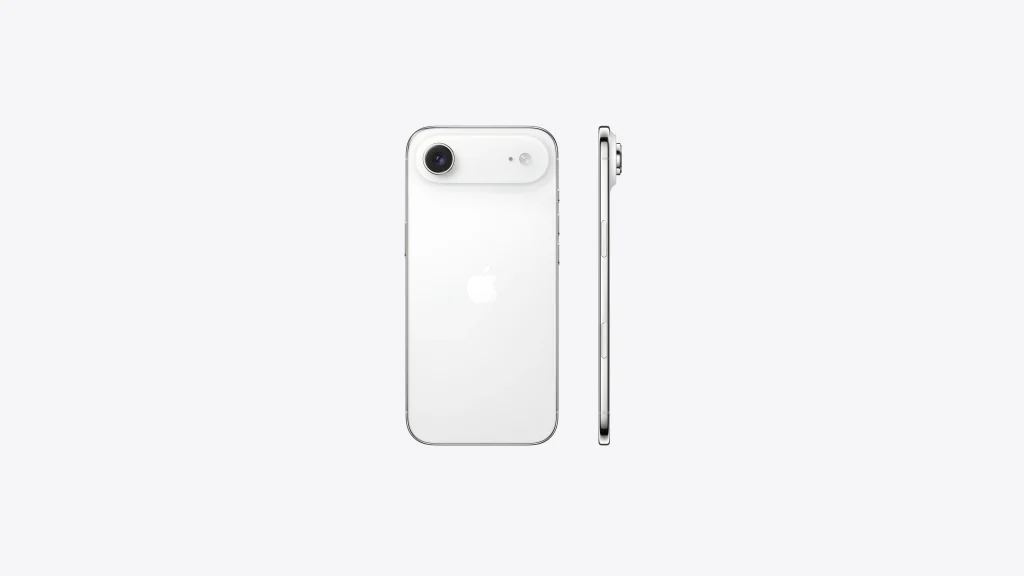
The Rear Camera Plateau
One unusual aspect of the design is the large rear plateau that houses the camera, speaker, and parts of the device’s internal electronics.
This design allows Apple to concentrate components in one area and use more of the remaining internal space for the battery. (Apple)
Visually, the plateau gives the iPhone Air a different appearance from conventional iPhones.
Apple iPhone Air Display
The Apple iPhone Air features a 6.5-inch Super Retina XDR OLED display with a resolution of 2736 × 1260 pixels and 460 pixels per inch. (Apple)
ProMotion Up to 120Hz
One of the most important display features is ProMotion, Apple’s adaptive refresh-rate technology.
The display can refresh at up to 120Hz, which makes scrolling, animations, gaming, and supported interface interactions appear considerably smoother than on conventional 60Hz displays.
The refresh rate is adaptive, meaning the phone can reduce the refresh rate when high refresh rates are unnecessary. Apple says the Always-On display can reduce its refresh rate as low as 1Hz. (Apple)
Always-On Display
The Apple iPhone Air also supports an Always-On display.
This allows selected information such as the time, widgets, and notifications to remain visible without requiring the entire screen to wake.
Because the display can operate at a very low refresh rate, the feature is designed to minimize unnecessary battery consumption.
Outdoor Brightness
Apple rates the iPhone Air at up to 3,000 nits of peak outdoor brightness, alongside 1,000 nits typical maximum brightness and 1,600 nits peak HDR brightness. (Apple)
High outdoor brightness can be particularly useful when using a phone under strong sunlight.
The device also includes an anti-reflective coating intended to improve outdoor visibility.
Dynamic Island
The display incorporates Apple’s Dynamic Island interface around the front camera and Face ID hardware.
It can display information from supported activities, alerts, timers, calls, music, navigation, and other system functions.
Apple iPhone Air Performance
The Apple iPhone Air is powered by Apple’s A19 Pro chip.
This is significant because Apple has placed a processor from its Pro-class silicon family into an exceptionally thin smartphone.
The A19 Pro includes:
- A 6-core CPU
- Two performance cores
- Four efficiency cores
- A 5-core GPU
- A 16-core Neural Engine
- Hardware-accelerated ray tracing
- Neural Accelerators in the GPU (Apple)
Everyday Performance
For normal tasks such as web browsing, social media, messaging, photography, video streaming, navigation, and productivity applications, the A19 Pro provides substantial processing capability.
The combination of Apple’s hardware and iOS optimization means users can expect fast application launches and responsive multitasking.
Gaming Performance
The A19 Pro also supports hardware-accelerated ray tracing and Apple’s newer graphics architecture.
Apple specifically positioned the chip as capable of supporting demanding games, including AAA-quality titles. (Apple)
However, the iPhone Air does not have exactly the same GPU configuration as Apple’s highest-end Pro models. Reviews have noted that the Air uses a five-core GPU rather than the six-core GPU found in some Pro configurations. (MacRumors)
That distinction may matter primarily to users who regularly play demanding 3D games or perform sustained graphics-intensive workloads.
Thermal Considerations
The extremely thin chassis creates an engineering challenge: powerful processors generate heat, and a thinner body provides less physical room for thermal management.
Independent reviews have reported noticeable heat around the camera plateau during demanding workloads. (WIRED)
For ordinary smartphone use, this may not be a major concern. Heavy gaming, prolonged video processing, or intensive computational workloads are more likely to expose thermal limitations.
Apple iPhone Air Camera System
The camera system is one of the areas where Apple’s thinness-first strategy is most apparent.
The iPhone Air has a 48MP Fusion Main camera on the rear. (Apple)
48MP Fusion Main Camera
The rear camera features:
- 48MP resolution
- 26mm equivalent focal length
- f/1.6 aperture
- Sensor-shift optical image stabilization
- Focus Pixels
- 24MP and 48MP photo options
- Photonic Engine
- Deep Fusion
- Smart HDR
- Night mode
- Photographic Styles (Apple)
In good lighting, the camera can produce detailed photographs with Apple’s computational photography processing.
Independent testing has generally found the main camera capable of producing high-quality images, although the lack of additional lenses limits photographic flexibility. (The Washington Post)
2x Optical-Quality Telephoto Option
Although there is only one physical rear camera, Apple uses the 48MP sensor to provide a 12MP 2x optical-quality telephoto option.
This is essentially a crop from the high-resolution main sensor rather than a separate telephoto lens. (Apple)
It can be useful for portraits and moderately closer subjects.
However, it should not be confused with a dedicated optical telephoto camera.
No Ultrawide Camera
One of the biggest camera compromises is the absence of a dedicated ultrawide camera.
This matters when photographing:
- Large buildings
- Landscapes
- Groups of people
- Tight indoor spaces
- Architectural scenes
A dedicated ultrawide lens gives photographers a wider perspective without having to physically move farther away.
Reviewers have specifically identified the lack of an ultrawide camera as one of the iPhone Air’s major compromises. (The Washington Post)
No Dedicated Telephoto Camera
The iPhone Air also lacks a dedicated long-range telephoto lens.
That means users who frequently photograph distant subjects, sports, wildlife, concerts, or other scenes requiring significant optical zoom may find the Air less flexible than Pro-oriented smartphones.
Digital zoom can extend the framing range, but image quality generally decreases as the crop becomes more aggressive.
18MP Center Stage Front Camera
The front camera is one of the Apple iPhone Air’s more interesting innovations.
It uses an 18MP Center Stage camera with autofocus and a square sensor design. (Apple)
Center Stage for Selfies
Center Stage uses software and the camera’s wide field of view to keep subjects properly positioned.
One benefit is that users can capture landscape-oriented selfies while holding the phone vertically.
For groups, the camera can automatically adjust its field of view to include additional people.
Dual Capture
The iPhone Air also supports Dual Capture, allowing users to record from the front and rear cameras simultaneously.
This can be useful for:
- Vlogging
- Travel videos
- Reaction videos
- Tutorials
- Live-event commentary
- Personal storytelling
For content creators who regularly want to appear alongside what they are filming, this feature can be particularly practical.
Front Camera Video
The Center Stage camera supports 4K Dolby Vision video recording and stabilization features. Apple also supports simultaneous front and rear camera recording. (Apple)
Apple iPhone Air Video Recording
The Apple iPhone Air can record 4K Dolby Vision video at up to 60 frames per second.
It also supports 1080p recording, slow-motion video, QuickTake, time-lapse, cinematic stabilization, stereo recording, wind-noise reduction, and Audio Mix. (Apple)
For everyday video creators, the main camera provides a strong set of recording capabilities.
The limitation is again primarily versatility rather than basic video quality: users do not have dedicated ultrawide and telephoto lenses.
iPhone Air Battery Life
Battery life is one of the most closely discussed aspects of the iPhone Air.
Apple rates the device for up to 27 hours of video playback or up to 22 hours of streamed video playback. With Apple’s iPhone Air MagSafe Battery, those figures increase to up to 40 hours and 35 hours respectively. (Apple)
Why Battery Capacity Is Important
A thin smartphone naturally creates less internal space for a large battery.
Apple’s engineering approach involves concentrating many components into the rear plateau while using the rest of the interior efficiently for the battery. (Apple)
The result is respectable battery performance for such a thin device, but independent reviews have found that heavier use can expose the limitations compared with larger phones. (The Washington Post)
Users who spend much of the day gaming, recording video, navigating with GPS, or using 5G heavily may need more frequent charging.
MagSafe Battery
Apple also offers a dedicated MagSafe Battery designed for the iPhone Air.
Apple says the accessory can extend video playback substantially, with its technical specifications listing up to 40 hours of video playback. (Apple)
However, adding a battery pack partly defeats the purpose of buying an ultra-thin phone.
This creates an interesting trade-off: the Air is at its most distinctive when it is used without bulky accessories, but heavy users may appreciate the additional battery capacity.
Charging
The iPhone Air supports fast charging.
Apple says it can reach up to 50% charge in approximately 30 minutes using a 20W or higher adapter and USB-C cable, or with a 30W or higher adapter when using MagSafe. (Apple)
The charging adapter is sold separately.
Apple iPhone Air Connectivity
The iPhone Air supports modern wireless connectivity, including:
- 5G
- Wi-Fi 7
- Bluetooth 6
- Thread
- NFC
- Ultra Wideband
- USB-C
- Satellite connectivity features
- GPS and other positioning systems (Apple)
C1X Cellular Modem
Apple uses its C1X cellular modem in the iPhone Air.
Apple describes C1X as a newer Apple-designed modem that is faster than the previous C1 while also improving power efficiency. (Apple)
The modem is an important part of Apple’s broader effort to design more of the hardware inside its devices.
Wi-Fi 7
The iPhone Air supports Wi-Fi 7 through Apple’s N1 wireless networking chip.
Wi-Fi 7 can provide higher throughput and improved wireless performance when paired with compatible networking equipment. (Apple)
Actual performance depends on the router, network conditions, internet connection, and environment.
iPhone Air Is eSIM-Only
One of the biggest practical changes for some buyers is that the iPhone Air does not support a physical SIM card.
Apple specifies dual eSIM support, including two active eSIMs, with the ability to store eight or more eSIMs. (Apple)
This can simplify switching between supported cellular plans and is particularly useful for people who regularly manage multiple eSIM profiles.
However, eSIM support depends on carrier compatibility.
This is an important consideration for international buyers and travelers because not every mobile operator offers the same eSIM activation experience.
iPhone Air Software
The iPhone Air launched with iOS 26, Apple’s major software generation associated with the device.
The software provides the familiar iPhone ecosystem, including:
- Face ID
- Apple Pay
- iCloud
- Messages
- FaceTime
- Safari
- App Store
- AirDrop
- Apple Intelligence features
- Find My
- Emergency satellite features where supported
The combination of powerful hardware and Apple’s software ecosystem gives the Air access to the same broad range of applications available to other current iPhones.
Apple Intelligence on iPhone Air
The iPhone Air supports Apple’s current generation of Apple Intelligence features.
The A19 Pro’s Neural Engine and GPU-based Neural Accelerators provide hardware designed for on-device machine-learning workloads. (Apple)
Apple’s approach emphasizes processing some AI tasks directly on the device while using cloud-based processing where appropriate.
The practical benefit is that AI capabilities can be integrated into everyday tasks rather than existing solely as a separate chatbot application.
Available features and languages can change over time, so users should check Apple’s current software documentation for regional availability.
iPhone Air Durability
Despite its thin profile, durability is an important part of Apple’s pitch.
The phone features:
- Grade 5 titanium
- Ceramic Shield 2 front protection
- Ceramic Shield rear protection
- IP68 water and dust resistance (Apple)
The IP68 rating means the device is tested for resistance to dust and water under controlled conditions.
Apple specifies resistance to a maximum depth of 6 meters for up to 30 minutes under the relevant testing standard. (Apple)
Water resistance should not be interpreted as permanent waterproofing. Seals can deteriorate through normal wear, and liquid damage is not something users should intentionally expose the phone to.
iPhone Air Storage Options
Apple offers the iPhone Air in three storage capacities:
256GB
The 256GB version provides a substantial amount of storage for most ordinary smartphone users.
It can accommodate thousands of photographs, numerous applications, downloaded music, documents, and a reasonable amount of 4K video.
512GB
The 512GB option is more appropriate for people who take large amounts of high-resolution photography and video or maintain extensive offline media libraries.
1TB
The 1TB model is aimed at users who need substantial local storage.
This may include professional content creators, frequent 4K video shooters, travelers who keep large offline libraries, and users who prefer storing media locally rather than relying heavily on cloud storage.
iPhone Air Pros and Cons
iPhone Air Advantages
The iPhone Air’s main advantages include:
- Extremely thin 5.64 mm design
- Lightweight 165-gram construction
- Titanium frame
- Large 6.5-inch OLED display
- ProMotion up to 120Hz
- A19 Pro processor
- 48MP Fusion main camera
- 18MP Center Stage front camera
- Wi-Fi 7
- Bluetooth 6
- USB-C
- 5G connectivity
- IP68 water and dust resistance
- Up to 1TB storage
- Apple Intelligence support
- Face ID
- Satellite features where supported (Apple)
iPhone Air Limitations
The main compromises include:
- Only one physical rear camera
- No dedicated ultrawide camera
- No dedicated telephoto camera
- Battery life is less substantial than some larger iPhones
- eSIM-only design
- USB-C data transfer is limited to USB 2 speeds
- Single-speaker configuration rather than the stereo arrangement used by many other iPhones
- Potential heat buildup during demanding workloads (WIRED)
These compromises are closely connected to the phone’s thin design.
iPhone Air vs Traditional Flagship Phones
The iPhone Air demonstrates that smartphone design is not simply about maximizing specifications.
A conventional flagship can devote more internal space to battery capacity, cameras, cooling, speakers, and other hardware.
The Air instead prioritizes portability.
That makes the phone particularly interesting for people who consider weight and thickness important aspects of the smartphone experience.
The trade-off is that users who prioritize camera versatility, maximum battery endurance, or sustained gaming performance may place more importance on other specifications.
Who Is the iPhone Air For?
The iPhone Air may appeal particularly to several groups.
People Who Want a Lightweight Large-Screen Phone
The combination of a 6.5-inch display and 165-gram weight is unusual.
Users who want a large display without the heft of a traditional large smartphone may find the form factor particularly appealing.
Travelers
A lightweight phone can be convenient for travel.
The eSIM design can also be useful for travelers who regularly switch between supported cellular plans.
However, international travelers should verify eSIM availability with their carrier before purchasing.
Content Creators
The 18MP Center Stage camera, Dual Capture, 4K video, and powerful A19 Pro processor make the Air capable of handling a range of content-creation tasks.
The absence of ultrawide and telephoto cameras, however, limits the flexibility available to photographers.
Minimalists
The Air’s design philosophy may appeal to users who prefer a simple, lightweight device rather than a phone loaded with multiple camera modules.
Who May Prefer Another iPhone?
The iPhone Air may not be the ideal fit for everyone.
Photographers who regularly use ultrawide or telephoto perspectives should pay particular attention to the camera limitations.
Heavy mobile gamers should also consider sustained performance, thermal behavior, and battery endurance rather than focusing solely on processor specifications.
Similarly, users who rely on physical SIM cards need to verify that their carrier supports eSIM before switching.
The iPhone Air is therefore best understood as a device built around a particular set of priorities rather than a phone that maximizes every specification simultaneously.
iPhone Air Price and Value
Apple launched the iPhone Air at a starting price of $999 in the United States for the base configuration. Independent reviews published around launch confirmed the $999 starting point. (The Washington Post)
The final retail price can vary considerably by country because of taxes, import costs, currency exchange rates, storage configuration, and local distribution.
For buyers outside the United States, including consumers in African markets, the local price may therefore be substantially different from the U.S. launch price.
When comparing the iPhone Air with other smartphones, it is useful to consider not only the purchase price but also storage capacity, accessories, cellular compatibility, and long-term software support.
Is the iPhone Air a Good Smartphone?
The answer depends largely on what a buyer values in a phone.
The iPhone Air combines an unusually thin body with flagship-level processing, a high-refresh-rate OLED display, modern connectivity, a capable main camera, and Apple’s software ecosystem.
Its limitations are equally clear: the single rear camera reduces photographic flexibility, while the thin body necessarily places greater constraints on battery capacity and thermal management.
Independent reviews broadly highlighted this same tension. Reviewers praised the thin, light construction, display, performance, and build quality while pointing to the camera system and battery life as the principal compromises. (The Washington Post)
Rather than viewing the iPhone Air simply as a smaller or cheaper alternative to a Pro iPhone, it makes more sense to view it as Apple’s experiment with a different type of flagship smartphone.
Frequently Asked Questions About iPhone Air
Is the iPhone Air the thinnest iPhone?
Yes. Apple lists the iPhone Air at 5.64 mm thick, making it the thinnest iPhone Apple has produced. (Apple)
How much does the iPhone Air weigh?
The iPhone Air weighs 165 grams, or approximately 5.82 ounces. (Apple)
Does the iPhone Air have a 120Hz display?
Yes. Its 6.5-inch Super Retina XDR display supports ProMotion with adaptive refresh rates up to 120Hz. (Apple)
What processor does the iPhone Air use?
The iPhone Air uses Apple’s A19 Pro chip with a six-core CPU, five-core GPU, and 16-core Neural Engine. (Apple)
How many cameras does the iPhone Air have?
The iPhone Air has one physical rear camera: a 48MP Fusion Main camera. It also has an 18MP Center Stage front camera. (Apple)
Does iPhone Air have an ultrawide camera?
No. The iPhone Air does not have a dedicated ultrawide rear camera. This is one of its major differences from iPhones equipped with multi-camera systems. (The Washington Post)
Does iPhone Air have a telephoto camera?
No dedicated telephoto camera is included. However, the 48MP main sensor provides a 12MP 2x optical-quality option through sensor cropping. (Apple)
Is iPhone Air waterproof?
The iPhone Air has an IP68 rating for water and dust resistance. Apple specifies testing at up to 6 meters for 30 minutes under IEC 60529 conditions. (Apple)
It should still not be treated as permanently waterproof.
Does iPhone Air use a physical SIM card?
No. The iPhone Air is eSIM-only and does not have a physical SIM card slot. Apple lists support for dual eSIM with two active eSIMs. (Apple)
How much storage does iPhone Air have?
The iPhone Air is available with 256GB, 512GB, or 1TB of storage. (Apple)
Does iPhone Air support 5G?
Yes. The iPhone Air supports 5G cellular connectivity, although specific bands and availability depend on the model and carrier. (Apple)
Does iPhone Air support Wi-Fi 7?
Yes. The iPhone Air supports Wi-Fi 7 through Apple’s N1 wireless networking chip. (Apple)
Does iPhone Air support Apple Intelligence?
Yes. Apple lists Apple Intelligence support for the iPhone Air, although specific features and language availability can vary by region and software version. (Apple)
How long does the iPhone Air battery last?
Apple rates the iPhone Air for up to 27 hours of video playback and up to 22 hours of streamed video playback. Actual battery life varies according to network conditions, brightness, applications, gaming, camera use, and other factors. (Apple)
Does iPhone Air support MagSafe?
Yes. The iPhone Air supports MagSafe wireless charging at up to 20W as well as Qi2 wireless charging at up to 20W. (Apple)
Does iPhone Air have Face ID?
Yes. Face ID is enabled through the TrueDepth front camera system. (Apple)
Is iPhone Air good for gaming?
The A19 Pro processor and five-core GPU provide substantial gaming performance, including support for hardware-accelerated ray tracing. However, prolonged demanding gaming can produce heat and consume battery more quickly, so users focused heavily on sustained gaming should consider those factors. (Apple)
Is iPhone Air good for photography?
The 48MP Fusion camera can produce high-quality everyday photographs, but the lack of dedicated ultrawide and telephoto cameras limits versatility compared with multi-camera iPhones. (The Washington Post)
What makes iPhone Air different from other iPhones?
Its defining characteristic is the combination of an exceptionally thin 5.64 mm body, 165-gram weight, titanium construction, 6.5-inch 120Hz OLED display, and A19 Pro performance. (Apple)
Final Thoughts on iPhone Air
The iPhone Air is an unusual addition to Apple’s smartphone lineup because it does not attempt to win every specification category. Instead, it focuses on making a large-screen smartphone dramatically thinner and lighter while retaining high-end processing power, a 120Hz OLED display, modern connectivity, advanced front-camera features, and a premium titanium construction. The trade-offs are equally important: buyers get a single rear camera, no dedicated ultrawide or telephoto lens, a thinner battery platform, eSIM-only connectivity, and slower USB data-transfer capabilities than some Pro models. Independent reviews have highlighted this same balance between exceptional portability and reduced camera and battery flexibility.
Sources: (The Washington Post) . (Apple)

[…] iPhone 6 Series: Complete Guide to iPhone 6, 6 Plus, 6s and 6s Plus • Apple iPhone Air: Everything You Need to Know About Apple’s Ultra-Thin iPhone • Hello world! […]
[…] XS Max, and XR • iPhone 6 Series: Complete Guide to iPhone 6, 6 Plus, 6s and 6s Plus • Apple iPhone Air: Everything You Need to Know About Apple’s Ultra-Thin iPhone • Hello world! […]
[…] their overall design remains recognizable as an iPhone, Apple has made several important changes beneath the surface. The biggest hardware upgrade is the A20 Pro […]
[…] camera also contributes to the device’s personalised household experience. Apple says HomeView can recognise up to six people and switch supported personal information according to […]