

The Apple A20 Pro is Apple’s latest high-end smartphone processor, introduced with the iPhone 18 Pro and iPhone 18 Pro Max in September 2026. It is also used in Apple’s first foldable iPhone, the iPhone Duo, giving the chip an important role across Apple’s newest premium devices. Apple describes A20 Pro as its most powerful and efficient iPhone chip design yet, combining a new 2-nanometer manufacturing process, a redesigned CPU and GPU, a substantially more powerful Neural Engine, increased memory bandwidth and a new thermal architecture.

The A20 Pro is not simply an incremental processor upgrade. Apple has redesigned several parts of the chip and its surrounding package to improve sustained performance, artificial intelligence processing, graphics rendering and power efficiency.
Table of Contents
At the heart of the processor is a 6-core CPU, 7-core GPU with Neural Accelerators, and Dual 16-core Neural Engine. Apple also says the chip provides 50 percent more memory bandwidth than the A19 Pro, while the GPU can be up to 40 percent faster.
The move to a 2nm manufacturing process is another important milestone. Smaller process technology allows chip designers to place more transistors into a similar physical area while potentially improving efficiency and performance.
What Is the Apple A20 Pro?
The A20 Pro is Apple’s flagship smartphone system-on-chip for the 2026 generation of Pro iPhones.
A system-on-chip, or SoC, combines several computing components into one package. Rather than having separate processors for general computing, graphics and AI, the A20 Pro integrates these capabilities into a tightly coordinated platform.
The main components include:
- 6-core CPU
- 7-core GPU
- Dual 16-core Neural Engine
- Integrated Neural Accelerators
- Hardware-accelerated ray tracing
- 50 percent higher memory bandwidth than A19 Pro
- 2nm manufacturing technology
- Advanced thermal-management architecture
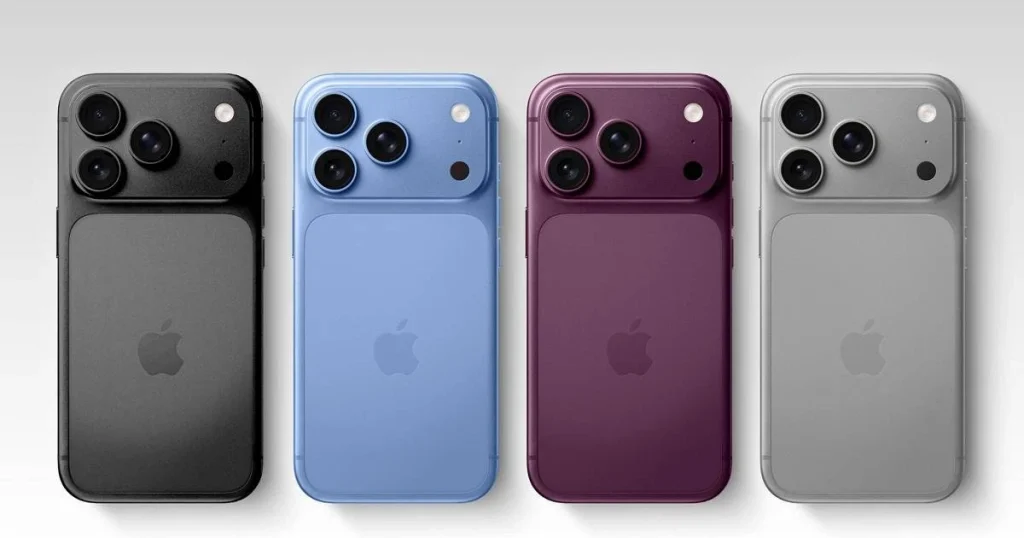
Apple uses the A20 Pro in the iPhone 18 Pro and iPhone 18 Pro Max. The company also uses the same processor in the iPhone Duo, where its performance is paired with a custom vapor chamber designed for sustained workloads inside the foldable form factor.
Apple A20 Pro Manufacturing Process
One of the biggest technical changes in the A20 Pro is its 2-nanometer manufacturing process.
The process refers to the semiconductor technology used to manufacture the transistors inside the chip. Moving to a smaller node generally gives chip designers greater transistor density and opportunities to improve performance and energy efficiency.
Apple says the A20 Pro is built using the latest 2nm process technology.
This matters because smartphone processors operate under strict limitations involving battery capacity, heat and physical space.
A desktop processor can consume substantially more electricity and use a large cooling system. A smartphone processor has to deliver high performance while operating inside a thin device powered by a relatively small battery.
The A20 Pro’s 2nm design therefore forms part of a larger strategy involving both semiconductor technology and thermal engineering.
A20 Pro CPU Architecture
The A20 Pro includes a 6-core CPU consisting of two performance cores and four efficiency cores. Apple’s technical specifications confirm this configuration.
The performance cores handle demanding workloads such as gaming, photo processing, video editing and computationally intensive applications.
The efficiency cores are designed for lighter workloads and background tasks.
This hybrid arrangement allows the processor to balance performance and energy consumption depending on what the user is doing.
For example, checking email or receiving notifications does not require the same processing power as rendering a complex 3D scene. The processor can therefore distribute work between different types of CPU cores.
Up to 20 Percent Faster CPU
Apple says the A20 Pro’s CPU is up to 20 percent faster than the A19 Pro. The company describes it as delivering the fastest CPU performance in a smartphone.
This improvement can benefit everyday responsiveness as well as demanding applications.
CPU performance is particularly important for:
- App launches
- Web browsing
- Multitasking
- Photo editing
- Video editing
- Gaming physics
- File processing
- AI workloads
- Productivity applications
Independent early Geekbench 7 results reported shortly after Apple’s announcement suggested even larger generational gains in some CPU workloads. MacRumors reported preliminary results showing approximately 21–23 percent higher single-core performance and 27–28 percent higher multi-core performance compared with the A19 Pro. These results were identified as early and unconfirmed, so they should not be treated as a definitive benchmark characterization.
A20 Pro GPU
Graphics processing is another major focus of the A20 Pro.
Apple gives the chip a 7-core GPU with Neural Accelerators and hardware-accelerated ray tracing.
Apple says the GPU is up to 40 percent faster than the A19 Pro and is also more power efficient.
The improvement is relevant to demanding applications that depend heavily on graphics processing.
These include:
- AAA mobile games
- 3D applications
- Augmented reality
- Video effects
- Professional photo applications
- Graphics-intensive AI applications
- Real-time rendering
Hardware-Accelerated Ray Tracing
The A20 Pro continues Apple’s push toward advanced graphics rendering through hardware-accelerated ray tracing.
Ray tracing attempts to simulate the behavior of light in a virtual environment. It can produce more realistic reflections, shadows and lighting effects than traditional rendering techniques.
On a smartphone, however, ray tracing has to operate within a strict power and thermal envelope.
The A20 Pro’s upgraded GPU architecture is therefore designed to make more sophisticated graphics possible without relying exclusively on higher power consumption.

A20 Pro Neural Engine
Artificial intelligence is one of the biggest areas of improvement in the A20 Pro.
Apple has introduced a Dual 16-core Neural Engine, giving the chip a total of 32 Neural Engine cores. Apple says this provides twice the compute power for AI processing compared with A19 Pro.
The Neural Engine is specifically designed for machine-learning workloads.
Instead of asking the CPU or GPU to perform every AI operation, the Neural Engine provides dedicated hardware optimized for neural-network calculations.
This can improve the performance and efficiency of tasks such as:
- Image recognition
- Speech processing
- Generative AI
- Computational photography
- Text processing
- Personalization
- Object recognition
- Image generation
- AI-assisted editing
Integrated Neural Accelerators
The A20 Pro also introduces integrated Neural Accelerators within its CPU architecture.
This allows AI-related calculations to be performed closer to the CPU cores, complementing the dedicated Neural Engine. Apple specifically highlights the combination of Neural Accelerators and the Dual 16-core Neural Engine as part of its next-generation Apple Intelligence architecture.
The significance is that AI processing is no longer confined to one specialized block.
Apple can distribute different AI workloads across several parts of the chip depending on the nature of the task.
That approach can improve responsiveness while potentially reducing the amount of data that has to be sent to remote cloud servers.
A20 Pro and Apple Intelligence
The A20 Pro was designed with Apple’s expanding Apple Intelligence platform in mind.
Apple’s AI strategy combines on-device processing with Private Cloud Compute for workloads that require greater computational resources.
On-device processing is particularly important for sensitive tasks because information can be processed locally without necessarily being sent to a remote server.
The A20 Pro’s Neural Engine and Neural Accelerators give Apple’s latest iPhones more dedicated hardware for these workloads.
Apple’s latest Siri AI experience also benefits from the new chip architecture.
The goal is to make Siri more conversational and context-aware while allowing AI capabilities to operate across applications.
A20 Pro Memory Bandwidth
Apple says the A20 Pro provides 50 percent more unified memory bandwidth than the A19 Pro.
Memory bandwidth describes how quickly data can move between the processor and memory.
Higher bandwidth becomes increasingly important as applications become more demanding.
Modern AI models, high-resolution image processing, 3D games and video editing can all move large quantities of data.
A faster memory subsystem therefore helps keep the CPU, GPU and Neural Engine supplied with the information they need.
The improvement is particularly relevant to AI because neural-network calculations can involve large amounts of data moving through the processor.
A20 Pro Thermal Management
Performance is only useful if a processor can maintain it.
Smartphone chips can become hot during sustained workloads such as gaming, video rendering and AI processing. When temperatures become too high, a phone can reduce processor speeds to control heat.
Apple has therefore redesigned the thermal architecture surrounding the A20 Pro.
The company says the new package is inspired by the architecture of Apple’s M-series chips. The silicon die and memory are positioned side by side rather than placing the memory directly in the thermal path. This allows the A20 Pro to connect more directly to a next-generation vapor chamber.
Larger Vapor Chamber
The new vapor chamber is another major part of the A20 Pro platform.
Apple says the iPhone 18 Pro’s redesigned vapor chamber has three times more surface area than the previous generation.
The company claims this enables up to a 40 percent gain in sustained performance compared with the previous generation.
This is important because short benchmark bursts do not necessarily represent real-world performance.
A phone might reach extremely high performance for a few seconds but then slow down after several minutes of intensive gaming or video processing.
Better cooling allows the processor to remain closer to its peak performance for longer.
A20 Pro in iPhone 18 Pro
The iPhone 18 Pro and iPhone 18 Pro Max are the first conventional iPhones to use A20 Pro.
Apple pairs the processor with a larger thermal-management system and the latest iOS generation.
The combination is designed for demanding workloads including:
- Professional photography
- 4K and high-resolution video
- AI processing
- Gaming
- Computational photography
- Video editing
- Augmented reality
- Multitasking
Apple’s official technical specifications confirm the 6-core CPU, 7-core GPU with Neural Accelerators, Dual 16-core Neural Engine and hardware-accelerated ray tracing.
A20 Pro in iPhone Duo
The A20 Pro is also used in Apple’s first foldable iPhone, the iPhone Duo.
This is significant because foldable smartphones present different thermal challenges from conventional smartphones.
The iPhone Duo has two displays and can be used as a large 7.6-inch device when opened.
Apple therefore pairs A20 Pro with a custom vapor chamber and a new chip package designed to dissipate heat efficiently.
Apple says iPhone Duo can deliver up to 35 percent better sustained performance than iPhone 17 Pro.
The company attributes this partly to its thermal architecture and the direct connection between A20 Pro and the vapor chamber.
This allows the processor to support demanding multitasking and gaming workloads on the larger foldable screen.
A20 Pro and Gaming
Gaming is one of the clearest beneficiaries of the A20 Pro’s upgraded GPU.
The 7-core GPU, hardware-accelerated ray tracing and higher memory bandwidth provide the necessary foundation for increasingly sophisticated mobile games.
The processor can support advanced lighting, reflections and other graphics effects while also handling game logic through the CPU.
Sustained Gaming Performance
The thermal architecture may be just as important as raw GPU performance.
Gaming can keep a processor under load for tens of minutes or even hours.
Apple’s larger vapor chamber is designed to remove heat more efficiently, helping maintain higher performance over longer gaming sessions.
The actual experience will still depend on the game, display resolution, frame-rate target, device temperature and software optimization.
A20 Pro for Photography
Smartphone photography increasingly depends on computational processing.
The camera captures raw sensor information, but the processor determines how that information is transformed into the final photograph.
The A20 Pro contributes to:
- HDR processing
- Noise reduction
- Image segmentation
- Portrait effects
- Computational zoom
- Night photography
- Smart focus
- AI-assisted image editing
Apple specifically identifies the Neural Engine as an important component for computational photography.
The processor therefore affects camera performance even when the physical camera sensors themselves remain unchanged.
A20 Pro for Video
Video recording generates enormous amounts of data.
The processor has to handle sensor input, stabilization, image processing, compression, color processing and other tasks simultaneously.
A stronger CPU, GPU and memory subsystem can therefore improve the overall video pipeline.
The A20 Pro is particularly relevant to Apple’s Pro models, which target users who record and edit high-resolution video directly on their phones.
A20 Pro Power Efficiency
Performance increases are only useful if they do not consume excessive battery power.
The 2nm manufacturing process is part of Apple’s effort to increase performance while maintaining efficiency.
The GPU is also described by Apple as being up to 40 percent faster and more power efficient than the A19 Pro.
Efficiency becomes particularly important during AI processing because AI workloads can require substantial computational resources.
A processor that performs more calculations per unit of energy can complete demanding tasks without putting as much pressure on the battery.
A20 Pro vs A19 Pro
The A20 Pro represents a broad architectural upgrade over A19 Pro.
| Feature | A20 Pro | A19 Pro |
|---|---|---|
| Manufacturing process | 2nm | Previous-generation process |
| CPU | 6-core | 6-core |
| GPU | 7-core | Previous generation |
| Neural Engine | Dual 16-core | Previous-generation Neural Engine |
| Neural Accelerators | Yes | Previous generation |
| Memory bandwidth | 50% higher than A19 Pro | Baseline |
| GPU performance | Up to 40% faster | Baseline |
| AI compute | 2x Neural Engine compute | Baseline |
| Ray tracing | Hardware accelerated | Hardware accelerated |
| Thermal design | New M-series-inspired package | Previous architecture |
Apple’s figures are manufacturer claims and represent maximum or comparative improvements rather than guaranteed gains in every application.
A20 Pro vs Snapdragon Flagship Processors
The A20 Pro competes with flagship mobile platforms from Qualcomm and other semiconductor manufacturers.
Apple’s official claim that the A20 Pro CPU is faster than the competition is a company claim, so cross-platform comparisons should ideally rely on standardized independent testing rather than marketing figures alone.
There is also an important distinction between benchmark performance and actual user experience.
Different operating systems, application optimization, thermal limits and power-management strategies can produce different results even when two chips have similar theoretical specifications.
The A20 Pro’s tight integration with iOS is therefore an important part of its performance story.
A20 Pro and Apple’s Hardware-Software Integration
One of Apple’s traditional advantages is the ability to design both the processor and operating system.
The A20 Pro is not designed as a standalone component.
It works with:
- iOS
- Apple Intelligence
- Apple’s camera frameworks
- Metal graphics technology
- Secure hardware
- Apple’s neural-processing frameworks
- Custom display technologies
- Apple’s networking components
This integration allows Apple to optimize workloads across the entire device.
The processor can therefore be designed around the software Apple expects its users to run.
Security Features
Apple’s A-series processors also form an important part of the company’s security architecture.
The processor works with Apple’s secure hardware and operating-system security technologies to protect sensitive information such as biometric authentication data, encryption keys and personal information.
This is especially important as more AI processing moves directly onto smartphones.
Local AI processing means the device may handle increasingly sensitive information directly on the phone, making hardware-level security an important part of the overall platform.
A20 Pro and Future-Proofing
The increasing importance of AI means smartphone processors are becoming more important every year.
A phone that can handle advanced AI models locally has the potential to remain useful for longer as software becomes more demanding.
The A20 Pro’s larger Neural Engine, Neural Accelerators and increased memory bandwidth are designed with this direction in mind.
Apple also says the chip is designed to deliver strong performance for years, although long-term software support and future application requirements will ultimately determine how well any processor ages.
A20 Pro Specifications
| Specification | Apple A20 Pro |
|---|---|
| Manufacturer | Apple |
| Process | 2nm |
| CPU | 6-core |
| CPU configuration | 2 performance + 4 efficiency cores |
| GPU | 7-core |
| Neural Engine | Dual 16-core |
| Neural Engine cores | 32 total |
| Neural Accelerators | Yes |
| Ray tracing | Hardware accelerated |
| Memory bandwidth | 50% higher than A19 Pro |
| CPU improvement | Up to 20% vs A19 Pro |
| GPU improvement | Up to 40% vs A19 Pro |
| AI compute | 2x A19 Pro Neural Engine |
| Thermal architecture | Advanced vapor-chamber system |
| First devices | iPhone 18 Pro, iPhone 18 Pro Max |
| Other device | iPhone Duo |
Specifications and performance figures are based primarily on Apple’s official documentation.
Frequently Asked Questions About the A20 Pro
What is the Apple A20 Pro?
The A20 Pro is Apple’s flagship smartphone processor introduced in 2026. It powers the iPhone 18 Pro, iPhone 18 Pro Max and iPhone Duo.
Is A20 Pro a 2nm chip?
Yes. Apple says A20 Pro is built using 2nm process technology.
How many CPU cores does A20 Pro have?
A20 Pro has six CPU cores consisting of two performance cores and four efficiency cores.
How many GPU cores does A20 Pro have?
A20 Pro has a seven-core GPU with integrated Neural Accelerators.
How powerful is the A20 Pro Neural Engine?
The processor has a Dual 16-core Neural Engine, giving it 32 Neural Engine cores. Apple says it provides twice the compute power for AI workloads compared with A19 Pro.
Is A20 Pro faster than A19 Pro?
Yes. Apple says the CPU is up to 20 percent faster and the GPU is up to 40 percent faster than A19 Pro, while memory bandwidth is 50 percent higher.
Does A20 Pro support ray tracing?
Yes. Apple’s technical specifications list hardware-accelerated ray tracing for A20 Pro.
Which iPhones use A20 Pro?
The A20 Pro powers the iPhone 18 Pro and iPhone 18 Pro Max. Apple also uses it in the iPhone Duo foldable smartphone.
Does A20 Pro improve AI performance?
Yes. The Dual 16-core Neural Engine, Neural Accelerators and higher memory bandwidth are specifically designed to improve on-device AI processing.
Does A20 Pro improve gaming?
The processor is designed to improve gaming through its faster seven-core GPU, hardware-accelerated ray tracing, increased memory bandwidth and improved thermal management.
Why is the 2nm process important?
A smaller semiconductor process allows chip designers to increase transistor density and potentially improve performance and efficiency. In A20 Pro, Apple combines the 2nm process with architectural and thermal changes.
Final Thoughts
The Apple A20 Pro represents one of Apple’s most significant smartphone processor upgrades in several generations. Its 2nm manufacturing process, six-core CPU, seven-core GPU, Neural Accelerators, Dual 16-core Neural Engine and 50 percent increase in memory bandwidth give it a strong foundation for demanding applications, advanced gaming, computational photography and on-device artificial intelligence. Apple claims up to 20 percent faster CPU performance, up to 40 percent faster GPU performance and twice the Neural Engine compute of A19 Pro, while the redesigned package and vapor-chamber cooling are intended to improve sustained performance. The chip is particularly significant because it powers both Apple’s conventional flagship iPhone 18 Pro models and the company’s first foldable iPhone Duo.
Source: Apple’s official A20 Pro announcement and iPhone 18 Pro specifications