Kirin 9050 Pro Processor: Architecture, Performance, AI, GPU and Everything You Need to Know

The Kirin 9050 Pro is Huawei’s latest high-end smartphone processor and one of the company’s most ambitious semiconductor developments in years. Introduced in September 2026 alongside the Huawei Mate XT 2 Ultimate, the chipset represents another step in Huawei’s effort to develop increasingly sophisticated smartphone silicon for its flagship devices.
Unlike many mobile processors that are marketed primarily around CPU clock speeds or manufacturing-process numbers, the Kirin 9050 Pro is notable for the architecture Huawei has built around it. Huawei describes the chip as its first LogicFolding τ-chip, combining a new vertical chip-stacking approach with its Linxi CPU architecture, Maleoon graphics processor, and Da Vinci neural-processing architecture.
Table of Contents
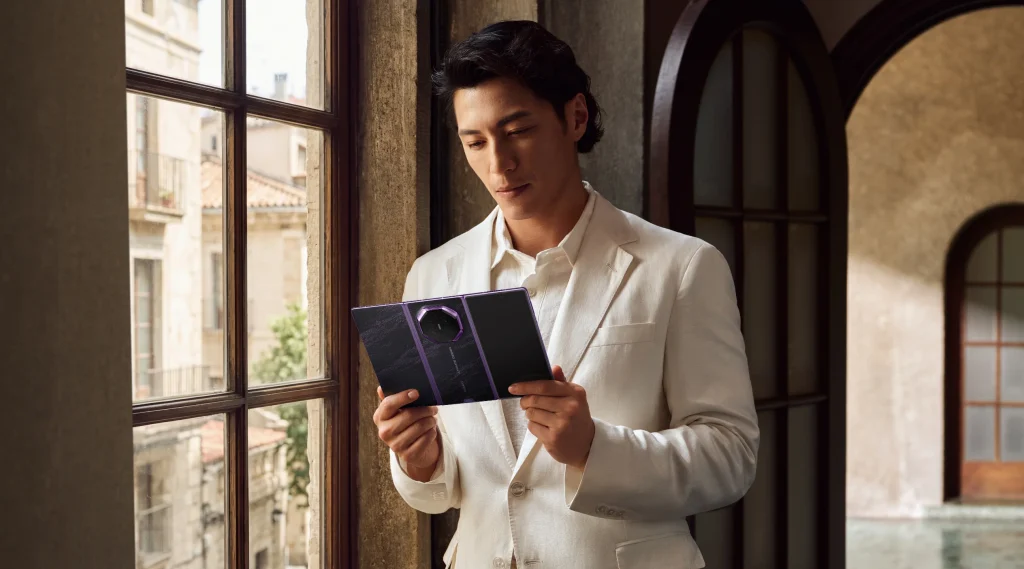
The processor debuted in the Huawei Mate XT 2 Ultimate, Huawei’s second-generation commercial tri-fold smartphone. The Mate XT 2 uses the Kirin 9050 Pro together with HarmonyOS 7, advanced cooling, a large 10.2-inch unfolded display, and Huawei’s latest camera-processing technology. Huawei says the complete device delivers a 42% improvement in overall performance compared with the previous generation.
The Kirin 9050 Pro is therefore more than a routine processor refresh. It represents Huawei’s attempt to increase CPU performance, graphics capabilities, AI processing, memory efficiency, and sustained performance while dealing with the difficult thermal and power requirements of a premium foldable smartphone.
What Is the Kirin 9050 Pro?
The Kirin 9050 Pro is a flagship smartphone system-on-chip developed by Huawei’s HiSilicon semiconductor division.
A smartphone SoC combines several important computing components into one platform. Rather than functioning as only a CPU, it integrates processing units responsible for general computing, graphics, artificial intelligence, imaging, connectivity, multimedia, and other smartphone operations.
The Kirin 9050 Pro includes:
- Linxi CPU architecture
- Maleoon GPU
- Da Vinci NPU architecture
- Advanced image-processing capabilities
- Hardware-accelerated ray tracing
- Multimodal AI capabilities
- Advanced memory-management technology
- Huawei’s LogicFolding τ-chip architecture
Huawei introduced the processor with the Mate XT 2 Ultimate in September 2026. The phone is officially specified with 16GB of RAM and up to 2TB of storage depending on configuration.
Kirin 9050 Pro and the Mate XT 2
The first smartphone to use the Kirin 9050 Pro is the Huawei Mate XT 2 Ultimate.
This is significant because the Mate XT 2 is an unusually demanding device.
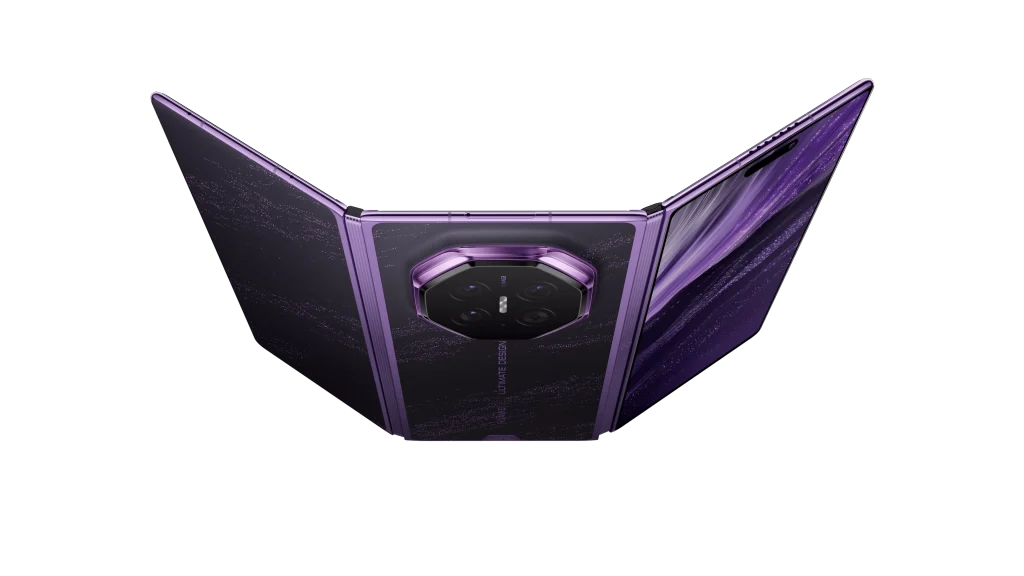
Unlike a conventional smartphone, it can transform from a folded handset into a 10.2-inch tablet-sized device. Its large flexible display can be used for multitasking, gaming, document editing, video playback, and other activities that place considerable demands on the processor and graphics hardware.
Huawei therefore needed a platform capable of sustaining high performance while operating inside a very thin folding device.
The Mate XT 2 measures approximately 12.3mm thick when folded and approximately 299 grams, while its fully unfolded internal display reaches 10.2 inches.
The Kirin 9050 Pro is consequently being used as the computing foundation for one of Huawei’s most technically demanding smartphones.
LogicFolding τ Architecture
One of the most unusual aspects of the Kirin 9050 Pro is Huawei’s LogicFolding τ architecture.
According to reporting on Huawei’s launch presentation, the design uses a two-layer vertical stacking approach intended to shorten signal paths between components.
Huawei describes this technology as part of its broader approach to increasing transistor density and improving the physical organization of the processor. TechNode reported that Huawei said transistor density increased from approximately 155 million transistors per square millimeter to 238 million transistors per square millimeter.
This is important because semiconductor performance is not determined exclusively by simply increasing clock speeds.
The physical arrangement of transistors, interconnects, caches, memory pathways, power delivery, and computing units can all affect how efficiently a processor performs.
Why Vertical Chip Architecture Matters
Shorter signal pathways can potentially reduce the distance electrical signals need to travel within the chip.
That can have implications for:
- Data-transfer efficiency
- Latency
- Power consumption
- Chip density
- Thermal behavior
- Overall computational performance
Huawei’s LogicFolding approach is therefore particularly interesting because it represents an architectural strategy rather than simply a conventional specification upgrade.
Linxi CPU Architecture
The Kirin 9050 Pro uses Huawei’s Linxi CPU architecture.
The CPU is responsible for general-purpose computing. It handles tasks ranging from launching applications and browsing websites to processing system instructions and managing background operations.
According to Huawei Central’s reporting, the Kirin 9050 Pro uses a heterogeneous CPU arrangement consisting of:
- 1 prime core
- 2 performance cores
- 4 efficiency cores
- 2 smaller efficiency-oriented cores
This allows the processor to distribute workloads according to their computational requirements.
Why Multiple CPU Core Types Matter
A smartphone rarely needs maximum CPU performance continuously.
A simple task such as checking a notification requires relatively little processing power.
Launching an application, editing a large document, compressing files, or performing complex calculations can require more.
A heterogeneous architecture allows the operating system to allocate lightweight workloads to efficient cores while using more powerful cores when additional performance is required.
This approach can improve the balance between responsiveness and battery consumption.
CPU Performance
Huawei says the Kirin 9050 Pro provides a substantial performance increase over its predecessor.
Independent reporting based on Huawei’s launch information indicates approximately 24% higher peak single-core performance and 52% higher multi-core concurrent performance compared with the previous generation referenced by Huawei’s presentation.
These numbers are important because they describe two different aspects of processor performance.
Single-Core Performance
Single-core performance is important for many everyday smartphone activities.
Applications frequently depend heavily on one or a small number of CPU cores for individual operations.
Higher single-core performance can contribute to:
- Faster application responsiveness
- Quicker interface operations
- Faster file processing
- Improved web performance
- Better performance in applications with limited parallelization
Multi-Core Performance
Multi-core performance becomes more important when several workloads can run simultaneously.
This is particularly relevant to the Mate XT 2 because its large screen encourages multitasking.
A user could potentially run several applications simultaneously, manipulate documents, browse the web, stream media, and perform other tasks.
Huawei’s claimed improvement in multi-core concurrent performance is therefore particularly relevant to the tri-fold form factor.
Maleoon GPU
Graphics processing is another major part of the Kirin 9050 Pro.
The processor uses a new Maleoon GPU designed to provide significantly greater graphics performance than the previous generation.
According to Huawei Central’s reporting, Huawei claims up to a 142% improvement in rendering performance, with hardware-accelerated ray-tracing compute units and a larger cache contributing to the improvement.
This represents one of the largest claimed improvements associated with the new processor.
Hardware Ray Tracing
The Kirin 9050 Pro supports hardware-accelerated ray tracing.
Ray tracing is a graphics technique that calculates how light interacts with objects in a virtual environment.
It can produce more realistic:
- Reflections
- Shadows
- Lighting
- Glass effects
- Water surfaces
- Global illumination
- Environmental effects
Traditional smartphone graphics rendering can approximate these effects using less computationally expensive techniques.
Hardware ray tracing allows dedicated graphics circuitry to accelerate the calculations.
Huawei says the Mate XT 2 can support up to 50 million rays per second with real-time hardware ray tracing acceleration.
Why Ray Tracing Matters for Mobile Gaming
Mobile games have become increasingly sophisticated.
Modern flagship smartphones can render detailed environments, realistic lighting, complex characters, and large virtual worlds.
Ray tracing provides developers with another tool for improving visual realism.
However, actual ray-tracing performance depends on game support, graphics settings, resolution, frame rate, thermal conditions, and software optimization.
The presence of hardware ray tracing does not automatically mean every mobile game will use it.
GPU Cache Improvements
Huawei’s new Maleoon GPU also benefits from increased cache resources.
Cache is a small amount of extremely fast memory located close to processing units.
It stores frequently needed data so the GPU does not always need to retrieve information from slower memory systems.
Increasing cache can potentially improve graphics performance and reduce memory-access bottlenecks.
Huawei’s reported combination of increased cache and dedicated ray-tracing hardware is intended to give the Kirin 9050 Pro substantially more graphics headroom.
Gaming Performance
The Kirin 9050 Pro is designed to support demanding mobile games.
Its CPU provides additional multi-core processing capacity, while the Maleoon GPU provides substantially higher graphics performance according to Huawei’s claims.
The processor also benefits from hardware ray tracing.
The Mate XT 2 adds another interesting dimension because its large unfolded screen provides a much larger gaming canvas than a conventional smartphone.
A 10.2-inch display can make strategy games, simulations, racing titles, role-playing games, and other visually detailed games more immersive.
However, the large screen also means the GPU may have to render more pixels depending on the application’s resolution and scaling behavior.
Thermal Management
Raw performance is only useful if a smartphone can maintain it.
This is particularly challenging inside a foldable phone because the available internal space must be divided among several components, including batteries, hinges, flexible displays, cameras, antennas, and processors.
Huawei therefore developed a dedicated cooling architecture for the Mate XT 2.
The company describes a distributed thermal design that separates major heat sources across different areas of the device. Huawei also uses a large vapor chamber and graphene-based heat-conduction materials.
Distributed Cooling
The Mate XT 2’s unusual shape allows Huawei to distribute heat across different sections.
Instead of concentrating all heat around a single small area, the cooling architecture is designed to spread thermal energy.
This can help maintain a more comfortable surface temperature and potentially improve sustained performance.
The approach is particularly important during:
- Extended gaming
- Video rendering
- AI workloads
- Large-file processing
- Long camera sessions
- Multitasking on the large display
Da Vinci NPU
Artificial intelligence is another major focus of the Kirin 9050 Pro.
The chip uses Huawei’s Da Vinci NPU architecture for neural-processing workloads.
An NPU, or neural processing unit, is a specialized processor designed to accelerate machine-learning operations.
Rather than sending every AI calculation to the CPU or GPU, the NPU can execute certain neural-network operations more efficiently.
This can reduce power consumption while accelerating AI functions.
On-Device AI
The Kirin 9050 Pro is designed to support increasingly sophisticated on-device AI.
Huawei and reporting around the launch describe support for multimodal mixture-of-experts large language models running on the device. The architecture is reported to support models with around 30 billion total parameters in this context.
This is significant because large AI models normally require substantial computational resources.
Running more AI processing locally can offer several potential advantages.
Privacy
Data can potentially remain on the device rather than being sent to a remote server.
Responsiveness
Local AI processing does not always require a network connection.
Reliability
AI functions can continue working in situations where network connectivity is limited.
Cost and Efficiency
Local processing can reduce dependence on cloud-based computation for supported tasks.
The actual capabilities depend on Huawei’s software, supported models, and individual applications.
Multimodal AI
Multimodal AI can process more than one type of information.
Depending on implementation, this can include:
- Text
- Images
- Audio
- Video
- Documents
- Voice commands
This is becoming increasingly important in smartphones because AI assistants are moving beyond simple voice commands.
A user could potentially ask an AI system to interpret a document, summarize information, analyze an image, or perform several related tasks.
The Kirin 9050 Pro provides the hardware acceleration required for these types of workloads, while HarmonyOS supplies the software environment.
AI and the Mate XT 2
The processor’s AI capabilities are particularly useful on the Mate XT 2 because the large unfolded display provides more room for AI-assisted workflows.
Huawei lists functions such as AI-powered image creation, document comparison, AI summaries, AI translation, AI-assisted composition, and other intelligent features on the Mate XT 2.
The processor therefore becomes part of a larger hardware-software system rather than functioning independently.
Camera and ISP Processing
Modern smartphone photography depends heavily on computational photography.
The image sensor captures raw information, but the final photograph is created through extensive processing.
The processor may handle:
- HDR
- Noise reduction
- White-balance correction
- Face detection
- Skin-tone processing
- Image sharpening
- Computational zoom
- Night photography
- Video stabilization
- AI scene recognition
The Mate XT 2 combines the Kirin 9050 Pro with Huawei’s third-generation Red Maple imaging system.
Huawei says its latest imaging system improves color reproduction by filtering unwanted infrared light. The phone also uses a tenth-generation ISP for real-time skin-tone region calibration.
High Dynamic Range Imaging
The Mate XT 2’s imaging system supports a claimed dynamic range of up to 18 EV in supported scenarios.
Dynamic range describes the difference between the darkest and brightest parts of a scene that a camera system can preserve.
A higher dynamic range can help when photographing scenes containing both bright highlights and dark shadows.
For example, when photographing a person against a bright sky, the system needs to prevent the sky from becoming completely white while retaining detail in the person’s face.
The Kirin 9050 Pro’s image-processing capabilities contribute to the computational side of this process.
Video Processing
Video places continuous demands on a smartphone processor.
Unlike a single photograph, video requires the system to capture, process, encode, and store multiple frames every second.
The Mate XT 2 supports high-resolution video capture, including 4K recording. Huawei’s specifications list video recording up to 3840 × 2160 pixels.
The processor contributes to stabilization, HDR processing, image enhancement, encoding, and other real-time operations.
Memory and Storage
The Kirin 9050 Pro is used in the Mate XT 2 alongside substantial memory configurations.
Huawei lists:
- 16GB RAM + 256GB storage
- 16GB RAM + 512GB storage
- 16GB RAM + 1TB storage
- 16GB RAM + 2TB storage on the premium privacy-display/stylus configuration
Huawei also states that the phone does not support memory-card expansion.
The combination of 16GB RAM and up to 2TB storage makes the Mate XT 2 suitable for users who keep large collections of photographs, videos, documents, games, and other files locally.
Memory Management and Multitasking
Large RAM capacity is particularly useful for a tri-fold smartphone.
The Mate XT 2 can display multiple applications simultaneously when fully unfolded.
This means memory management becomes increasingly important.
Huawei has developed system-level memory technologies intended to keep applications available in the background and reduce unnecessary application reloads.
The Kirin 9050 Pro provides the underlying processing capacity, while HarmonyOS manages how applications are distributed across the available resources.
Connectivity
A flagship smartphone processor also has to support communication.
The Mate XT 2 supports modern wireless connectivity, including Wi-Fi, Bluetooth, NFC, cellular connectivity, and satellite communication features in supported markets.
Huawei’s official specifications list Bluetooth 6.0 and Wi-Fi support including Wi-Fi 7-class IEEE 802.11be functionality.
The Chinese version also supports satellite communication technologies including Tiantong satellite communication and two-way BeiDou satellite messaging. Availability of these features depends on region and network/service support.
Power Efficiency
Performance is only one side of processor design.
A powerful chip that consumes excessive energy can reduce battery life and generate substantial heat.
The Kirin 9050 Pro’s heterogeneous CPU architecture is designed to allocate workloads according to their requirements.
Light tasks can use efficiency-oriented cores, while more demanding operations can activate higher-performance cores.
The NPU can also execute supported AI workloads without forcing the CPU or GPU to perform all the calculations.
This division of labor is an important part of modern mobile processor design.
Kirin 9050 Pro vs Kirin 9030S
The Kirin 9050 Pro should not be confused with the Kirin 9030S used in Huawei’s Pura 90s Pro and Pura 90s Pro Max.
Huawei’s official Pura 90s Pro specifications list the Kirin 9030S as the processor.
The Kirin 9050 Pro instead debuted with the Mate XT 2.
The 9050 Pro represents a newer processor generation with a substantially redesigned architecture, more powerful graphics capabilities, advanced ray tracing, and expanded AI processing.
This distinction is important when comparing Huawei’s 2026 flagship smartphones.
Kirin 9050 Pro vs Previous Kirin Platforms
The Kirin 9050 Pro represents a substantial architectural step for Huawei.
Huawei’s reported improvements include:
| Area | Kirin 9050 Pro |
|---|---|
| CPU architecture | Linxi |
| GPU | Maleoon |
| NPU | Da Vinci |
| Ray tracing | Hardware accelerated |
| Reported single-core improvement | Up to 24% |
| Reported multi-core concurrent improvement | Up to 52% |
| Reported rendering improvement | Up to 142% |
| AI architecture | Da Vinci |
| AI model support | Multimodal MoE workloads |
| First commercial device | Huawei Mate XT 2 |
| Operating system at launch | HarmonyOS 7 |
| Maximum Mate XT 2 RAM | 16GB |
| Maximum Mate XT 2 storage | 2TB |
The performance figures are Huawei-related launch claims reported by technology publications rather than independent standardized benchmark results, so they should not be interpreted as universal performance measurements across every application.
Real-World Performance
The real-world experience of the Kirin 9050 Pro depends on more than its hardware.
Performance is affected by:
- Operating-system optimization
- Application optimization
- Cooling
- Memory management
- Display resolution
- Workload type
- Battery temperature
- Power-management settings
The Mate XT 2’s combination of HarmonyOS 7 and the Kirin 9050 Pro is particularly important.
Huawei says the processor and operating system were designed with system-level optimization in mind, rather than treating the CPU, GPU, memory, and software as completely independent components.
Gaming With the Kirin 9050 Pro
Gaming is one of the most demanding workloads for a smartphone processor.
A modern game can simultaneously stress the CPU, GPU, memory, storage, display, and thermal system.
The Kirin 9050 Pro addresses these demands through its upgraded Maleoon GPU, hardware ray tracing, increased graphics resources, and distributed cooling system.
The Mate XT 2 also supports high-quality gaming on its large unfolded display.
However, the actual frame rate in any particular game depends on whether that game has been optimized for Huawei’s platform.
Productivity Performance
The Kirin 9050 Pro may be even more interesting for productivity than gaming.
The Mate XT 2 can display multiple applications at once.
A user might use a document application, web browser, messaging application, calculator, or reference material simultaneously.
The CPU and memory system must coordinate these workloads without causing excessive application reloads or noticeable interface delays.
This is where the processor’s multi-core architecture and the phone’s 16GB RAM become particularly useful.
Artificial Intelligence and Future Smartphones
The Kirin 9050 Pro arrives at a time when smartphone processors are becoming increasingly focused on AI.
The traditional smartphone performance race was largely about CPU and GPU speed.
Modern flagship processors must also handle:
- Generative AI
- Voice recognition
- Image generation
- AI photography
- Translation
- Summarization
- Personal assistants
- On-device language models
- Multimodal AI
The Kirin 9050 Pro is designed around this shift.
Its NPU and reported support for large multimodal models indicate that Huawei sees AI processing as a fundamental smartphone function rather than an optional feature.
Why the Kirin 9050 Pro Matters to Huawei
The processor is significant beyond the specifications of one smartphone.
Huawei has spent years developing its own semiconductor ecosystem and reducing its dependence on externally supplied flagship smartphone processors.
The Kirin 9050 Pro represents another stage in that effort.
Its introduction also demonstrates Huawei’s willingness to develop specialized architectures around its own hardware and software ecosystem.
The processor’s debut in the Mate XT 2 makes the situation particularly interesting because the smartphone itself is one of Huawei’s most technically complex products.
Challenges Facing the Kirin 9050 Pro
The Kirin 9050 Pro also faces challenges.
Limited Device Availability
Because the processor is closely associated with Huawei’s own smartphone ecosystem, it is not expected to appear across the wide range of Android manufacturers that use Snapdragon or MediaTek platforms.
That limits the number of devices through which consumers can experience the chip.
Benchmark Availability
Independent benchmark coverage is more limited than for processors from Qualcomm or MediaTek.
This means Huawei’s own performance claims should be separated from independently measured results.
Application Optimization
The processor’s capabilities are only fully useful when applications are optimized for the hardware.
Developers therefore play an important role in determining how effectively the GPU, NPU, and CPU are used.
International Software Ecosystem
The Kirin 9050 Pro is part of Huawei’s broader hardware and software ecosystem.
International buyers need to consider application availability and Huawei’s software environment alongside raw processor performance.
Kirin 9050 Pro Specifications
| Specification | Kirin 9050 Pro |
|---|---|
| Manufacturer | Huawei / HiSilicon |
| Launch | September 2026 |
| First smartphone | Huawei Mate XT 2 Ultimate Design |
| CPU | Linxi architecture |
| CPU configuration | 1 prime + 2 performance + 4 efficiency + 2 smaller cores |
| GPU | Maleoon |
| Ray tracing | Hardware accelerated |
| NPU | Da Vinci architecture |
| AI | On-device multimodal AI / MoE workloads |
| Reported single-core improvement | Up to 24% |
| Reported multi-core improvement | Up to 52% |
| Reported graphics rendering improvement | Up to 142% |
| Maximum RAM in first device | 16GB |
| Maximum storage in first device | 2TB |
| Launch OS | HarmonyOS 7 |
Some architectural and performance details come from Huawei’s launch claims as reported by technology publications rather than a complete public semiconductor specification sheet.
Frequently Asked Questions
What is the Kirin 9050 Pro?
The Kirin 9050 Pro is Huawei’s flagship smartphone processor introduced in September 2026. It combines Linxi CPU technology, a Maleoon GPU, and Da Vinci NPU architecture.
Which phone uses the Kirin 9050 Pro?
The first smartphone to use the Kirin 9050 Pro is the Huawei Mate XT 2 Ultimate Design. Huawei’s official specifications confirm the processor.
Does the Huawei Pura 90s Pro use the Kirin 9050 Pro?
No. The Huawei Pura 90s Pro uses the Kirin 9030S. Huawei’s official specifications list the Kirin 9030S processor.
Does the Pura 90s Pro Max use the Kirin 9050 Pro?
No. The Pura 90s Pro Max also uses the Kirin 9030S.
What is the Linxi CPU?
Linxi is the CPU architecture used by the Kirin 9050 Pro. It uses a heterogeneous multi-core design intended to balance high performance and efficiency.
What GPU does the Kirin 9050 Pro use?
The processor uses Huawei’s Maleoon GPU.
Does the Kirin 9050 Pro support ray tracing?
Yes. Huawei says the Mate XT 2’s Kirin 9050 Pro platform supports hardware-accelerated real-time ray tracing, with up to 50 million rays per second claimed in supported workloads.
What is the Da Vinci NPU?
Da Vinci is Huawei’s neural-processing architecture used for artificial-intelligence workloads on the Kirin 9050 Pro.
Does the Kirin 9050 Pro support generative AI?
The platform is designed to support on-device AI workloads, including multimodal mixture-of-experts large-language-model applications described in reporting on Huawei’s launch.
How much RAM does the Kirin 9050 Pro support?
In its first commercial device, the Mate XT 2, the processor is paired with up to 16GB of RAM.
How powerful is the Kirin 9050 Pro?
Huawei’s reported figures indicate up to 24% higher single-core performance, 52% higher multi-core concurrent performance, and 142% higher graphics rendering performance versus the previous generation referenced in its launch materials. These are vendor-reported figures rather than universal independent benchmark results.
Is the Kirin 9050 Pro a 5G processor?
The Mate XT 2 platform supports modern cellular connectivity, including satellite-related communication capabilities in supported markets. Exact cellular capabilities depend on the device and regional version.
What is the difference between Kirin 9050 Pro and Kirin 9030S?
The Kirin 9050 Pro is a newer flagship platform with the Linxi CPU, new Maleoon graphics architecture, hardware ray tracing, and enhanced AI capabilities. The Kirin 9030S is used in Huawei’s Pura 90s Pro and Pro Max.
Is Kirin 9050 Pro made by Huawei?
The Kirin family is developed by Huawei’s HiSilicon semiconductor business. The 9050 Pro incorporates Huawei’s own CPU, GPU, and NPU architectures.
Final Thoughts
The Kirin 9050 Pro is an important milestone in Huawei’s smartphone processor development. Its Linxi CPU architecture, Maleoon GPU, hardware-accelerated ray tracing, Da Vinci NPU, LogicFolding τ architecture, and emphasis on on-device multimodal AI demonstrate that Huawei is addressing modern smartphone performance as a combination of CPU, graphics, AI, memory, thermal management, and software optimization rather than simply increasing clock speeds. Its debut inside the Huawei Mate XT 2 Ultimate is particularly significant because that device demands substantial computing resources to drive a large 10.2-inch tri-fold display while maintaining a thin and portable design. Huawei’s reported performance gains should be distinguished from independent benchmark results, but the processor nevertheless represents one of the company’s most technically ambitious mobile SoCs to date.
Sources for this article include Huawei’s official Mate XT 2 specifications and product materials, , TechNode, and Huawei Central’s technical reporting on the Kirin 9050 Pro.



[…] Kirin 9050 Pro is designed for Huawei’s highest-end Mate 90 models and represents another step in the […]
[…] Max moves further into the ultra-premium segment with a 6.9-inch dual-layer LTPO OLED display, the Kirin 9050 Pro platform in its higher configuration(same processor which fuels the Huawei Mate 90 RS Ultimate), a 200MP […]
[…] also includes more advanced Kirin variants for higher-end models, including the Kirin 9035 and Kirin 9050 family. The standard Kirin 9030 therefore serves as an important example of how Huawei is scaling its […]